A reduced-fat soya drink can suit easy-to-chew meals when reducing fat is a deliberate goal; needing soft food alone is not a reason to choose one. Compare fat per 100 ml with protein and fortification, because a no-sugars label does not establish that a drink is low fat. If appetite is poor or weight is falling, West Suffolk NHS Foundation Trust advises avoiding low-fat options when food fortification is needed; follow any individual plan for drink consistency.
Who is this choice for?
Adults making easy-to-chew meals
If porridge, sauces or puddings are easier to eat than chewy foods and thin drinks are suitable, compare a soya drink’s fat, protein and fortification rather than choosing by its sugar wording alone. The International Dysphagia Diet Standardisation Initiative says its regular easy-to-chew guidance is for people without swallowing problems.
People deliberately reducing fat
A reduced-fat variant is worth considering when lower fat is an established dietary aim. Check the exact carton’s nutrition panel and whether it provides the fortification you want; an unsweetened variant is not necessarily a reduced-fat one.
Carers supporting someone with swallowing or low-intake concerns
An easy-to-chew food choice does not determine which drinks a person can swallow. Follow their individual drink-consistency plan, and seek dietary advice if appetite is poor or weight is falling rather than assuming lower fat is helpful.
What should you check on the carton?
Start with the reason for choosing soya drink: a fat target, the nutrients it contributes to a meal, or a particular way of preparing it. Check drink consistency separately if a swallowing plan applies.
| Priority |
What to check |
Your needs |
| Fat and energy |
Compare total fat and energy per 100 ml on the exact carton. Check whether it is described as reduced-fat rather than inferring that from an unsweetened label. |
I’m trying to reduce fat, not choosing a different drink simply because the meal is soft. If I’m eating little, I need to consider the energy the drink adds to the meal. |
| Protein and fortification |
Compare protein per 100 ml and check the label for added calcium, vitamin D, vitamin B12 and iodine. Tesco lists 3.5 g protein and 120 mg calcium per 100 ml for its Soya Drink Unsweetened. |
For porridge or a sauce I eat regularly, I want to know what the drink contributes, particularly if I use it instead of dairy milk. |
| Drink consistency |
Check whether thin drinks are permitted under any individual swallowing plan. A smooth soya drink or an easy-to-chew meal label does not establish a prescribed drink thickness. |
If drinks cause difficulty, I need to follow the specified consistency rather than choosing a carton for its fat or sugar content. |
| Cooking and storage |
Read heating and after-opening directions on the carton. Waitrose & Partners advises heating its Essential Unsweetened Soya Drink gently and taking it off the heat before it boils. |
I want a drink I can use in the meals I make, with storage instructions I can follow once the carton is open. |
| Ingredients and allergens |
Check the current ingredients and allergen information, especially when buying a different variant. GOV.UK identifies soya beans as one of the 14 allergens food businesses must tell consumers about. |
Before using a new carton, I need to confirm that its ingredients suit the person eating the meal. |
Mistakes to avoid
-
Assuming easy-to-chew food makes thin drinks suitable
The International Dysphagia Diet Standardisation Initiative says regular easy-to-chew guidance is for people without swallowing problems. A food texture does not establish which drink consistency is suitable for someone with a swallowing plan.
If drinking causes coughing or choking, or a thickness has been prescribed, follow the individual plan and seek clinical advice rather than selecting by the carton’s nutrition claims.
-
Choosing low fat when intake is already low
West Suffolk NHS Foundation Trust advises avoiding low-fat options when food fortification is needed. Lower fat should not become the deciding factor solely because someone eats easy-to-chew meals.
If appetite is poor or weight is falling, ask a dietitian how the drink fits the person’s overall meals and any existing dietary requirements.
-
Reading “no sugars” as “low fat”
Sugar and fat appear separately on the nutrition panel. Alpro lists 0 g sugars but 1.9 g fat per 100 ml for Soya No Sugars, while Tesco lists 1.5 g fat per 100 ml for its Soya Drink Unsweetened.
Compare the fat figures per 100 ml on the variants you are considering, then check protein and fortification if they matter to the meal.
-
Using an older listing instead of the current carton
The variant and its current label matter when you are checking nutrients, ingredients, allergens and preparation directions.
Read the pack before purchase and use, including its nutrition panel, allergen information and storage instructions.
Brands and ranges to compare
These examples show why the variant matters more than the brand name alone; compare the current carton before using any of them in a meal.
Alpro
Alpro has distinct reduced-fat and no-sugars soya variants. Their front-of-pack descriptions answer different questions.
- Tesco describes Alpro Soya Light as a reduced-fat soya drink with added calcium, iodine and vitamins.
- Alpro lists 1.9 g fat per 100 ml for Soya No Sugars, despite its 0 g sugars. Check fat separately when that is your priority.
Tesco
Tesco’s own-label Soya Drink Unsweetened provides a labelled comparison point for an unsweetened carton.
- Tesco lists 1.5 g fat, 3.5 g protein and 120 mg calcium per 100 ml for Soya Drink Unsweetened.
- Check the exact fresh or long-life variant rather than applying one carton’s nutrition figures to the whole range.
Waitrose Essential
Essential Unsweetened Soya Drink is a long-life option with preparation guidance relevant to hot meals.
- Waitrose & Partners advises heating it gently and removing it from the heat before boiling.
- Check the current carton’s nutrition, ingredients and storage directions for the meal you plan to make.
Joybuy soya drinks for easy-to-chew meals
These Alpro soya drinks are options to assess for meals such as porridge or cereal. Check fat and fortification on the exact carton rather than assuming either variant is reduced-fat.
 No image available
Alpro Soya No Sugars Long Life Drink, 8 × 1 L
For porridge or savoury cooking, compare this carton’s fat per 100 ml with your dietary aim: “No Sugars” describes sugar, not fat. This is an 8 × 1 L long-life pack. Follow any prescribed drink-consistency plan.
View on Joybuy
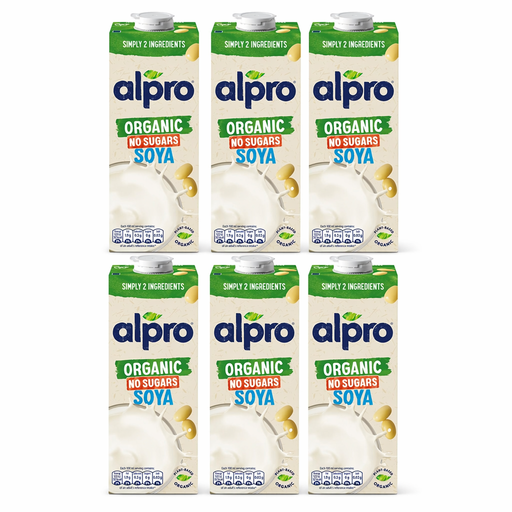 No image available
6 Alpro Soya Drink OG
For cereal or hot drinks, check the current carton’s fat per 100 ml against your goal. Check its calcium and vitamin information if fortification matters to your choice, and follow any prescribed drink-consistency plan.
View on Joybuy
Questions about soya drinks and soft meals
Does “no sugars” mean a soya drink is low fat?
No. Sugar and total fat are separate nutrition values. Alpro lists 0 g sugars and 1.9 g fat per 100 ml for Soya No Sugars; compare the fat per 100 ml on the exact cartons you are considering.
Can I use an ordinary soya drink with easy-to-chew meals?
Yes, if thin drinks are suitable for the person eating the meal. The International Dysphagia Diet Standardisation Initiative says regular easy-to-chew guidance is for people without swallowing problems; follow any individual instructions about drink thickness.
Should I choose low fat if someone has a small appetite?
Not automatically. West Suffolk NHS Foundation Trust advises avoiding low-fat options when food fortification is needed. If appetite is poor or weight is falling, seek individual dietary advice before making lower fat the priority.
How should I heat soya drink for porridge or sauce?
Follow the instructions for the carton you use. Waitrose & Partners advises heating its Essential Unsweetened Soya Drink gently and removing it from the heat before it boils.
Do I need to check soya on the allergen label?
Yes. GOV.UK identifies soya beans as one of the 14 allergens food businesses must tell consumers about. Check the current pack’s ingredients and allergen information, including when buying a familiar product.


