For regular cereal, smoothies or drinks, start by comparing unsweetened soya drinks that list calcium and iodine fortification, particularly if a child cannot have dairy. A sweetened or flavoured drink may suit a flavour-led snack, but compare sugars per 100ml; a short ingredient list alone does not establish fortification. Soya drinks are not suitable for anyone who needs to avoid soya.
Who is choosing the drink?
The checks change according to whether the drink is an occasional snack or a regular part of a dairy-free diet.
Families choosing dairy-free snacks for children over two
For cereal, smoothies or a drink during the holidays, check the child’s allergy requirements and the product’s age statement. Kingston and Richmond NHS Foundation Trust advises choosing dairy substitutes fortified with calcium and iodine when a child cannot consume dairy.
Teenagers and adults comparing sweetness
If you are choosing between unsweetened, sweetened and flavoured drinks, compare the sugars figures per 100ml on the cartons. Similar-looking soya drinks can have different listed values.
Shoppers who prefer a short ingredient list
An organic soya drink with few ingredients may fit that preference. If it will be a regular dairy alternative for a child, check fortification separately rather than treating ingredient simplicity as evidence of added calcium or iodine.
What should you compare?
Choose the type of drink for its intended use, then check the current carton for the nutrients, sugars and allergens that matter to your household.
Unsweetened and fortified
Consider it when: A soya drink will be used regularly for cereal, smoothies or drinking, and calcium and iodine fortification matter.
Check: Fortification varies by product, and a general soya drink may have an age restriction on use as a child’s main milk drink.
Sweetened or flavoured
Consider it when: A particular flavour is wanted for a drink, cereal or a smoothie.
Check: Flavour does not establish nutritional suitability; compare sugars and fortification with the unsweetened option you would otherwise buy.
Organic with few ingredients
Consider it when: An organic product and a short ingredient list are the main preferences.
Check: Do not assume it has added calcium or iodine if it will be used as a dairy alternative for a child.
| Priority | What to check | Your needs |
|---|
| Fortification |
Look for calcium and iodine on the carton, then note any listed vitamins. Kingston and Richmond NHS Foundation Trust identifies 120mg calcium per 100ml as an ideal level when choosing a calcium-fortified dairy substitute for a child. |
If my child cannot have dairy, I want to know what the drink contributes before using it regularly, rather than relying on the words ‘plant-based’ or ‘organic’. |
| Sugars and flavour |
Compare sugars per 100ml, including for vanilla or other flavoured drinks. Sainsbury’s lists less than 0.5g per 100ml for its Unsweetened Long Life Soya Drink and 2.3g per 100ml for its Sweetened version. |
For everyday cereal or smoothies, I may prefer an unsweetened drink; for a flavour-led snack, I want to see how the alternative differs. |
| Other nutrition |
Compare protein and energy per 100ml when the drink is a regular dairy alternative. Kingston and Richmond NHS Foundation Trust cautions that some dairy substitutes are low in protein or energy. |
Where the drink forms a regular part of a child’s dairy-free diet, I need to compare the whole nutrition panel, not just the ingredient list. |
| Allergens and age |
Read the current ingredients and allergen statement for soya and any other relevant ingredients. Check the age wording: Sainsbury’s states that its listed long-life soya drinks are not suitable as a main milk-drink alternative for children under two. |
If someone must avoid soya, this is not a suitable drink. For a young child, I also need to check whether the particular product is appropriate for its intended use. |
What is easy to overlook?
-
Assuming all soya drinks replace dairy in the same way
Calcium, iodine, protein and energy can differ between products. Kingston and Richmond NHS Foundation Trust notes that some dairy substitutes are not fortified and some are low in protein or energy.
If a child cannot consume dairy, check calcium and iodine first, then compare protein and energy per 100ml on the drink you plan to use.
-
Choosing by flavour without reading the sugars figure
Sainsbury’s lists 2.3g sugars per 100ml for its Sweetened Long Life Soya Drink, compared with less than 0.5g per 100ml for its Unsweetened version.
Compare the cartons per 100ml so a sweetened or flavoured choice is deliberate, especially when buying a drink for frequent use.
-
Treating dairy-free as suitable for every allergy
A soya drink still contains soya. Frimley Health NHS Foundation Trust’s guidance for children on a milk- and soya-free diet says soya products must be excluded.
Check the ingredients on every pack. Do not use a soya drink where soya must be avoided.
-
Overlooking the age statement
Sainsbury’s states that its listed unsweetened and sweetened long-life soya drinks are not suitable as a main milk-drink alternative for children under two.
Follow the wording on the particular carton. If dairy is being excluded from a young child’s diet, seek individual professional advice about an appropriate replacement.
Which brand ranges are relevant?
These brand and retailer examples help identify drink types to compare; their inclusion does not establish which products are available for a particular shop.
Alpro
Alpro soya listings include No Sugar, Original, Vanilla and High Protein varieties.
- Sainsbury’s describes Alpro Vanilla as a soya drink with added calcium and vitamins and suggests it for cereal, smoothies and porridge.
- Check sugars and fortification on the specific variety rather than assuming all Alpro drinks have the same formulation.
Sainsbury’s
Its listed unsweetened and sweetened long-life soya drinks both include calcium, iodine, vitamin D and B12.
- Sainsbury’s lists 120mg calcium and 22.5µg iodine per 100ml for each of these two drinks.
- The listed sugars differ: less than 0.5g per 100ml for Unsweetened and 2.3g per 100ml for Sweetened. Both carry a warning about use as a main milk-drink alternative for children under two.
Tesco
Tesco lists own-label sweetened and unsweetened long-life soya drinks alongside Alpro varieties.
- The listed range gives shoppers both sweetened and unsweetened options to compare.
- Use the individual carton’s nutrition and ingredient information for product-specific decisions.
M&S
M&S describes unsweetened and sweetened Plant Kitchen soya drinks as dairy alternatives.
- M&S states that both listed drinks contain added calcium, iodine, vitamin D and B12.
- Compare the current labels when choosing between its sweetened and unsweetened versions.
Waitrose
Waitrose lists Essential Unsweetened and Essential Original long-life soya drinks.
- Waitrose describes both as fortified with calcium, iodine and vitamins D, B12 and B2.
- Original is described as sweetened; compare its current sugars figure with Unsweetened before choosing.
Joybuy soya drink options
These soya drinks cover unsweetened, malt-flavoured and other ready-to-drink choices for half-term snacks. Check each current carton against your household’s needs, especially if the drink will regularly replace dairy for a child.
 No image available
Alpro Soya No Sugars Long Life Drink, 8 × 1L
An unsweetened option to consider for cereal or smoothies. The bundle contains eight 1L cartons; check the current label for calcium and iodine if choosing a regular dairy alternative for a child.
 No image available
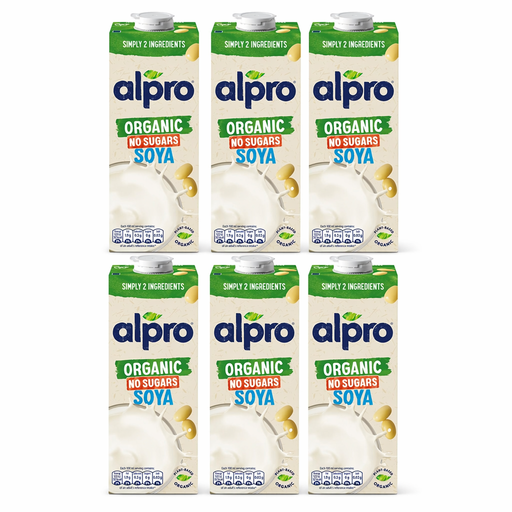
Alpro Soya Drink OG, pack of 6
For a shopper comparing soya drinks by their ingredients, check this pack’s current ingredient list and nutrition panel. Confirm calcium and iodine fortification separately if it will regularly replace dairy for a child.
 No image available
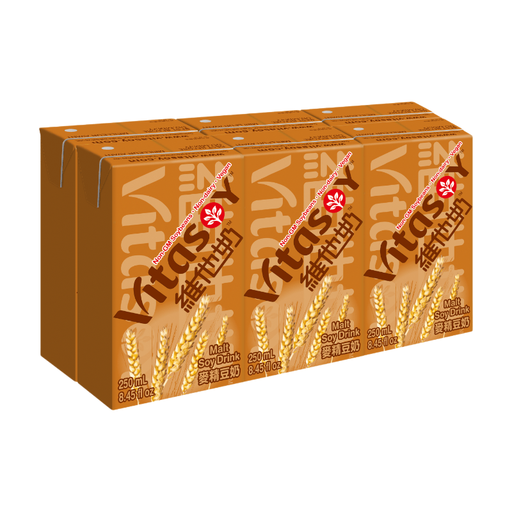
Vitasoy Malted Soy Milk, 250ml × 6
A malt-flavoured option in six individual cartons. Compare sugars per 100ml with an unsweetened drink, and check the current ingredients if soya or barley must be avoided.
 No image available
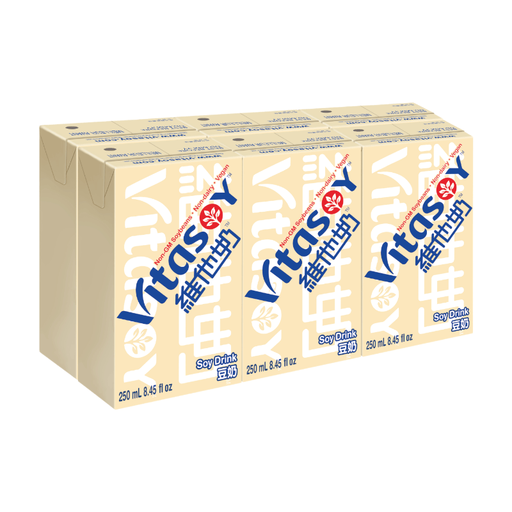
Vitasoy Original Soy Milk, 250ml × 6
Six individual cartons offer a portioned format for snack shopping. Compare the sugars figure per 100ml and check the current carton for calcium, iodine and allergens before using it as a regular dairy alternative.
 No image available
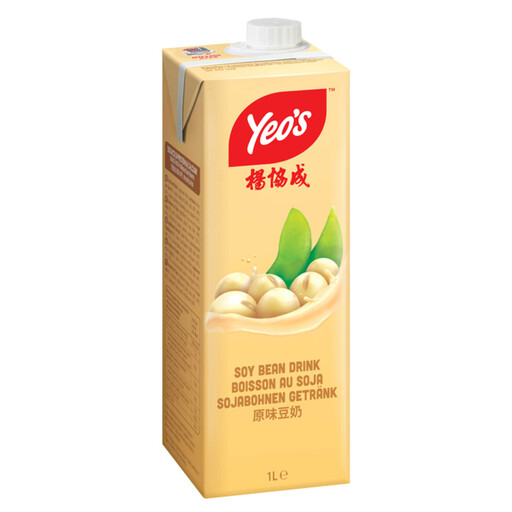
Yeo’s Soy Bean Drink, 1L
A 1L soya drink to compare for shared snack use or smoothies. Read the sugars figure per 100ml and check the current carton for fortification and allergens if it will be used regularly.
Questions about soya drinks
Can a child have soya drink with a half-term snack?
Check the particular drink’s age statement and how it will be used. Sainsbury’s says its Unsweetened Long Life Soya Drink can be part of a balanced diet from age one, but is not suitable as a main milk-drink alternative for children under two. If a child is avoiding dairy, Kingston and Richmond NHS Foundation Trust advises choosing a substitute fortified with calcium and iodine; seek individual professional advice about a suitable replacement where needed.
What matters on the label when a child cannot have dairy?
Check for calcium and iodine, then compare protein, energy and sugars per 100ml. Kingston and Richmond NHS Foundation Trust identifies 120mg calcium per 100ml as an ideal level for a calcium-fortified dairy substitute and cautions that some substitutes are not fortified or are low in protein or energy.
Does a short ingredient list mean a soya drink is fortified?
No. An ingredient list tells you what is in that product, but simplicity does not establish added calcium, iodine or vitamins. Check the fortification statement and nutrition information separately, particularly if the drink will regularly replace dairy for a child.
Is soya drink suitable for someone who must avoid soya?
No. Soya drinks are unsuitable where soya must be excluded. Frimley Health NHS Foundation Trust’s guidance for children on a milk- and soya-free diet says to exclude soya and soya products; check the ingredients on each pack rather than relying on a dairy-free description.


