What should you check on the carton?
Start with the child's age and whether the drink will be a regular milk alternative, then check fortification, sugars, organic certification and allergens.
| Priority |
What to check |
Your needs |
| Age and use |
Check the carton’s age guidance and whether the drink is intended as an ingredient or a regular milk alternative. NHS guidance permits unsweetened, calcium-fortified alternatives from age 1 as part of a balanced diet; individual product wording may be narrower. |
I’m serving dinner to a child aged 1 or over and need to know whether this particular carton fits how often we will use it. |
| Fortification |
Look for added calcium; check the label for iodine, vitamin D and vitamin B12 where these matter to the choice. Do not assume that every soya drink has the same additions. |
If soya drink regularly replaces milk at meals, I want to check which nutrients the carton actually lists. |
| Organic status |
Check for an organic certification mark. The UK government's SACN/COT assessment says plant drinks labelled organic in the UK cannot be fortified with nutrients. |
Organic production matters to me, but I do not want to mistake certification for fortification. |
| Sugars and sweeteners |
Read the ingredients and sugars per 100 ml, rather than relying on a range name. British Society for Allergy and Clinical Immunology guidance describes the plant-drink alternative for children aged 1 and over as fortified and unsweetened, without free sugars or non-sugar sweeteners. |
For frequent dinner use, I’m looking for an unsweetened carton rather than choosing by flavour or packaging alone. |
| Allergens |
Check the current ingredients for soya and any milk ingredient, along with relevant precautionary allergen information. A plant-based name alone does not establish suitability for a child with allergies. |
We avoid a particular allergen, so I need to check this exact product and follow the child’s allergy plan. |
Brand and own-label references
A brand name does not settle the organic-versus-fortified choice; compare the wording on the particular carton.
Alpro
Alpro has separate organic and child-focused soya drinks; their labels serve different selection questions.
- Alpro describes its Soya Growing Up drink as intended for children aged 1–3 and lists calcium, iron and vitamin D.
- Do not transfer that drink’s age wording or nutrient declaration to an Alpro organic carton.
Tesco
Tesco lists an unsweetened own-label soya drink with added nutrients.
- The Tesco Soya Drink Unsweetened listing names added calcium, iodine, vitamin B12, riboflavin and vitamin D2.
- That listing does not present the drink as organic; check the current carton for its full formulation.
Waitrose Essential
The Essential Unsweetened Soya Drink listing describes a fortified own-label option.
- Waitrose lists added calcium, vitamin D, vitamin B12, vitamin B2 and iodine for this product.
- The cited product listing does not identify this carton as organic.
Sainsbury's
Sainsbury's Unsweetened Soya Drink has product-specific child-use wording worth reading before purchase.
- Its listing says it can be used as part of a balanced diet from age 1 and identifies calcium and vitamin D.
- The same Sainsbury's listing says it is not suitable as a main milk-drink alternative for children under 2; follow that carton-specific restriction.
M&S Plant Kitchen
M&S lists both unsweetened and sweetened soya-drink variants, so the variant name matters.
- M&S describes its Unsweetened Soya Drink as fortified with calcium, iodine, vitamin D and vitamin B12.
- Do not assume the sweetened Plant Kitchen Soya Drink meets the same unsweetened criterion.
Soya drinks on Joybuy
These Alpro options represent two different dinner choices: a no-sugars drink to check for regular milk-alternative use, and an OG variant for an organic-first choice. Check each current carton before serving it to a toddler.
 No image available
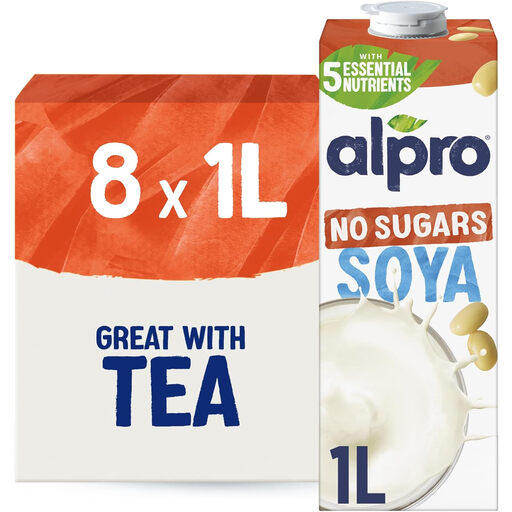
Alpro Soya No Sugars Long Life Drink, 8 × 1L
For regular use at dinner from age 1, check the current carton for its added nutrients and age guidance before relying on it as a milk alternative. The product name identifies a no-sugars, long-life drink in an 8 × 1L pack; check the allergen declaration if soya or milk is a concern.
View on Joybuy
 No image available
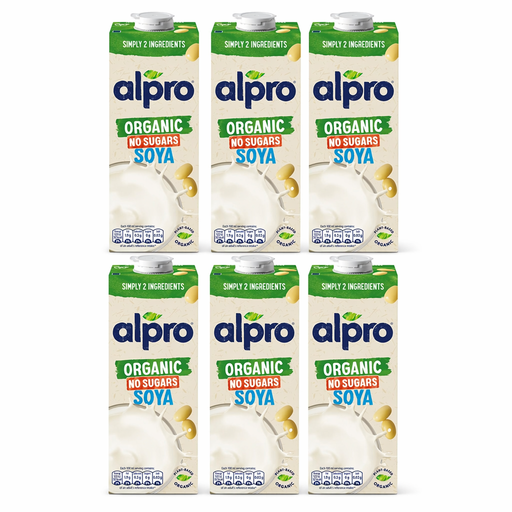
Alpro Soya Drink OG, pack of 6
For an organic-first dinner choice, check this carton for a recognised certification mark, age guidance and allergens. The UK government's SACN/COT assessment says organic plant drinks cannot be fortified, so do not treat an organic drink as a substitute for the added nutrients in a fortified milk alternative.
View on Joybuy
Questions about soya drink at toddler dinners
Can a toddler have soya drink with dinner?
From age 1, NHS guidance permits unsweetened, calcium-fortified milk alternatives, including soya drinks, as part of a balanced diet. NHS-linked guidance says a plant alternative should not be the main milk drink before the child's first birthday.
Does organic certification make soya drink a suitable regular milk alternative?
Not on its own. The UK government's SACN/COT assessment says organic plant drinks cannot be fortified, while NHS guidance for children from age 1 specifies unsweetened, calcium-fortified alternatives. Check the drink’s intended role and nutrient label separately from its organic certification.
Does soya drink contain milk?
A soya drink is not necessarily milk-containing, but suitability for dairy avoidance depends on the exact carton. Check its ingredients and allergen information for milk as well as soya; a plant-based description is not a substitute for that check.
Which label details matter for a child aged 1 or over?
Check that the particular drink is unsweetened and lists added calcium; look for iodine, vitamin D and vitamin B12 where relevant to your choice. British Society for Allergy and Clinical Immunology guidance also specifies no free sugars or non-sugar sweeteners for the fortified plant-drink alternative it describes.
What if the child avoids cow's milk because of allergy?
Follow the child's clinician's or dietitian's plan rather than selecting a soya drink by organic or dairy-free wording alone. Local NHS guidance notes that soya may not suit some children with cow's-milk protein allergy; check the exact product’s allergens too.


