For a bedtime hot drink where both fat and sugars matter, compare the figures per 100ml: Sainsbury’s lists Alpro Soya Light at 1.2g fat and 0g sugars, and its own Unsweetened Soya Drink at 1.3g fat and less than 0.5g sugars. Alpro says its Light drink can be used hot or cold; for other cartons, follow the preparation directions, as adding soya drink to very hot liquid can cause separation.
Who is this for?
The most useful carton details depend on what matters in your evening drink: fat, sugars, added nutrients or how it mixes when heated.
People comparing fat content
If you use soya drink in an evening tea, coffee, cocoa or malted drink, compare total fat on the nutrition panel rather than relying on a word such as “light”. Keep the stated unit in view: a value per 100g is not directly the same measure as one per 100ml.
Shoppers looking for little or no sugar
The “of which sugars” figure lets you compare cartons separately from their fat content. If you also want added calcium, iodine or vitamins, check those on the pack rather than assuming every unsweetened drink has the same fortification.
Tea and coffee drinkers concerned about separation
Preparation instructions matter when soya drink meets hot liquid. Tesco advises adding its Unsweetened Soya Drink before the hot liquid and avoiding boiling water; Sainsbury’s advises letting water cool slightly for its Unsweetened Soya Drink.
What should you check?
Start with the nutrition values for the amount of drink you use, then check the carton’s directions for preparing it hot.
| Priority |
What to check |
Your needs |
| Total fat |
Compare total fat on the same measurement basis. Sainsbury’s lists Alpro Soya Light at 1.2g per 100ml and its own Unsweetened Soya Drink at 1.3g per 100ml; Tesco lists 1.5g per 100ml for its Unsweetened Soya Drink. M&S reports 1.4g per 100g, so do not treat that figure as a per-100ml value. |
I want to compare how much fat the soya drink adds to my usual evening cup. |
| Sugars |
Read the “of which sugars” line as well as the product name. Sainsbury’s lists 0g per 100ml for Alpro Soya Light and less than 0.5g per 100ml for its own Unsweetened Soya Drink. Waitrose lists 0g sugars but 1.9g fat per 100ml for Essential Unsweetened Soya Drink: the two figures answer different questions. |
For my bedtime drink, I would rather choose by the stated sugars figure than assume “unsweetened” tells me anything about fat. |
| Hot-drink preparation |
Check the directions for the particular carton. Tesco says to add its Unsweetened Soya Drink before the hot liquid and not to mix it with boiling water; Sainsbury’s says to let water cool slightly for its Unsweetened Soya Drink. Alpro says Soya Light can be used hot or cold. |
I want the soya drink to mix into tea, coffee or cocoa without separating. |
| Added nutrients |
If fortification matters to you, compare the current pack for calcium, iodine, vitamin D and vitamin B12. Tesco and Sainsbury’s list these nutrients for their unsweetened soya drinks; do not assume every carton has identical amounts. |
I use soya drink regularly in place of dairy milk and want to know what has been added to the carton I buy. |
| Carton use |
Check the pack size, whether it needs chilling before opening and its instructions for storage after opening. A small carton and a larger chilled carton may suit different patterns of use, regardless of their nutrition figures. |
I want an amount I can use as directed rather than choose a carton solely by its front label. |
Common buying mistakes
-
Assuming unsweetened means lower in fat
Sugars and total fat are separate figures. Waitrose lists 0g sugars and 1.9g fat per 100ml for its Essential Unsweetened Soya Drink.
Compare both lines on the nutrition panel if you care about each of them.
-
Ignoring the hot-drink directions
Soya drink can separate when mixed with liquid that is too hot, changing the texture of a tea or coffee.
Follow the particular carton’s directions: Tesco advises adding its drink before hot liquid and avoiding boiling water, while Sainsbury’s advises letting water cool slightly.
-
Assuming all unsweetened cartons are fortified alike
Fortification is a separate consideration from sugars and fat, and nutrient amounts can differ between products.
If you want added nutrients, check the current carton for calcium, iodine, vitamin D and vitamin B12.
-
Using an online description as an allergy check
Soya is an allergen. The Food Standards Agency identifies it as a possible risk for people with a soya allergy, and product ingredients can change.
If you have a soya allergy, do not use a soya drink. Read the allergen declaration on the physical pack before consuming any product.
Brand and own-label options to compare
These are references for specific soya drinks, not a judgement about every product made by each brand; compare the current carton when choosing.
Alpro
Soya Light is a chilled option that Alpro says can be used hot or cold.
- Sainsbury’s lists 1.2g fat, 0g sugars and 22kcal per 100ml for Alpro Soya Light.
- Alpro’s No Sugars drink is a different product; do not use its name or nutrition figures as a substitute for Soya Light’s label.
Tesco
Tesco Soya Drink Unsweetened combines a per-100ml nutrition panel with specific mixing advice for hot drinks.
- Tesco lists 1.5g fat, 0.4g sugars and 3.5g protein per 100ml, as well as added calcium and iodine.
- Tesco advises against mixing this drink with boiling water because it may curdle.
Sainsbury's
Its Unsweetened Soya Drink is an own-label option with instructions relevant to hot drinks.
- Sainsbury’s lists 1.3g fat, less than 0.5g sugars and 2.2g protein per 100ml, alongside added calcium and iodine.
- Its product information warns that separation can occur unless water is allowed to cool slightly.
M&S Plant Kitchen
M&S Unsweetened Soya Drink is a fortified own-label alternative for shoppers comparing carton nutrition.
- Marks & Spencer lists 1.4g fat, 0.4g sugars and 2.8g protein per 100g, with added calcium, iodine, vitamin D and vitamin B12.
- Its published nutrition uses a per-100g basis; check the unit before comparing it with drinks listed per 100ml.
Waitrose Essential
Essential Unsweetened Soya Drink is a UHT carton with hot-drink guidance and listed fortification.
- Waitrose lists 0g sugars and 3.4g protein per 100ml, with added calcium, iodine and vitamins.
- It lists 1.9g fat per 100ml. Waitrose advises letting water cool slightly when adding it to hot drinks.
Joybuy product options
This ready-to-drink black soya option comes in small cartons. For a bedtime hot drink, compare its current nutrition label and warming directions with the larger unsweetened drinks discussed above.
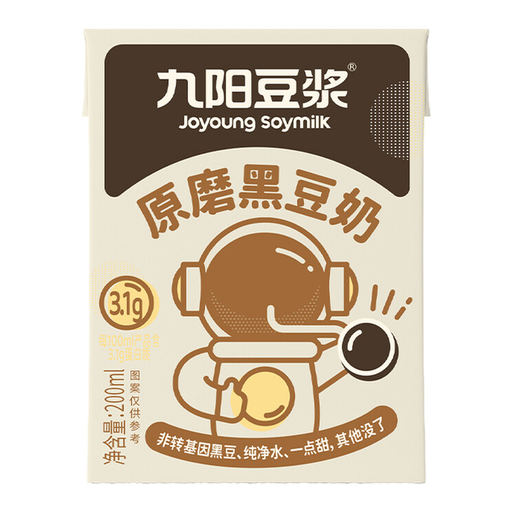 Image unavailable
Joyoung Original Ground Black Soy Milk, 3 × 200ml
The three 200ml cartons offer a smaller format to consider for an evening drink. Check the current pack’s fat and sugars figures and follow its directions before serving it warm; the product name alone does not establish that it matches an unsweetened drink.
View on Joybuy
Questions about soya drinks
Which fat figures can I compare for a bedtime drink?
Compare figures expressed in the same units. Sainsbury’s lists Alpro Soya Light at 1.2g fat per 100ml and its own Unsweetened Soya Drink at 1.3g per 100ml; Tesco lists 1.5g per 100ml for its Unsweetened Soya Drink. M&S lists its figure per 100g, so do not read it as a per-100ml figure.
How can I reduce separation in hot tea or coffee?
Use the directions for your carton rather than pouring boiling water straight onto the soya drink. Tesco says to add its Unsweetened Soya Drink before the hot liquid and not to mix it with boiling water; Sainsbury’s says to let water cool slightly before adding its Unsweetened Soya Drink.
Does unsweetened also mean lower in fat?
No. “Unsweetened” does not tell you the total fat value: Waitrose lists 0g sugars and 1.9g fat per 100ml for Essential Unsweetened Soya Drink. Read both nutrition lines if both matter to your choice.
Can I use soya drink if I have a soya allergy?
No. The Food Standards Agency identifies soya as an allergen that may pose a risk to people with a soya allergy. Check the current pack’s allergen declaration before consuming a product, as ingredients and labelling can change.


