People in the low-FODMAP restriction phase
Check whether the drink is made from soya protein or soya beans, then check the serving. Monash FODMAP distinguishes the two sources; a gluten-free badge does not settle the FODMAP question.


A gluten-free label alone does not tell you whether a soya drink suits a low-FODMAP diet. Monash FODMAP says drinks made from soya beans tend to be high in galacto-oligosaccharides (GOS), while soya milk made from soya protein is listed as a low-FODMAP alternative. If you also need to avoid gluten, check the gluten-free claim separately, then confirm the drink and serving against current low-FODMAP guidance.
The relevant checks depend on whether you are restricting FODMAPs, avoiding gluten, replacing dairy milk, or doing more than one of these.
Check whether the drink is made from soya protein or soya beans, then check the serving. Monash FODMAP distinguishes the two sources; a gluten-free badge does not settle the FODMAP question.
Treat gluten labelling and FODMAP suitability as separate checks. A gluten-free claim addresses gluten, while the soya source and serving matter for the low-FODMAP decision.
Compare the carton’s calcium and other listed nutrients as well as its ingredients. Fortification does not establish that a bean-based drink suits a low-FODMAP restriction phase.
Start with the soya ingredient and serving guidance; check gluten wording separately if gluten avoidance is required. Nutrition and format can then help distinguish cartons that meet those needs.
| Priority | What to check | Your needs |
|---|---|---|
| Soya source | Read the ingredient list for soya protein or soya beans. Monash FODMAP lists soya-protein milk as a low-FODMAP alternative but says soya-bean milk tends to be high in GOS. | I need a soya drink for the restriction phase, so an unsweetened or gluten-free label cannot stand in for the ingredient check. |
| Serving | Check current guidance for the particular drink and portion, especially if its ingredients list hulled soya beans. Do not infer a serving from the word ‘hulled’ alone. | A drink needs to work in the amount I plan to use, not just appear suitable from its ingredient name. |
| Gluten wording | If gluten avoidance is required, check the current pack for a gluten-free claim. Keep that check separate from the soya-source and serving checks. | I need to avoid gluten as well as assess FODMAPs; one label cannot answer both questions. |
| Nutrition | When replacing dairy milk, compare calcium per 100 ml and any listed vitamin D, B12 or iodine across the cartons you are considering. Check the pack for the current amounts. | I want to compare what the drinks contain without assuming that fortification changes their FODMAP content. |
| Diet stage | Distinguish the restriction phase from later reintroduction and personalisation. Monash FODMAP describes its first, restrictive step as lasting 2–6 weeks. | My choice during restriction may differ from what I can include after assessing my own tolerance. |
A gluten-free claim does not measure the GOS relevant to the soya-drink FODMAP decision. Monash FODMAP says soya-bean milk tends to be high in GOS.
Use the claim for your gluten check if needed, then read the soya ingredient and check the serving separately.
A drink can be unsweetened or fortified and still be made from soya beans. Tesco and M&S ingredient listings provide examples of bean-based drinks.
Look for the stated soya source rather than relying on sugar wording or added nutrients to judge FODMAP suitability.
The ingredient wording identifies a bean-based recipe, not an appropriate portion for every low-FODMAP diet stage.
Check current guidance for the specific drink and amount before using it during restriction.
An older listing may not describe the carton or format you are buying now.
Read the pack’s ingredients, gluten wording and nutrition panel when you purchase it, particularly when switching between chilled, long-life or barista versions.
These named drinks illustrate why the ingredient list matters: a soya-drink range or retailer name cannot establish the FODMAP suitability of every variant.
Tesco Groceries lists Alpro Barista Soya with a base of water and hulled soya beans.
Tesco Unsweetened Soya Drink is listed with soya bean at 9%.
Waitrose Essential Unsweetened Soya Drink lists hulled soya bean at 9%.
The M&S Unsweetened Soya Drink listing names soybeans at 9%.
These Alpro soya-drink options are relevant to the carton checks above. Their inclusion does not establish that either drink suits a low-FODMAP serving; check the current ingredients, gluten wording and portion guidance before choosing.
 Image unavailable
The long-life, no-sugars variant is an option to assess when comparing soya drinks. If you also need to avoid gluten, check the current carton’s claim; separately confirm its soya source and an appropriate low-FODMAP serving.
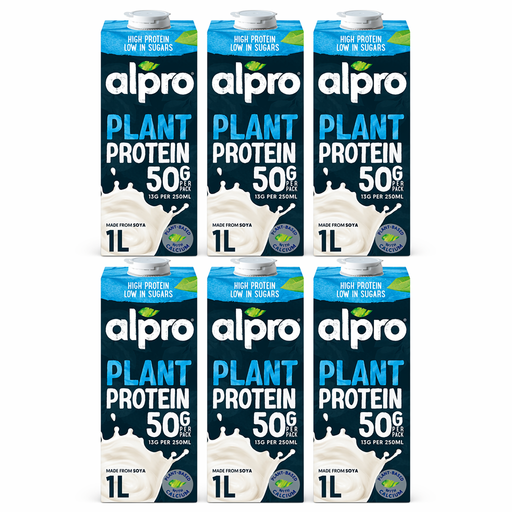 Image unavailable
This six-unit listing is another soya-drink option to assess. The ‘Plant Protein’ name alone does not identify the soya ingredient used; check the current carton for its source, any gluten-free claim you require and serving guidance.
No. A gluten-free claim addresses gluten, not FODMAP content. Monash FODMAP says soya-bean milk tends to be high in GOS, while it lists soya milk made from soya protein as a low-FODMAP alternative. Check the particular drink and serving before using it during restriction.
Look for wording that identifies a soya-protein-based drink, then check current serving guidance. Monash FODMAP distinguishes soya-protein milk from milk made from soya beans; ‘hulled soya beans’ should not be treated as a serving allowance on its own.
Not solely because you follow a low-FODMAP diet: gluten avoidance and FODMAP restriction are different requirements. If you also need to avoid gluten, check the pack’s gluten-free wording as well as the drink’s soya source and serving.
Compare the current cartons’ calcium per 100 ml and any listed vitamin D, B12 or iodine, alongside ingredients and serving guidance. Nutrient fortification does not establish low-FODMAP suitability.
No. Monash FODMAP describes an initial 2–6 week restriction step followed by reintroduction and personalisation. The NHS notes that a dietitian may recommend a low-FODMAP diet for IBS; seek appropriate professional guidance rather than treating the initial restriction list as a permanent rule.