Cereal and fruit breakfast eaters
If you pour soya drink over cereal or granola, or have a glass with fruit and toast, compare the sugar declaration and any added nutrients on the exact carton.


For cereal and fruit, an unsweetened soya drink is a starting point. If it regularly replaces dairy, check the carton for calcium, iodine, vitamin D and vitamin B12; the NHS advises people following a vegan diet to choose fortified dairy alternatives. For tea or coffee, follow the product’s heating instructions, as Waitrose says its unsweetened soya drink can separate in very hot liquid. The UK government’s 2025 plant-based-drinks assessment says organic-labelled plant drinks cannot be fortified, making organic and fortified drinks different choices.
If you pour soya drink over cereal or granola, or have a glass with fruit and toast, compare the sugar declaration and any added nutrients on the exact carton.
When soya drink is a frequent dairy alternative, the listed fortification matters as well as flavour. The NHS advises people following a vegan diet to include fortified dairy alternatives and to check whether plant drinks contain iodine.
If the drink is mainly for a hot beverage, check its preparation instructions. Waitrose advises letting hot water cool slightly before adding its unsweetened soya drink.
Decide whether the drink is mainly for cold cereal, a hot beverage or regular use instead of dairy, then compare the labels of the cartons you are considering.
| Priority | What to check | Your needs |
|---|---|---|
| Fortification | Check the exact carton for added calcium, iodine, vitamin D and vitamin B12. The NHS advises people following a vegan diet to include fortified dairy alternatives and to check plant-drink labels for iodine. | My breakfast drink regularly replaces dairy, so I want to know which nutrients this particular carton lists. |
| Sugar declaration | Check whether the carton says unsweetened or no sugars, then compare sugars per 100 ml on its nutrition panel. The NHS advises choosing lower-sugar dairy alternatives for a vegan diet. | For cereal or a glass alongside fruit, I want to compare sugar information rather than choose by the plant base alone. |
| Organic status | Check whether the drink is labelled organic. The UK government’s 2025 plant-based-drinks assessment says organic-labelled plant drinks cannot be fortified with nutrients. | Organic sourcing matters to me, but I do not want to mistake an organic carton for a fortified one. |
| Allergens | Check the precise milk-free claim and the allergen declaration. The Food Standards Agency distinguishes a specified free-from claim from the presence of other allergens, including soya. | If I need to avoid milk, I need a clear claim on this product. If I have a soya allergy, I need a non-soya drink instead. |
| Hot drinks | Read the carton’s heating instructions. Waitrose advises gentle heating and slightly cooler water for its unsweetened soya drink because it can separate. | My breakfast includes tea or coffee, so I want preparation guidance for the drink I choose. |
The UK government’s plant-based-drinks assessment says micronutrient fortification varies between products. A dairy-free label does not tell you which nutrients a carton contains.
If the drink frequently replaces dairy, compare the ingredient and nutrition labels of the exact cartons for the nutrients relevant to you.
The UK government’s 2025 assessment says plant drinks labelled organic in the UK cannot be fortified with nutrients.
If added nutrients are a priority, look for a non-organic carton that lists them rather than relying on an organic label.
A claim about milk does not address soya. The Food Standards Agency identifies soya as an allergen in its own right.
For milk allergy, check that a free-from milk claim applies to the exact product. For soya allergy, avoid soya drink and check the allergen declaration on any alternative.
Waitrose says its unsweetened soya alternative can curdle or separate when overheated or added to very hot liquid.
Follow the chosen product’s instructions. For the Waitrose drink, that means heating gently without boiling and allowing hot water to cool slightly before adding it.
Sainsbury’s lists a specific Alpro No Sugars long-life soya drink with added calcium, iodine and vitamins B2, B12 and D2.
Waitrose describes its Essential Unsweetened Soya Drink as fortified with calcium, iodine and vitamins D, B12 and B2.
M&S describes its unsweetened soya drink as fortified with calcium, iodine, vitamin D and vitamin B12.
Tesco Groceries lists both Longlife Soya Drink Unsweetened and Longlife Sweetened Soya Drink in its soya-drink range.
These soya drinks cover larger cartons for cereal and smaller, individual breakfast drinks. Compare each variant’s label if sugar content, fortification or allergens determine your choice.
 No image available
This No Sugars variant is an option to compare for cereal or a glass at breakfast. If it regularly replaces dairy, check the carton’s calcium, iodine, vitamin D and vitamin B12 declarations rather than assuming the variant name describes its fortification.
 No image available
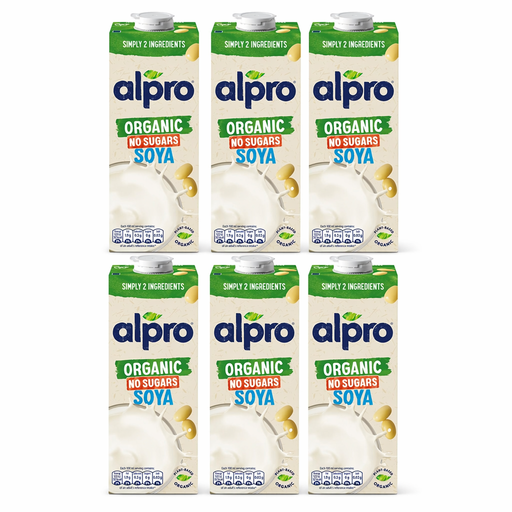
This organic soya option can be compared for cereal or a breakfast drink. The UK government’s 2025 plant-based-drinks assessment says organic-labelled plant drinks cannot be fortified, an important distinction if added nutrients are a reason for replacing dairy.
 No image available
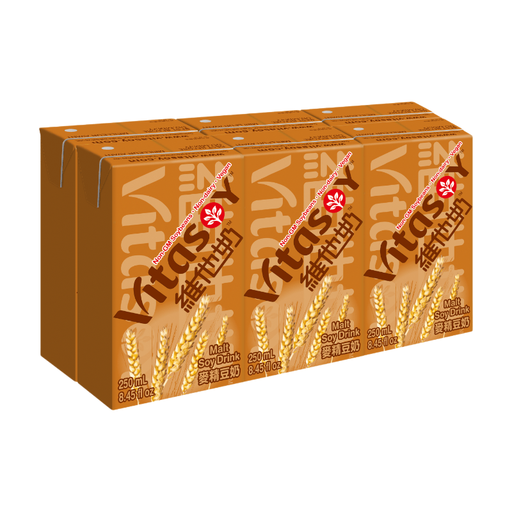
The individual cartons offer a drink alongside toast or fruit. This malted variant lists barley and soya as allergens; compare its sugars per 100 ml with an unsweetened carton if sugar content matters to you.
 No image available
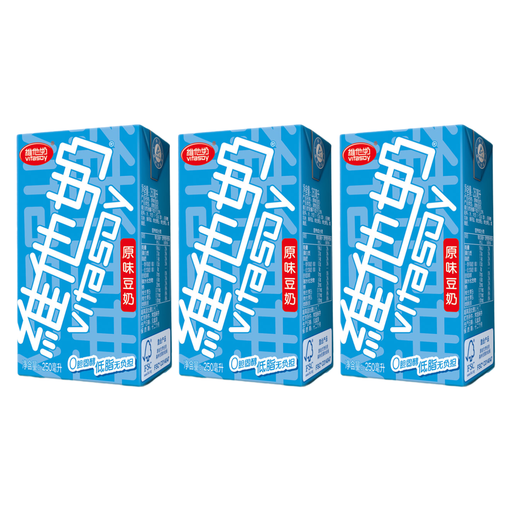
These individual cartons can be considered for a drink alongside breakfast. The original variant includes sugar; check its nutrition panel and any listed fortification if you are comparing it with an unsweetened drink or using it regularly instead of dairy.
 No image available
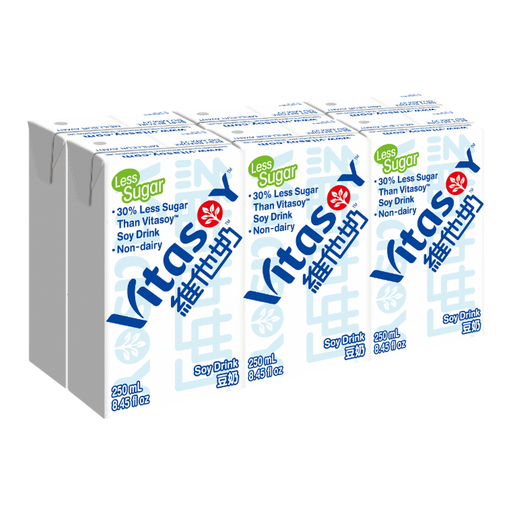
The six individual cartons offer a breakfast-drink format. Treat “Low-Sugar” as the variant name rather than a comparison with other drinks: check sugars per 100 ml on the current carton, as well as its nutrient declaration if it will regularly replace dairy.
Check for a free-from milk claim on the exact product. The Food Standards Agency says a free-from claim guarantees the absence of the specified allergen; “dairy-free” does not address other allergens such as soya.
No. Soya remains an allergen even when a drink is free from milk. Choose a non-soya alternative and check its own allergen declaration.
Compare its unsweetened or no-sugars wording with the sugars per 100 ml declaration. If it regularly replaces dairy, also check whether the carton lists calcium, iodine, vitamin D and vitamin B12; the NHS advises people following a vegan diet to choose fortified dairy alternatives.
Not for added nutrients: the UK government’s 2025 plant-based-drinks assessment says organic-labelled plant drinks cannot be fortified. If fortification is important to your choice, compare non-organic cartons that list the nutrients you are looking for.
Follow the instructions for your chosen drink. For its unsweetened soya alternative, Waitrose advises gentle heating without boiling and allowing hot water to cool slightly before adding the drink.