People replacing milk at breakfast
If you use a drink in cereal, porridge, tea or coffee while avoiding milk or lactose, check the claim on the exact carton. You can then compare its sugar content and listed nutrients for your regular routine.


For a weekday breakfast, choose a soya drink whose current label addresses the particular allergen you need to avoid; soya drinks are not suitable for someone with a soya allergy. If sugar content or added nutrients matter to you, compare the exact drink’s nutrition panel and fortification rather than assuming all unsweetened versions are alike. Vegan or dairy-free wording alone does not establish suitability for a nut or peanut allergy, so read any precautionary warning too.
If you use a drink in cereal, porridge, tea or coffee while avoiding milk or lactose, check the claim on the exact carton. You can then compare its sugar content and listed nutrients for your regular routine.
A dairy-free or vegan label does not answer every allergy question. Check the ingredients, declared allergens and any precautionary wording for the product you are buying, particularly when nuts or peanuts are a concern.
If you prefer an unsweetened drink for a repeat breakfast purchase, compare the sugars figure per 100 ml. Check the individual carton for calcium, vitamin D, vitamin B12 and iodine if those additions matter to you.
Start with the allergen you need to avoid, then compare the nutrition and format of drinks that meet that requirement.
| Priority | What to check | Your needs |
|---|---|---|
| Allergens | Read the exact product’s ingredients, allergen declaration and any precautionary statement. The UK Food Standards Agency identifies milk, soybeans, peanuts and tree nuts as separate allergens that must be declared when present as ingredients. | I need to avoid a particular allergen, not just find a carton labelled vegan or dairy-free. A soya drink is not an option if I have a soya allergy. |
| Sugars | Compare sugars per 100 ml and distinguish unsweetened or no-sugars variants from original or sweetened ones. Waitrose lists 2.5 g sugars per 100 ml for its Essential Original Soya Drink. | For cereal or porridge most weekdays, I want to know how much sugar comes from the drink itself rather than relying on the flavour name. |
| Added nutrients | Check the individual carton for calcium, vitamin D, vitamin B12 and iodine; fortification varies by product. Compare protein using the same per-100 ml basis if it matters to your choice. | If this regularly replaces dairy at breakfast, I want to see which nutrients are actually listed on the drink I buy. |
| Format and age | Check whether the carton is chilled or long-life and follow its storage instructions after opening. For a young child, read age-specific warnings: Waitrose says its Essential Unsweetened Soya Drink is not suitable for children under two. | A pack needs to fit how often it is opened and used at home. If I am buying for a child, an ordinary adult drink cannot be assumed to suit their age. |
Vegan, dairy-free and gluten-free wording addresses different questions. Soya is itself an allergen, while a separate precautionary warning may matter for someone avoiding nuts or peanuts.
Match the exact carton to the allergen in question: read its ingredients, declared allergens and any “may contain” statement rather than relying on a broad front-of-pack description.
Waitrose lists water and organic soybeans for Plenish Organic No Added Sugar Soya, but also displays a “May Contain Nuts” warning.
If nuts are the concern, check the current precautionary wording on the precise product even when its ingredient list is short.
Original and unsweetened variants can differ in sugars, and added nutrients depend on the recipe. Some products also carry age-specific warnings.
Compare sugars and relevant nutrients per 100 ml on the current cartons, then check whether an age warning applies to the person who will drink it.
These examples show why claims need checking by variant; a brand name alone does not establish allergen suitability.
Alpro offers No Sugar and other soya-drink variants, including chilled and long-life options.
The range includes Original and Unsweetened long-life soya drinks.
M&S lists sweetened and unsweetened soya alternatives for uses including cereal and hot drinks.
Plenish Organic No Added Sugar Soya is an option for shoppers comparing ingredient lists.
Tesco lists own-label long-life soya drinks in Unsweetened and Sweetened variants.
These Alpro multipacks offer three different starting points for a weekday breakfast: a No Sugars long-life drink, a Plant Protein drink and an OG-labelled soya drink. Check the current carton against your own allergen and nutrition requirements before choosing.
 No image available
The No Sugars variant may be worth comparing for regular cereal or porridge when the drink’s sugar content matters to you. This is an 8 × 1 L long-life soya-drink pack; it is not suitable for someone with a soya allergy. Check the current carton for any nut or peanut precautionary wording and for the particular added nutrients you want.
 No image available
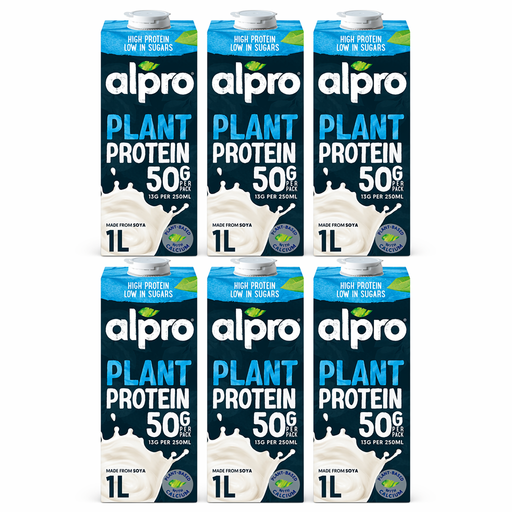
This 6 × 1 L soya-drink pack is a different breakfast choice from the No Sugars variant. Compare its current sugars and protein figures per 100 ml if either matters to you; do not assume it is unsweetened. It contains soya, and any nut or peanut precautionary wording needs checking on the current carton.
 No image available
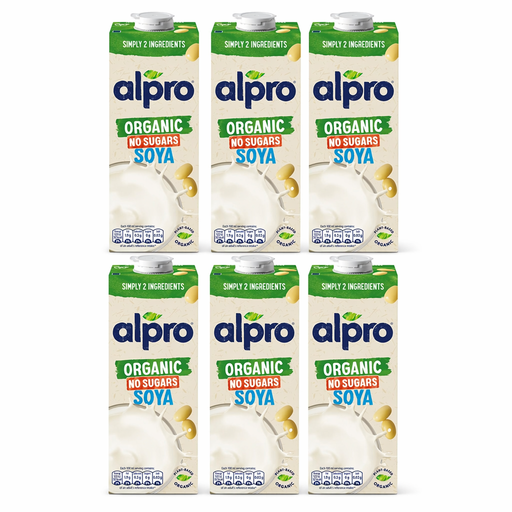
If the ingredient list is your main point of comparison for breakfast, check this OG-labelled 6 × 1 L soya-drink pack against the other variants. It is not suitable for a soya allergy. Read the current carton for precautionary nut wording and for any fortification you want.
No. The UK Food Standards Agency identifies soybeans as an allergen that must be declared when present as an ingredient. A non-soya alternative still needs its own ingredient and precautionary-allergen checks.
No. The Food Standards Agency’s research on vegan labelling and food hypersensitivities cautions against using vegan wording in place of allergen information because cross-contact can matter. Read the exact drink’s ingredients, allergen declaration and any precautionary statement.
Check the relevant allergen information first, then compare sugars per 100 ml and any added nutrients that matter to you. Waitrose lists calcium, iodine, vitamin D and vitamin B12 for its Essential Unsweetened drink, and M&S lists those additions for its Unsweetened Soya Drink; neither example establishes the contents of every soya drink.
Do not assume an adult drink is suitable for that age group. Waitrose warns that its Essential Unsweetened Soya Drink is not suitable for children under two, while Alpro has a separately labelled Growing Up drink for ages 1–3. If a child needs a dairy alternative because of an allergy or medical need, seek advice from an appropriate healthcare professional.