For an adult choosing soya milk to add protein through the drink itself, compare the nutrition figures per 100ml: Alpro and Sainsbury’s high-protein examples each list 5.0g, while the standard and no-sugars examples considered here list 2.2g to 3.3g. Check sugars and fortification alongside protein; if you have kidney disease, seek an individual protein target from your renal dietitian or clinician rather than following general high-protein advice.
Who is this for?
Adults adding protein through everyday drinks
If you pour soya milk over cereal or use it in a smoothie, the amount you use determines how much protein the drink contributes. Alpro and Sainsbury’s high-protein examples list 5.0g per 100ml; their standard or unsweetened examples list 2.2g to 3.3g per 100ml.
Vegan adults checking fortification
Protein is only one label detail when a plant drink replaces dairy. The NHS recommends fortified dairy alternatives as part of a vegan diet and identifies vitamin D, vitamin B12, iodine, selenium and calcium as nutrients to consider. Check which nutrients the particular carton lists.
Older adults with individual dietary needs
An older adult can compare drinks using the same per-100ml label figures, but a carton cannot establish a personal protein target. If you have kidney disease, University Hospitals Sussex NHS Foundation Trust advises particular care with protein intake when approaching dialysis; discuss your target with your renal dietitian or clinician.
What should you check?
Start with protein per 100ml and the amount you normally pour, then check sugars, fortification and any dietary restrictions on the same carton.
| Priority | What to check | Your needs |
|---|
| Protein |
Compare grams per 100ml, then calculate the amount in your usual serving. Sainsbury’s Sweetened High Protein Soya Drink lists 5.0g per 100ml and 12.5g per 250ml. |
I want the drink itself to contribute protein, rather than assuming every soya carton has the same amount. |
| Sugars |
Read sugars alongside protein on a like-for-like basis. Alpro Soya High Protein lists 2.5g sugars per 100ml; Alpro Soya No Sugars lists 0g sugars and 3.3g protein per 100ml. |
If limiting sugars matters more to me than protein per glass, I need to weigh up both figures before choosing. |
| Fortification |
Look separately for calcium, iodine, vitamin D and vitamin B12 on the current pack. The NHS notes that some plant drinks are fortified with iodine and advises checking the label. |
When I use a plant drink instead of dairy regularly, I want to know which nutrients this particular carton lists. |
| Personal suitability |
Check the ingredient and allergen label for soya. If you have kidney disease, confirm an individual protein target with your renal dietitian or clinician before using a drink to increase your intake. |
My allergy information or clinical advice needs to guide the choice before its protein figure does. |
Common selection mistakes
-
Assuming every soya drink has the same protein content
Sainsbury’s lists 5.0g protein per 100ml for its Sweetened High Protein Soya Drink but 2.2g for its Unsweetened Soya Drink. The category name alone does not tell you what a serving contributes.
Compare protein per 100ml and use the amount you actually pour to work out the contribution.
-
Checking protein but overlooking sugars
Alpro Soya High Protein lists 5.0g protein and 2.5g sugars per 100ml. Its No Sugars drink lists 0g sugars and 3.3g protein per 100ml, so the choice changes with the nutrient you prioritise.
Read both lines of the nutrition table before choosing between a high-protein and a no-sugars formulation.
-
Assuming fortification is identical across cartons
Fortification is product-specific. The NHS advises checking a plant drink’s label to see whether it contains iodine.
If you rely on a plant drink instead of dairy, check the current carton separately for iodine, calcium, vitamin D and vitamin B12.
-
Using a general protein goal when you have kidney disease
University Hospitals Sussex NHS Foundation Trust cautions that too much protein can put extra strain on the kidneys when approaching dialysis. A drink comparison cannot set an individual intake.
Ask your renal dietitian or clinician what protein target applies to your circumstances before changing your intake.
Brand and retailer references
These examples illustrate why the exact formulation matters; a retailer’s listing for one drink does not describe every soya drink it carries.
Alpro
Alpro lists both high-protein and no-sugars soya drinks.
- Alpro’s Soya High Protein page lists 5.0g protein and 2.5g sugars per 100ml.
- The Alpro No Sugars drink lists 0g sugars but 3.3g protein per 100ml; check which formulation suits your priority.
Sainsbury’s
Sainsbury’s lists high-protein and unsweetened own-label soya drinks with different protein figures.
- Its Sweetened High Protein Soya Drink lists 5.0g protein, 120mg calcium and 22.5µg iodine per 100ml.
- Its Unsweetened Soya Drink lists 2.2g protein per 100ml, so check the exact carton name.
Tesco
Tesco lists Alpro High Protein Soya Original in a 1L carton.
- Tesco describes that listed drink as containing added calcium and vitamins.
- Check the exact product’s nutrition label rather than extending those details to other soya drinks Tesco carries.
Asda
Asda lists Alpro High Protein Soya Original in a 1L carton.
- Asda’s listing gives 5.0g protein and 2.5g sugars per 100ml for that drink.
- Those figures apply to the listed Alpro product, not to Asda’s wider soya-drink range.
M&S
M&S lists an unsweetened soya drink with declared fortification.
- The M&S listing gives 2.8g protein and 0.4g sugars per 100g, and lists calcium, iodine, vitamin D and vitamin B12.
- Its nutrition figures are stated per 100g, not per 100ml; check the measurement basis before comparing cartons.
Waitrose
Waitrose lists Alpro Soya Long Life No Sugar.
- The Waitrose listing gives 0g sugars and 3.3g protein per 100ml and lists iodine among its added nutrients.
- For protein per 100ml, compare it with a high-protein formulation rather than assuming that the drinks contribute the same amount.
Joybuy soya drink options
These Joybuy options include plant-protein and no-sugars soya drinks, plus individual cartons. Use each product’s current label to compare protein, sugars and fortification for your needs.
 No image available
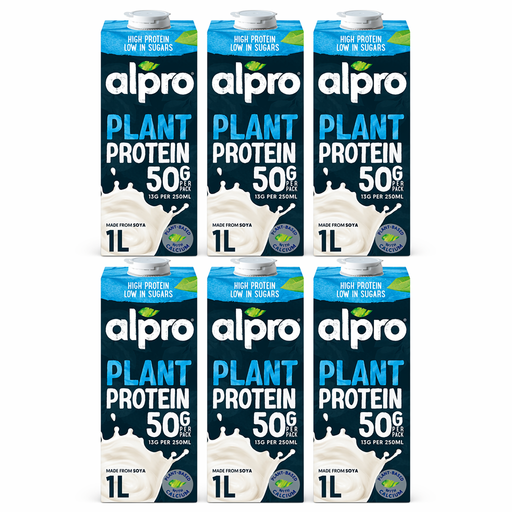
Alpro Plant Protein 1L, pack of 6
A plant-protein soya option for regular use: compare protein and sugars per 100ml on the current carton, and check iodine separately if it matters to your diet.
View on Joybuy
 No image available
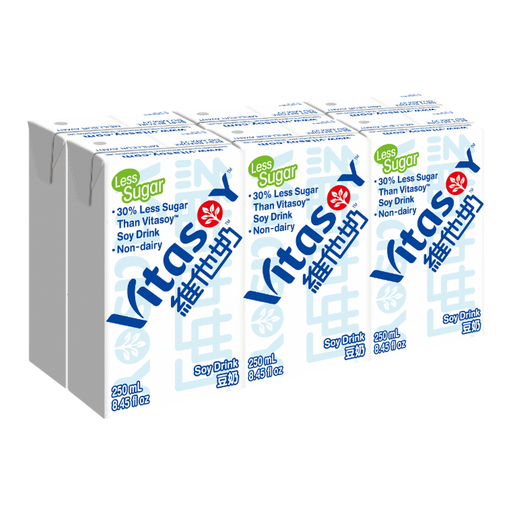
Vita Low-Sugar Soy Milk, 6 × 250ml
The individual cartons offer a defined serving size. Compare the sugars figure on the current nutrition label rather than relying on the Low-Sugar name, and check fortification if relevant.
View on Joybuy
 No image available
Alpro Soya No Sugars Long Life, 8 × 1L
Consider this no-sugars formulation if sugars are a deciding factor. Alpro’s No Sugars drink lists 3.3g protein per 100ml; compare the current carton with a high-protein drink if protein per glass is your priority, and check iodine if relevant.
View on Joybuy
Questions about choosing soya milk
How much protein can a high-protein soya drink add?
It depends on the carton and the amount you pour. Alpro and Sainsbury’s high-protein examples each list 5.0g protein per 100ml; Sainsbury’s lists 12.5g for a 250ml serving. Check the per-100ml figure when comparing other drinks.
What should a vegan check besides protein?
Check the particular soya drink’s fortification. The NHS recommends fortified dairy alternatives as part of a vegan diet and highlights vitamin D, vitamin B12, iodine, selenium and calcium as nutrients to consider; the presence of one added nutrient does not establish that the carton contains the others.
Does no-sugars soya milk provide as much protein as a high-protein drink?
Not in the Alpro examples here. Alpro Soya No Sugars lists 0g sugars and 3.3g protein per 100ml, while Alpro Soya High Protein lists 5.0g protein per 100ml. Decide which label figure matters more for your use.
Can I use soya drinks to follow a high-protein diet if I have kidney disease?
Do not set a personal protein target from a general drink comparison. University Hospitals Sussex NHS Foundation Trust cautions against too much protein when approaching dialysis; ask your renal dietitian or clinician what intake applies to your treatment and circumstances.
What if I have a soya allergy?
Do not choose a soya drink if you have a soya allergy. Read the current ingredient and allergen label before selecting any alternative drink.


