Sauce-led Easter hosts
If sauce is the centre of the lunch, the named Tesco and M&S spaghetti descriptions give you a rough-texture cue to consider. Compare the cooking instructions on the pack you choose so the pasta and sauce are ready together.


For an Easter Sunday lunch centred on pasta sauce, choose dried spaghetti by the sauce you plan to serve and your guests’ needs. The named Tesco and M&S bronze-die products are described as having a rough texture that holds sauce; standard durum spaghetti offers a familiar option for a hearty sauce, while the named Napolina wholewheat version has a nuttier profile and a longer stated cooking time. Check the exact pack’s cooking instructions and allergen information before serving.
If sauce is the centre of the lunch, the named Tesco and M&S spaghetti descriptions give you a rough-texture cue to consider. Compare the cooking instructions on the pack you choose so the pasta and sauce are ready together.
If you want a nuttier wholewheat profile, the Napolina wholewheat spaghetti listed by Sainsbury’s provides a specific option to compare. Its stated al dente cooking time is 12 minutes, so allow for that when planning the meal.
When a guest needs to avoid wheat, gluten or another allergen, check the label of the exact pack before cooking. The M&S spaghetti page, for example, carries an egg-allergy warning specific to that product; it is not a warning about every dried spaghetti.
For a sauce-led Easter lunch, settle any guest allergen requirements before weighing texture, the style of spaghetti and serving plans.
| Concern | What to check | Who this matters to |
|---|---|---|
| Sauce-holding texture | Look for a product-specific description of a rough or porous texture. Tesco and M&S describe their named bronze-die spaghetti this way; it is not an independent comparison with other pasta. | If the sauce is the focus of lunch, I want spaghetti described as holding it rather than choosing on pack style alone. About 31% of consumers put sauce-holding texture first. |
| Familiar spaghetti for a group | Compare pack sizes, the pack’s serving guidance and its cooking instructions. The named Tesco and Napolina examples use approximately 75 g dried pasta per serving. | When serving a group, I want a familiar spaghetti option and a way to plan how much to cook. Familiar group serving is the primary need for about 23% of consumers. |
| Wholewheat profile | Check the wholewheat designation, fibre declaration per 100 g and cooking time. Sainsbury’s lists 6.8 g fibre per 100 g uncooked and 12 minutes al dente for the named Napolina wholewheat spaghetti. | I would choose a nuttier wholewheat pasta for this meal, provided its stated cooking time works with the menu. About 23% of consumers prioritise the wholewheat profile. |
| Allergen suitability | Read the current pack’s ingredients and allergen statement, including product-specific warnings. If gluten-free food is required, choose a pack explicitly labelled gluten-free. | Before cooking for a guest with a dietary restriction, I need to establish whether this exact pack is suitable. Allergen and dietary checks come first for about 23% of consumers. |
The named standard durum and wholewheat spaghetti examples are wheat-based. Pasta style alone cannot establish whether a product meets a guest’s gluten-free requirement.
Choose an explicitly gluten-free-labelled product where needed, then check the ingredients and allergen information on the pack you will serve.
The named product instructions differ: Tesco Cook Italian spaghetti states 8 minutes al dente, M&S spaghetti states 11 minutes, and Napolina wholewheat spaghetti states 12 minutes al dente. Those times apply to those products, not to every pack of their type.
Use your chosen pack’s instructions and time the sauce around them.
Product information can change, and a warning may be specific to one variant. The named M&S spaghetti page says that product is not suitable for people with an egg allergy.
Read the label on the pack received, including its allergy warnings, before cooking for guests.
Napolina offers standard durum-wheat spaghetti and a named wholewheat variant relevant to a sauce-led meal.
Tesco’s named Cook Italian bronze-die and organic wholewheat spaghetti give two different product descriptions to compare.
The named M&S 500 g bronze-die spaghetti is described by Marks & Spencer as rough-textured for holding sauce.
These dried spaghetti packs are options for a sauce-led lunch, with single packs and multipacks for different serving plans. Check each chosen pack’s cooking and allergen information; the selection does not establish how bronze-die or wholewheat alternatives compare.
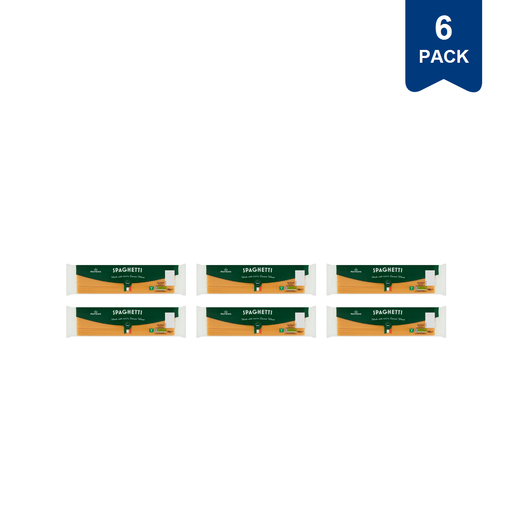 Image unavailable
For a shared sauce-led lunch, this multipack lets you plan across several packs rather than relying on one. It contains six 500 g packs; follow the cooking and allergen information on the packs you receive.
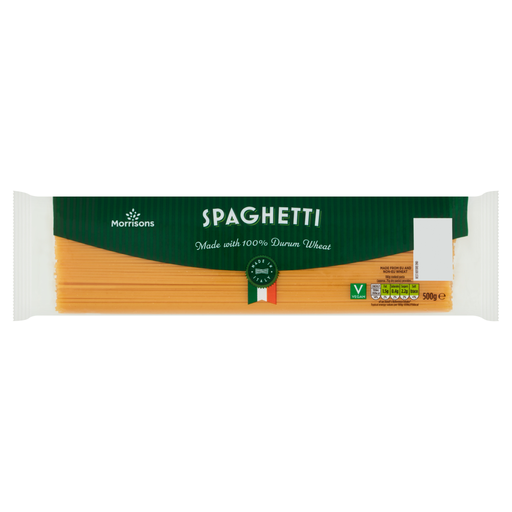 Image unavailable
This single pack is an option when you want dried spaghetti for a sauce-led meal without choosing a multipack. Check its cooking instructions and allergen statement before planning portions for guests.
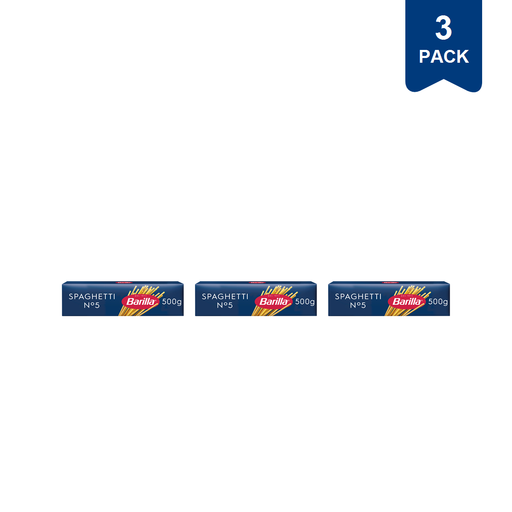 Image unavailable
For a larger sauce-led meal, this bundle provides three 500 g packs of spaghetti. Read the current packs for cooking directions and allergen statements, including any mustard or soya warning relevant to your guests.
 Image unavailable
For a hearty sauce, Napolina positions this standard durum-wheat spaghetti for dishes such as Bolognese. The pack size is 500 g; check the pack’s cooking instructions and wheat declaration before serving.
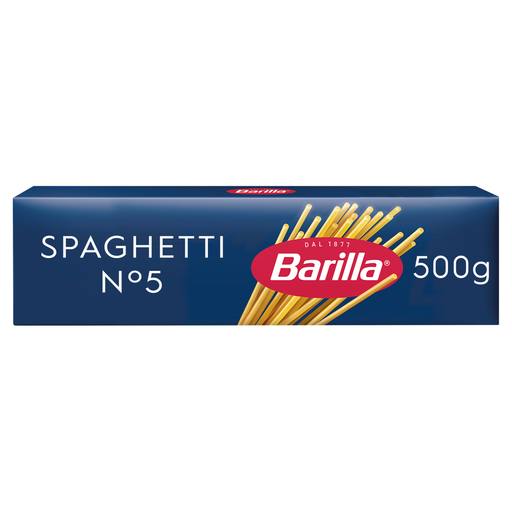 Image unavailable
This single pack is an option for a spaghetti main with sauce when a three-pack bundle is unnecessary. Use the pack’s cooking instructions and check its allergen information, particularly for guests concerned about wheat, mustard or soya.
Start with the serving guidance on your chosen pack. The named Tesco and Napolina examples use approximately 75 g dried pasta per person; adjust your plan for children, side dishes and the rest of the menu.
It is an option if you want spaghetti specifically described as rough-textured for holding sauce. Tesco and Marks & Spencer make that claim for their named products, but it is not an independent test showing that every bronze-die pasta holds sauce better than every standard one.
The named standard durum and wholewheat examples are wheat-based, so do not use those products for a gluten-free requirement. Choose a pack explicitly labelled gluten-free and check its current label before serving.
Use a webpage to compare products, then read the label on the pack received before cooking for someone with an allergy. Tesco and Marks & Spencer advise shoppers to check product labels because food information can change.
Check the ingredients list and highlighted allergen information on the exact pack. GOV.UK guidance says that allergens required to be declared in the ingredients list for pre-packed food must be emphasised; also read any product-specific allergy warning before serving a guest with a restriction.