
24/7 Customer Support

Free returns

Same-day & Next-day Delivery

Quality Guaranteed

Unlock Your Welcome Offers: FREE Delivery | Up to 80% OFF | Free 30-day JoyPlus trial
Download the APP
Buying individual tools can quickly become expensive, while a large mixed kit may contain sizes and functions you never use. The right spanner and pliers tool sets should match the fasteners, materials and working space you regularly encounter, whether you maintain a bicycle, repair a car, install plumbing or handle household DIY.
The main challenge is separating useful specifications from marketing language. A polished finish, a high piece count or a claimed “professional” design does not automatically mean a set will suit your work.
A 100-piece kit may look good value, but it can include duplicate screwdriver bits, uncommon sizes or tools unsuitable for high-force work. Before buying, list the jobs you actually do. A combination spanner set may be more useful for mechanical repairs, while water pump pliers and hose clamp pliers are more relevant to plumbing and vehicle maintenance.
Check whether the set covers the sizes you need in metric, imperial or both. This matters in the UK, where modern bicycles and vehicles commonly use metric fasteners, but older machinery and some imported equipment may use imperial sizes.
A tool’s stated torque figure is not permission to apply unlimited force. A breaker bar is designed to provide leverage for loosening stubborn fasteners, but it should not automatically be used for final tightening. Similarly, a torque wrench set is intended to apply a measured torque value, not to replace a general-purpose ratchet or breaker bar.
Always check the manufacturer’s limits, use the correct socket or jaw position and avoid adding improvised extensions to a handle.
Serrated jaws provide grip, but they can mark plated fittings, soft metal or finished surfaces. Adjustable water pump pliers are useful for pipes and robust fittings, whereas a rubber band wrench is more appropriate for smooth or delicate cylindrical objects.
For example, the ValueMax band wrench set uses rubber bands designed to grip without the same type of metal-to-metal contact as conventional pipe tools. However, its instructions still warn against sharp edges and extremely hot surfaces.
For regular automotive tools and DIY hand tools, heat-treated chrome vanadium steel is a commonly used construction material because it combines hardness with resistance to wear. Drop-forged construction can provide a strong form for spanners and pliers, while a polished or plated finish may make cleaning and corrosion prevention easier.
Material alone does not determine suitability. Look at the handle design, jaw geometry, adjustment mechanism and storage system. A comfortable non-slip handle is particularly useful when working in a cold garage or when repeated adjustments are required.
For a combination spanner set, check the actual size range rather than simply the number of pieces. The Silverline 14-piece set covers 1/4 inch to 1-1/4 inch and uses open and bi-hexagonal ends with a 15-degree offset. This can help access fasteners where a straight handle would foul against nearby components.
For plumbing tools, compare jaw opening and tool length. A longer handle can provide more leverage but may be awkward under a sink. A two-size set, such as 200 mm and 250 mm water pump pliers, gives a practical choice for smaller fittings and larger pipework.
A torque wrench set should clearly state its torque range, measurement units and accuracy. The WORKPRO bicycle torque set covers 2–26 N·m and includes hex and Torx bits, making it more relevant to bicycle, motorcycle and light mechanical work than to wheel nuts or large suspension components.
A ratchet wrench is selected differently. Tooth count and working arc affect how much movement is needed in a confined space. The WORKPRO 1/4-inch swivel-head ratchet has a 72-tooth mechanism, a stated 5-degree working arc and a head that swivels up to 270 degrees. These features may help when access is restricted, although the compact 1/4-inch drive is not intended for high-torque fasteners.
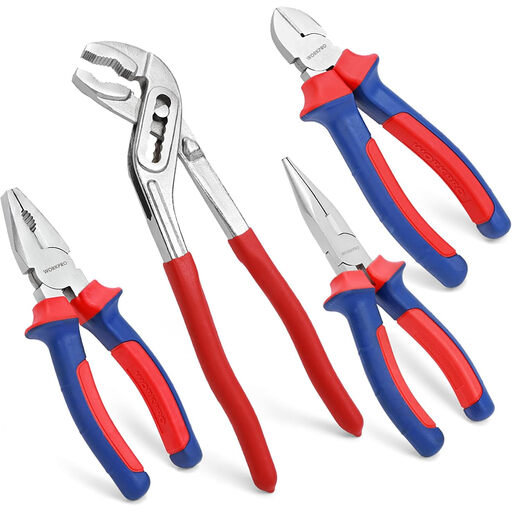
Why This Fits Their Persona: A practical starting point for UK households, renters and DIY users who need several basic gripping and cutting functions without buying four separate tools.
It provides clearly defined tools rather than relying on a high but unclear piece count: combination, long-nose, side-cutting and water pump pliers.
Heat-treated alloy steel construction; PP and TPR resin handles with a non-slip texture.
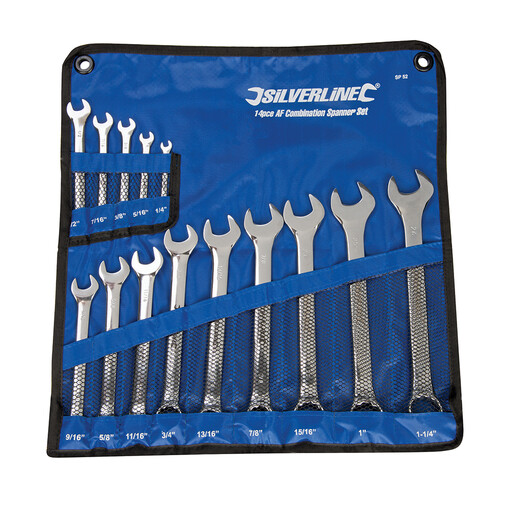
Why This Fits Their Persona: Suitable for workshop owners, mechanics and DIY users who prefer a conventional, organised spanner collection for repeated mechanical work.
The size coverage is stated clearly, and the storage roll keeps each spanner identifiable instead of leaving a mixed set loose in a toolbox.
14 chrome vanadium steel spanners; 15-degree offset ends and ballistic nylon storage roll.
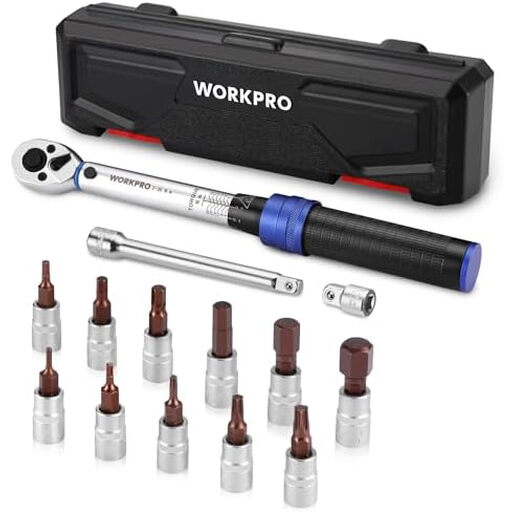
Why This Fits Their Persona: A focused option for cyclists and motorcycle owners who need controlled tightening for components rather than a general high-force wrench.
Its stated 2–26 N·m range makes the intended light-duty application easier to assess before purchase.
14-piece accessory selection; dual-direction 72-tooth mechanism and stated accuracy of ±3%.
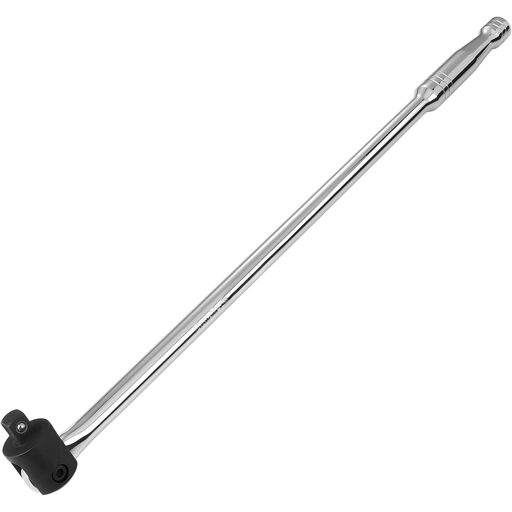
Why This Fits Their Persona: Appropriate for garage users and automotive maintenance tasks where seized or tightly fitted fasteners require additional leverage.
The 60 cm handle, 1/2-inch drive and stated torque of up to approximately 780 N·m identify it as a leverage tool, not a small general-purpose ratchet.
240-degree swivelling head; spring-loaded ball system helps retain the socket during use.
Use the correct tool for the fastener and keep the jaws or spanner ends fully seated before applying force. Wear safety glasses when cutting, loosening corroded parts or working beneath a vehicle. Do not use pliers on live electrical circuits unless they are specifically rated and the task is carried out with appropriate protection.
Wipe tools after use, remove moisture and store them in a dry location. Keep adjustable mechanisms lightly lubricated where the instructions allow it. Torque wrench users should return the tool to its minimum setting after use and follow the manufacturer’s guidance for checking calibration.
We have compiled a complete, real-time list of products that fully satisfy these strict selection criteria and UK safety regulations.
They can be, provided the set includes tools suited to pipes and fittings. Water pump pliers are useful for gripping different shapes, while a rubber band wrench can help turn smooth fittings with reduced surface marking. For flexible hoses, use hose clamp pliers designed for that application and check their stated limitations.
A torque wrench set is useful when a bicycle component specifies a tightening value. Match the wrench’s range to the manufacturer’s instructions and use the supplied hex or Torx bit correctly. It is not a substitute for a larger automotive torque wrench.
Lifespan depends on frequency of use, applied force, storage and exposure to moisture or chemicals. Selecting suitable materials, avoiding overload and replacing tools that show cracks, deformation or damaged jaws can help maintain safe performance. A smaller, correctly matched set is often more practical than a larger kit used outside its intended purpose.