
24/7 Customer Support

Free returns

Same-day & Next-day Delivery

Quality Guaranteed

Unlock Your Welcome Offers: FREE Delivery | Up to 80% OFF | Free 30-day JoyPlus trial
Download the APP
Whether you're a professional mechanic, a dedicated DIY enthusiast or simply tackling odd jobs around the house, a reliable spanner set is a cornerstone of any toolbox. However, the market is flooded with options, and it's easy to fall for marketing hype that leaves you with a drawer full of tools that rust, break or simply can't handle the job. As a Joybuy Product Recommendation Officer, my role is to help you cut through the clutter and identify the key features that truly matter.
Before you invest, let's look at the common pitfalls that many UK buyers encounter.
To ensure you get a tool set that performs reliably for years, focus on these non-negotiable specifications.
The industry standard for quality hand tools is chrome vanadium steel (Cr-V). This alloy is heat-treated to provide high strength, toughness and resistance to abrasion and fatigue. It's what separates a tool that lasts a lifetime from one that fails on its first challenging job.
Not all spanners are created equal. Choosing the right type for your primary needs is crucial for efficiency and effectiveness.
Based on these practical criteria, we've identified several spanner sets that align with the needs of different UK users.
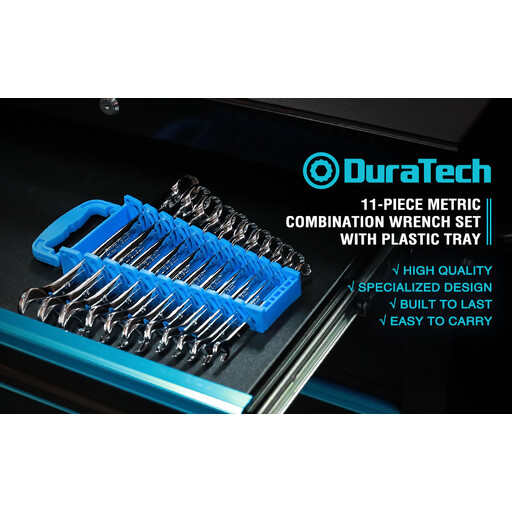
Why This Fits Their Persona: This set is ideal for someone tackling flat-pack furniture, bicycle maintenance or general home repairs. It provides the most common metric sizes without unnecessary filler, ensuring you have the right tool for 90% of household jobs.
It avoids the "more is better" trap by focusing on 11 essential sizes. The construction is chrome vanadium steel with a polished finish, directly countering the pitfall of poor materials and rust-prone tools.
Includes a compact organising rack for easy storage and transport. The 15-degree offset box end provides good knuckle clearance.
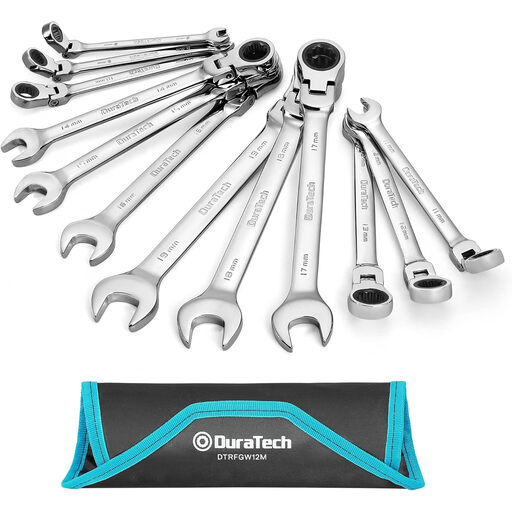
Why This Fits Their Persona: Perfect for anyone working on cars, motorcycles or machinery. The combination of a ratcheting mechanism and a pivoting head is specifically designed to save time and frustration when dealing with hard-to-reach fasteners in engine bays or undercarriages.
This set directly solves the "poor ratchet" problem. Its 72-tooth gear provides a minimal 5-degree swing arc, essential for tight spaces. The 180-degree flex head adds another layer of accessibility that standard spanners lack.
Made from drop-forged Cr-V steel for strength. Comes in a roll-up pouch for organised, portable storage in a vehicle or tool chest.
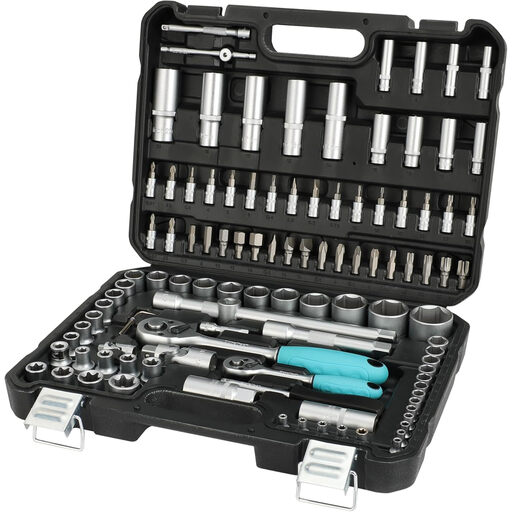
Why This Fits Their Persona: For the user who wants a comprehensive solution for car, motorcycle and home maintenance. This is a complete mechanics tool set that provides the flexibility to tackle almost any job without needing to buy extra components.
This is an example of a large set done right. It avoids the quality pitfall by using Cr-V steel for sockets and high-hardness S2 steel for the bits. It provides genuine utility rather than just a high piece count.
Includes both 1/4" and 1/2" drive ratchets and sockets, extension bars and universal joints for maximum versatility. Comes in a sturdy blow-moulded case for organisation.
We have compiled a complete, real-time list of products that fully satisfy these strict selection criteria and UK safety regulations.
In the United Kingdom, "spanner" is the standard term for this type of tool. "Wrench" is the more common term in American English. While the terms are often used interchangeably when searching online for a wrench set, some specific tools like a "pipe wrench" or "torque wrench" are always referred to as wrenches in the UK.
For working in confined areas, yes. A 72-tooth ratchet mechanism requires only a 5-degree arc of movement to engage the next tooth. A lower-count ratchet, such as one with 36 teeth, needs a 10-degree arc. This might not sound like much, but in a tight space, that extra 5 degrees of required movement can be the difference between finishing a job quickly and not being able to turn the fastener at all.
The first step is to purchase a set made from quality materials. Chrome vanadium spanners with a full chrome plating offer excellent corrosion resistance. To maintain them, always wipe your tools clean of oil, dirt and moisture after use. Storing them in their supplied case or a dry toolbox will prevent ambient dampness, a common issue in UK sheds and garages, from causing rust.