
24/7 Customer Support

Free returns

Same-day & Next-day Delivery

Quality Guaranteed

Unlock Your Welcome Offers: FREE Delivery | Up to 80% OFF | Free 30-day JoyPlus trial
Download the APP
Buying spanner and socket sets can seem straightforward until you need a particular size, a longer handle or access to a fastener hidden behind an engine component. A large box is not automatically a useful one. For UK DIY enthusiasts, home mechanics, tradespeople and workshop users, the right choice depends on the fastening system, working space, material and storage method.
A set advertised with more than 100 pieces may include duplicate drive adaptors, short bits or accessories you rarely use. Check the actual socket sizes, spanner sizes and drive types first. A smaller metric spanner set covering 8–19 mm may be more practical for common vehicle and household jobs than a larger kit with gaps in the sizes you need.
Also check whether the set is metric, imperial or mixed. Most modern UK cars use metric fasteners, but older machinery, imported vehicles and some plumbing equipment may require imperial sizes.
A standard ratchet can require considerable room to swing. In an engine bay, under a sink or inside a cabinet, the handle may hit surrounding parts before the fastener moves. A ratcheting spanner set with a fine-tooth mechanism can help, but the advertised tooth count is only useful when paired with a suitable swing arc.
For example, a 144-tooth ratcheting combination spanner requires a stated 2.5-degree swing arc, which is suited to narrow access. A 72-tooth socket ratchet requires a wider movement but can offer greater versatility through extensions and universal joints.
Chrome vanadium steel tools are widely used for hand-tool applications because they combine hardness and strength. However, a polished or black chrome finish does not make a tool immune to corrosion, damaged jaws or ratchet wear. Wipe away oil and moisture after use, avoid leaving tools in a damp vehicle boot and lubricate ratchet mechanisms periodically where the manufacturer permits it.
A storage case or roll-up pouch is more than a presentation feature. It reduces lost pieces and makes it easier to identify the correct size before force is applied.
For routine car, motorcycle and household work, look for commonly used metric sizes such as 8 mm, 10 mm, 12 mm, 13 mm, 14 mm, 15 mm, 17 mm and 19 mm. A 12-point box end can engage a fastener from more angles, while a 6-point socket generally places contact on the flatter sides of a hexagonal fastener.
Use the correct size. A loose fit can damage the corners of a nut or bolt, especially where corrosion has already weakened the surface.
A 1/4-inch drive is suited to smaller fasteners and lighter work. 3/8-inch drive offers a useful middle ground for general mechanical jobs, while 1/2-inch drive is intended for larger sockets and higher-load applications. A socket wrench set containing more than one drive size can reduce the need for separate kits.
Extensions, sliding bars and universal joints help reach recessed fasteners, but they can change the feel of the tool. Keep the tool aligned with the fastener and avoid using extensions as uncontrolled leverage.
Look for clearly marked sizes, a secure socket-release mechanism and handles that provide a firm grip. Drop-forged, heat-treated chrome vanadium steel tools are common across combination spanner and socket sets. Some products also state compliance with standards such as DIN 838 or that the spanners exceed stated ANSI requirements. Treat these statements as specifications to verify against the product listing, rather than assuming that every item in a large kit has identical performance.
Specialist jobs may need an oil filter spanner, brake line spanner set, Torx socket set or torque wrench set. These tools solve different problems and should not be substituted with an adjustable spanner when accurate fit or controlled tightening is required.
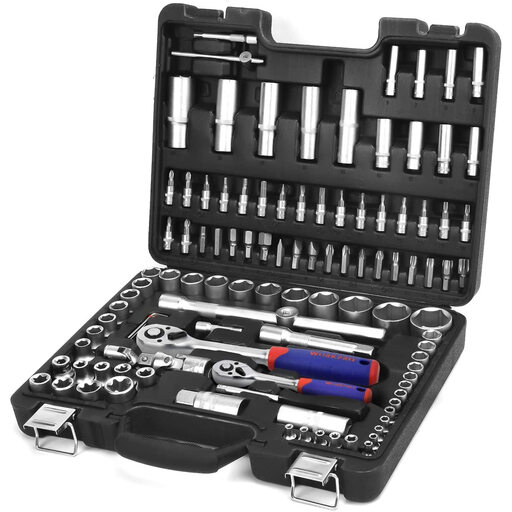
Why This Fits Their Persona: A practical starting mechanic tool set for home garages, occasional car repairs and general DIY hand tools, with two drive sizes and a carrying case.
The listing identifies the 1/4-inch and 1/2-inch drives, 72-tooth ratchets and included accessories instead of relying only on the piece count.
Chrome vanadium construction; quick-release ratchets, extensions, universal joints and a marked plastic case.

Why This Fits Their Persona: Suitable for users building a more complete workshop collection for cars, motorcycles, bicycles and household maintenance.
The contents are itemised across 1/4-inch, 3/8-inch and 1/2-inch drives, including Torx sockets, spark-plug sockets and extension bars.
Three ratchet sizes; marked blow-moulded storage case; S2 bits and chrome vanadium sockets.
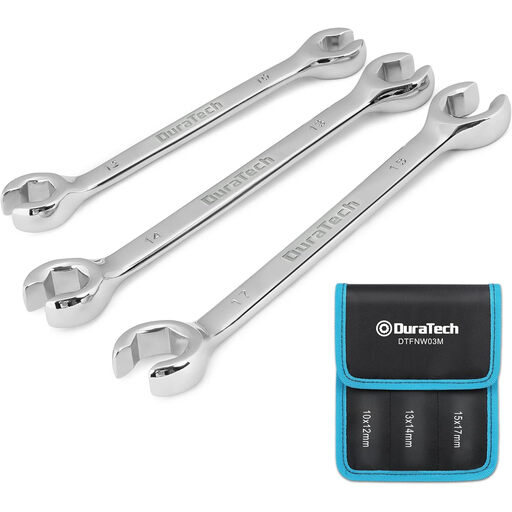
Why This Fits Their Persona: A focused option for mechanics and automotive repair technicians working on brake lines, pipe connections and restricted fittings.
The flare-nut opening is designed for tubing-line fasteners, where a standard open-ended spanner may provide less surrounding contact.
Includes 10x12 mm, 13x14 mm and 15x17 mm sizes; 15-degree offset ends and a labelled storage pouch.
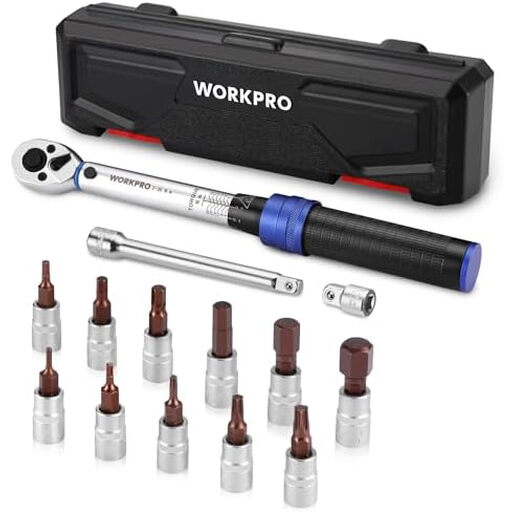
Why This Fits Their Persona: Designed around lower-torque bicycle and motorcycle maintenance, where controlled tightening matters more than a large socket range.
Its stated 2–26 N.m range makes it more appropriate for smaller components than using a large general-purpose ratchet without torque control.
72-tooth bidirectional mechanism; supplied hex and Torx bits, extension bar and socket adaptor.
We have compiled a complete, real-time list of products that fully satisfy these strict selection criteria and UK safety regulations.
They are suitable for many modern vehicles, but compatibility depends on the vehicle and fastener. Check the service information and inspect the existing fastener before buying. A mixed set may be useful for older or imported vehicles, while a metric set can reduce unnecessary pieces for routine work.
Neither replaces the other. A socket wrench set offers extensions, different drive sizes and access around recessed fasteners. A combination spanner set is quicker to position in open areas and can be easier to carry. Many home mechanics keep both types available.
Choose tools with storage case, rack or roll-up pouch, depending on your workspace. A case protects small sockets and bits during transport, while a pouch is convenient for spanners in a vehicle or compact workshop. Return each tool to its marked position after use and store everything dry to reduce corrosion.