Parents and carers packing holiday lunches
If juice is on the menu, consider the serving alongside any other juice or smoothie that day. The NHS advises having fruit juice with a meal.


A sparkling apple drink can be an occasional choice with a school-holiday lunch, rather than the regular drink. If choosing 100% juice, check whether a measured serving fits the NHS advice to limit fruit juice and smoothies to a combined 150ml a day and have them with meals. A drink with less juice may have different sugars and ingredients, so compare its label rather than assuming it serves the same purpose.
The useful distinction for a holiday lunch is between choosing a measured juice serving and choosing a different kind of sparkling apple drink.
If juice is on the menu, consider the serving alongside any other juice or smoothie that day. The NHS advises having fruit juice with a meal.
Check whether the drink is 100% apple juice, juice diluted with sparkling water, or an apple-flavoured soft drink. The name alone does not tell you the juice percentage.
Read the ingredient list if added sugar, sweeteners or flavourings matter to your choice. Drinks with similar apple names can use different ingredients.
Start with the amount the child would actually drink, then compare juice content, ingredients and pack format.
| Priority | What to check | Your needs |
|---|---|---|
| Juice portion | Check the volume you will serve and any other juice or smoothie that day. The NHS advises a combined maximum of 150ml a day and says to have it with meals. | I want to offer juice with lunch without overlooking what has already been served that day. |
| Juice content | Read the declared juice percentage and ingredient list. Sainsbury’s labels identify Appletiser as 100% apple juice and Cawston Press Cloudy Apple as 49% pressed apple juice with sparkling water; these are different drink types. | If I am buying apple juice rather than an apple-flavoured drink, I need the label to make that distinction clear. |
| Sugars and sweeteners | Compare sugars per 100ml and the amount to be consumed; check separately for added sugar or named sweeteners. On the cited Sainsbury’s labels, Appletiser has 10.5g sugars per 100ml, while Shloer White Grape & Apple has 3.3g and contains sucralose. | A lower listed sugar figure might matter to me, but I also want to know whether the drink contains a sweetener or less juice. |
| Serving format | Check can or bottle volume before serving. A 250ml can or 750ml sharing bottle does not provide a pre-measured 150ml pour; follow any pressure warning on the pack. | For a packed lunch, a defined serving is convenient. At home, I can measure a pour from a larger pack. |
Juice can contain free sugars without added sugar. The NHS includes unsweetened fruit juice in its advice to limit fruit juice and smoothies to a combined 150ml a day.
Check both sugars per 100ml and the amount served, and account for other juice or smoothies that day.
The cited retailer labels include 100% apple juice, drinks containing less apple juice, and apple-flavoured soft drinks with added ingredients.
Use the juice percentage and ingredient list to identify the drink type before comparing it with another pack.
A full 250ml can is more than the NHS’s 150ml daily maximum for fruit juice and smoothies; a sharing bottle also needs a deliberate pour if it is being served as juice.
Decide the serving amount before opening the pack. Follow the label when storing any remainder, and open pressurised bottles away from the face.
These examples describe the cited products, not everything made by each brand. Their labels show why juice percentage, sugars and serving size need separate checks.
The 150ml sparkling apple juice listed by Sainsbury’s is labelled as 100% carbonated apple juice from concentrate.
Sainsbury’s lists Cloudy Apple as a sparkling-water drink containing 49% pressed apple juice.
The cited White Grape & Apple sparkling fruit drink is a 750ml sharing bottle, rather than a single lunch portion.
Sainsbury’s describes Sparkling English Apple as an apple-flavoured carbonated drink, rather than a juice-led option.
Tesco describes the cited Pink Lady sparkling apple product as made with 100% fruit juice and no added sugar.
These options include 100% sparkling apple juice, a mixed apple-and-raspberry sparkling drink and a larger sparkling apple bottle. Check the serving and ingredients for each rather than treating them as interchangeable lunch drinks.
 No image available
This is a 100% sparkling apple-juice option, but a full 250ml can exceeds the NHS’s 150ml daily maximum for fruit juice and smoothies.
The Joybuy listing describes carbonated apple juice from concentrate and lists 10.5g sugars per 100ml and 26g per 250ml can. Pour a measured amount if serving it with a child’s lunch.
 No image available
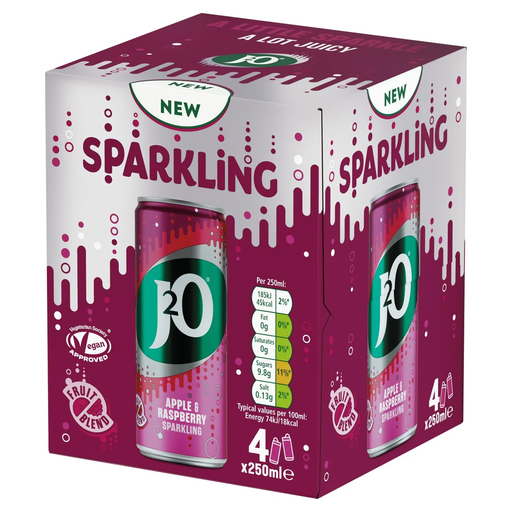
Choose this as a mixed sparkling fruit drink, not as 100% apple juice: the listed ingredients include apple and raspberry juice.
The Joybuy product information lists 20% apple juice, sugar and sucralose. Each can is 250ml; the listing also warns that the container is pressurised and should be kept out of children’s reach.
 No image available
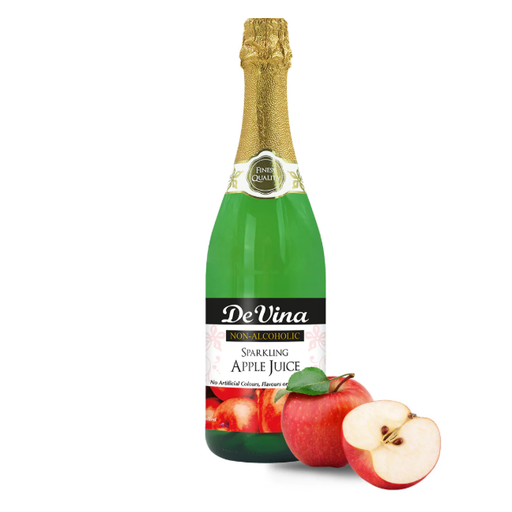
This glass bottle is a sharing format, so measure a serving rather than treating the bottle as a lunch portion.
The listed ingredients include apple juice from concentrate and carbon dioxide. Check the current nutrition label for sugars before comparing it with another drink. The product listing states that it is not suitable for children under 4.
Fruit juice is better treated as an occasional lunch choice rather than the regular drink. British Nutrition Foundation guidance for children aged 5–11 favours water or milk for most drinks; the NHS advises limiting fruit juice and smoothies to a combined 150ml a day and having them with meals.
No. The percentage describes juice content. Sainsbury’s lists 10.5g sugars per 100ml for its cited 100% Appletiser product, or about 15.8g in a 150ml can; the NHS counts sugars in unsweetened fruit juice as free sugars.
A full 250ml can of fruit juice exceeds the NHS’s 150ml daily maximum for fruit juice and smoothies. If serving juice with lunch, measure the amount and consider any juice or smoothie already consumed that day. For a drink containing only some juice, also check its full ingredient and nutrition label rather than treating it as a 100% juice serving.
Check the ingredient list and declared juice percentage. The cited Sainsbury’s labels describe Appletiser as 100% carbonated apple juice, Cawston Press Cloudy Apple as containing 49% pressed apple juice, and Fentimans Sparkling English Apple as an apple-flavoured drink containing 5% apple juice.
No. The Department for Education’s cited 150ml maximum juice portion applies to primary school meals in England for pupils aged 4 to 10, not automatically to a family’s holiday lunch at home. Separately, NHS advice limits fruit juice and smoothies to a combined 150ml a day.