Families considering an occasional fizzy snack drink
If a sparkling apple drink accompanies an after-school snack, the serving size matters. NHS guidance counts the sugars in unsweetened fruit juice as free sugars, even when the drink is 100% juice.


For an after-school snack, choose a smaller serving if you want 100% sparkling apple juice, or compare apple-containing drinks if juice content matters less than the ingredients or labelled sugars. NHS guidance says sugars in unsweetened fruit juice count as free sugars, so check the amount served rather than treating a fizzy juice as an unrestricted thirst drink.
If a sparkling apple drink accompanies an after-school snack, the serving size matters. NHS guidance counts the sugars in unsweetened fruit juice as free sugars, even when the drink is 100% juice.
Apple-labelled sparkling drinks can have different juice percentages and ingredients. Compare the label if added sugar, sweeteners or the amount of apple juice affects your choice.
Appletiser’s 150ml can is listed by ASDA Groceries as 100% carbonated apple juice from concentrate. Check the can size when buying: a 250ml can is a different serving.
Start with whether you want 100% juice or an apple-containing drink, then compare the ingredients and the amount you plan to serve.
| Priority | What to check | Your needs |
|---|---|---|
| Serving size | Check the can or bottle volume and decide how much to pour. Tesco Groceries lists 26g sugars for a 250ml Appletiser serving. | I want a manageable serving alongside a snack, rather than assuming the whole can or bottle is one portion. |
| Juice content | Read the ingredients and juice percentage. ASDA Groceries lists Appletiser’s 150ml can as 100% carbonated apple juice; Waitrose & Partners lists Cawston Press Sparkling Cloudy Apple as 49% pressed apple juice. | I want to know whether I am buying apple juice or a sparkling drink that contains some apple juice. |
| Sugars | Compare the sugars figure on the same per-100ml basis, then check the amount in the serving. NHS guidance says sugars in unsweetened fruit juice count as free sugars. | The amount poured matters to me as well as the figure on the nutrition panel. |
| Other ingredients | Check the ingredient list for added sugar, sweeteners and other fruit juices. Marks & Spencer lists sugar in its Sparkling British Apple Spring Water; Sainsbury’s lists sweeteners in Shloer White Grape & Apple. | I may prefer a particular ingredient profile, even when another drink has a different labelled sugars figure. |
NHS guidance says sugars in unsweetened fruit juice count as free sugars. Tesco Groceries lists 10.5g sugars per 100ml for Appletiser’s lightly sparkling juice.
Check the serving size and serve the amount you intend, rather than relying on the words “100% juice”.
A drink made without added sugar can still show sugars on its nutrition panel.
Read the sugars figure per 100ml and check it against the can size, as well as reading the ingredients.
ASDA Groceries lists Appletiser’s 150ml can as 100% apple juice, while Waitrose & Partners lists Cawston Press Sparkling Cloudy Apple as 49% pressed apple juice. Marks & Spencer lists 16% apple juice in its sparkling apple spring water.
Use the stated juice percentage to distinguish these formulations before comparing other label details.
A 750ml bottle does not define how much will be served with one snack.
Decide on the amount to pour and follow the bottle’s directions after opening.
These product lines illustrate different formulations; a brand name alone does not tell you the juice percentage or serving size.
ASDA Groceries lists its 150ml sparkling can as 100% carbonated apple juice from concentrate. Tesco Groceries also lists a 6 x 250ml format.
Waitrose & Partners lists Sparkling Cloudy Apple as a drink made with 49% not-from-concentrate pressed apple juice.
Sainsbury’s lists White Grape & Apple as a sparkling fruit drink in a 750ml bottle.
Marks & Spencer lists Sparkling British Apple Spring Water as a carbonated spring-water drink containing 16% apple juice from concentrate.
Copella Fruit Juices describes its Cloudy Apple product as pressed apple juice with vitamin C. It is a still-juice reference when deciding whether sparkle matters.
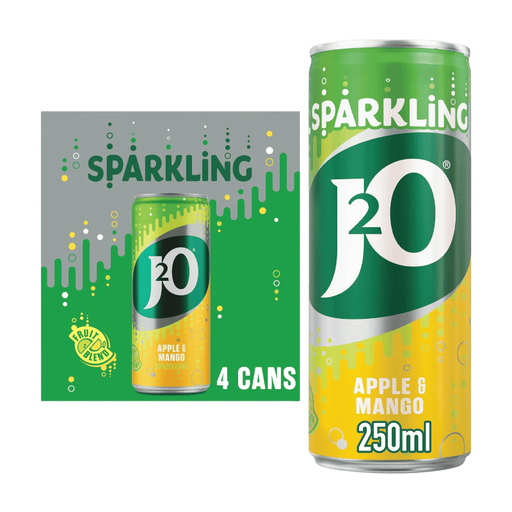
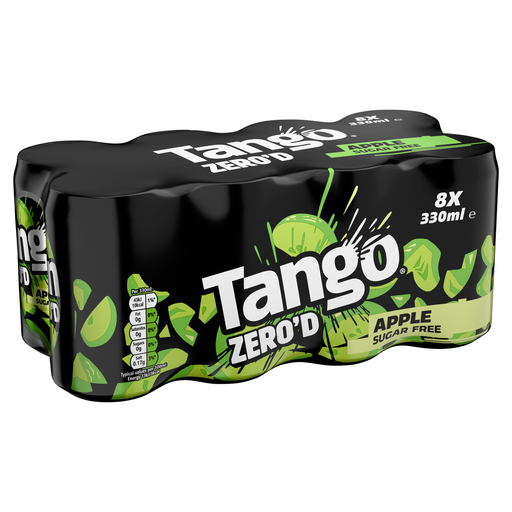
These options cover 100% sparkling apple juice, an apple-and-mango sparkling drink and an apple-flavoured fizzy drink. They are different formulations, so compare their labels rather than treating them as interchangeable juices.
 No image available
For a snack where 100% sparkling apple juice matters more than choosing a smaller ready-to-serve can. Joybuy describes this multipack as carbonated apple juice from concentrate; Tesco Groceries lists 26g sugars per 250ml serving for the same format. Decide how much to pour if a full can is more than intended.
 No image available
Consider this if an apple-and-mango sparkling drink suits the snack better than pure apple juice. The pack contains four 250ml cans; check the current ingredients and nutrition panel if juice content or sweeteners affect your choice.
 No image available
An apple-flavoured fizzy-drink option rather than a substitute for 100% apple juice. The pack contains eight 330ml cans; check the ingredient list for the sweeteners used and decide whether a full can suits the snack.
It is better considered as a portioned drink with a snack than as unrestricted hydration. NHS guidance says sugars in unsweetened fruit juice count as free sugars; check how much juice is served, not just whether sugar has been added.
No. ASDA Groceries lists a 150ml can, while Tesco Groceries lists 250ml cans in its multipack. Choose by the serving you intend to offer rather than assuming the formats are equivalent.
No. A drink can contain sugars from its fruit ingredients without having added sugar. Read both the ingredients and the sugars figure on the current nutrition panel, then consider the serving size.
Check the ingredients and stated juice percentage. ASDA Groceries lists Appletiser’s 150ml can as 100% carbonated apple juice from concentrate; Waitrose & Partners lists Cawston Press Sparkling Cloudy Apple as 49% pressed apple juice, and Marks & Spencer lists 16% apple juice in its sparkling apple spring water.
Check the drink volume, juice percentage, ingredients and sugars information, then follow the storage and opening directions on the pack. These details help distinguish pure juice from an apple-containing or apple-flavoured drink and help you plan the amount served.