Choose 100% sparkling apple juice when apple-juice content is the priority; choose an apple-and-sparkling-water blend if its ingredients and flavour suit the occasion, checking the juice percentage and sugars on the label. For children aged five and over, the NHS advises no more than a combined 150ml of fruit juice and smoothies a day, served with meals—a 250ml can is not automatically one child's serving.
Who is this for?
The useful distinction for a school-holiday snack is whether you want a juice-led drink, a blended flavour or simply a fizzy apple-flavoured option.
Parents planning an occasional shared drink
A picnic or family lunch may call for something fizzy, but a can's size need not set a child's portion. The NHS advises serving fruit juice with meals and limiting juice and smoothies to a combined 150ml daily for children aged five and over.
Shoppers comparing juice with sparkling blends
A 100% apple-juice label answers a different question from a ‘no added sugar’ label. Check both the apple-juice percentage and the sugars figure before choosing between a juice-led drink and an apple-and-water blend.
Families buying for a mixed-age table
Individual cans and larger bottles can both work for sharing when drinks are poured into glasses. Check the intended servings and the opened-bottle storage instructions for the particular product.
What should you check?
Start with the ingredients, then compare the sugars figure on a like-for-like basis and decide how much to pour. A lower sugars figure does not, by itself, tell you how much apple juice a drink contains.
| Priority |
What to check |
Your needs |
| Apple-juice content |
Read the ingredient list and juice percentage. Tesco lists Appletiser as 100% carbonated apple juice from concentrate; Marks & Spencer lists 59% apple juice in its Juicy Apple and Elderflower Sparkling Water; Tesco lists 8% in its Finest Cox's Apple & Elderflower Pressé. |
I want to know whether I'm buying sparkling apple juice, an apple-and-water blend or a drink with a lighter apple flavour. |
| Sugars and serving |
Check sugars per 100ml or per 100g, noting which unit the label uses, then check the amount you plan to pour. Tesco lists 26g sugars per 250ml Appletiser serving; Marks & Spencer lists 6.6g per 100g for its no-added-sugar apple-and-elderflower blend. |
A ‘no added sugar’ claim alone doesn't answer my question: I also want to see the sugars figure for the drink and serving I'm considering. |
| When it is served |
For children aged five and over, the NHS advises a combined maximum of 150ml of fruit juice and smoothies a day, served with meals. Its guidance distinguishes that amount from the size of a packaged drink. |
If juice is part of lunch, I can pour a portion rather than leave a full can out to sip throughout the afternoon. |
| Pack format |
Check the can or bottle volume, how many people will share it and the label's instructions after opening. A 250ml can and a 750ml bottle call for different pouring and storage plans. |
For a group snack, I'd rather choose the amount to serve in glasses than assume each unopened container is one person's portion. |
Common buying mistakes
-
Assuming 100% juice contains no free sugars
UK government oral-health guidance includes sugars naturally present in fruit juice within free sugars. ‘100% juice’ describes the drink's juice content, not an absence of sugars.
If serving juice to a child aged five or over, follow the NHS advice to count it alongside other juice and smoothies within the combined 150ml daily amount and offer it with a meal.
-
Reading ‘no added sugar’ as ‘sugar-free’
Marks & Spencer's Juicy Apple and Elderflower Sparkling Water has no added sugar but still lists sugars. Tesco's apple-and-elderflower pressé has a different recipe, including sugar and sweeteners.
Compare the full ingredient list, juice percentage and sugars figure in the same units. Decide whether juice content or the particular blended flavour matters more for this purchase.
-
Letting the container set a child's serving
Tesco lists 26g sugars in a 250ml Appletiser can. That can is also larger than the NHS's combined 150ml daily guidance for fruit juice and smoothies for children aged five and over.
Pour the intended amount into a glass at a meal. For a bottle shared over more than one occasion, follow its own refrigeration and use-after-opening instructions.
-
Offering juice to sip between snacks
The NHS advises giving fruit juice at mealtimes rather than between meals because the sugars released by juicing can affect teeth.
Keep water available during holiday activities and decide separately whether a sparkling apple drink belongs with a planned meal.
Relevant brand references
These named products illustrate different ingredient choices; a brand's inclusion here does not mean every drink it makes is sparkling or listed on Joybuy.
Appletiser
A direct sparkling-apple-juice comparison: Tesco lists its 6 × 250ml product as 100% carbonated apple juice from concentrate.
- The ingredient description makes its apple-juice content clear.
- Tesco lists 26g sugars per 250ml serving; a full can exceeds the NHS's combined 150ml daily juice-and-smoothie guidance for children aged five and over.
M&S
Its named sparkling apple drinks show why similar front-of-pack descriptions need an ingredient check.
- Marks & Spencer lists 59% apple juice and no added sugar for Juicy Apple and Elderflower Sparkling Water.
- Its Sparkling British Apple Spring Water lists 16% apple juice and sugar among its ingredients. Neither named drink is plain 100% apple juice.
Tesco Finest
Cox's Apple & Elderflower Pressé is a 750ml bottle for a shared occasion rather than a plain sparkling apple juice.
- Tesco lists 4.5g sugars per 100ml and identifies the apple-juice proportion as 8%.
- The ingredient list includes sugar and sweeteners; its sugars figure should not be treated as a measure of apple-juice content.
Copella
Copella Cloudy Apple provides a still-juice reference if fizz is optional.
- Copella identifies Cloudy Apple as pressed apple juice and lists 10g sugars per 100ml.
- Cloudy Apple is a still-juice comparison, not a sparkling option.
Tropicana
Orchard Apple is another still-juice comparison for a family deciding whether the drink needs fizz.
- Tropicana describes Orchard Apple as 100% pressed apple juice, not from concentrate.
- That description does not make Orchard Apple a sparkling drink.
Sparkling apple drinks on Joybuy
These options range from 100% sparkling apple juice to mixed-fruit and apple-flavoured fizzy drinks. Check the juice content before treating them as interchangeable choices for a school-holiday meal.
 Image unavailable
Appletiser 100% Apple Juice Lightly Sparkling, 6 × 250ml
For a juice-led fizzy drink to pour at a shared meal. The ingredients state 100% carbonated apple juice from concentrate; Tesco lists 26g sugars per 250ml serving. A full can is larger than the NHS's combined 150ml daily juice-and-smoothie guidance for children aged five and over.
View on Joybuy
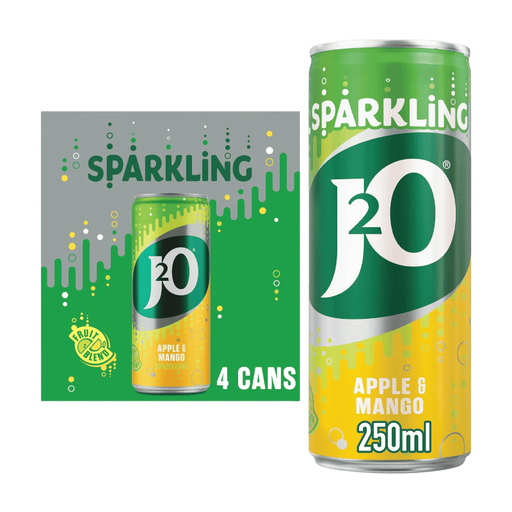 Image unavailable
J2O Sparkling Apple & Mango, 4 × 250ml
For an apple-and-mango option rather than plain sparkling apple juice. The product information lists 20% apple juice, 4% mango juice, sugar and sucralose, with 4.0g sugars per 100ml. Check the amount you intend to serve from each 250ml can.
View on Joybuy
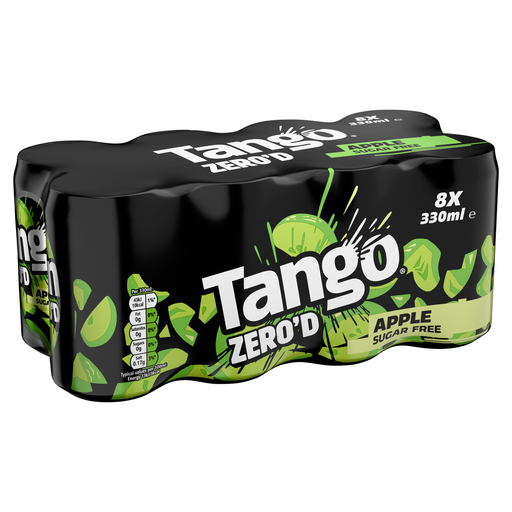 Image unavailable
Tango Sugar Free Apple, 8 × 330ml
For a fizzy apple-flavoured drink rather than a juice-led choice. Its product information lists 4% apple juice, sweeteners and 0g sugars per 100ml. Each can holds 330ml; choose the amount to pour independently of the can size.
View on Joybuy
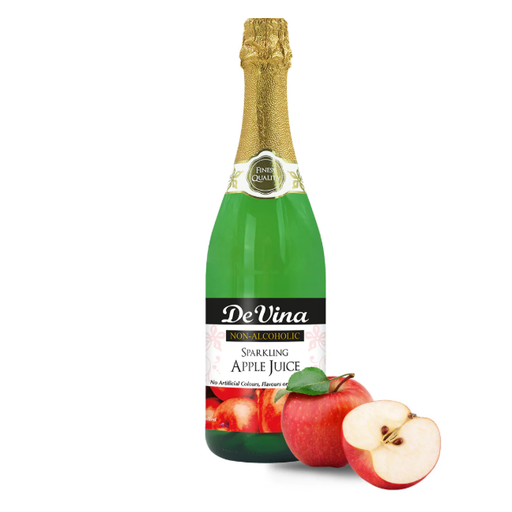 Image unavailable
De Vina Sparkling Apple, 750ml
A 750ml glass bottle that can be poured for a shared occasion. Its ingredients name apple juice from concentrate and carbon dioxide; check the bottle label for the juice percentage and sugars when deciding on a serving. The product description says it is unsuitable for children under four and instructs refrigeration after opening and use within three days.
View on Joybuy
Frequently asked questions
Can sparkling apple juice be served with a school-holiday snack?
It can be an occasional drink with a meal, rather than something to sip between snacks. For children aged five and over, the NHS advises limiting fruit juice and smoothies to a combined 150ml a day and serving juice at mealtimes.
Is 100% sparkling apple juice automatically the right choice for children?
No. It answers the question of apple-juice content, not portion size or sugars: Tesco lists 26g sugars in a 250ml Appletiser serving. For a child aged five or over, pouring a smaller amount with a meal better fits the NHS's combined 150ml daily guidance for juice and smoothies than treating the full can as one serving.
Does ‘no added sugar’ mean an apple sparkling drink has no sugars?
No. Marks & Spencer lists its Juicy Apple and Elderflower Sparkling Water as having no added sugar while also listing 6.6g sugars per 100g. Check the sugars figure as well as the ingredient list and apple-juice percentage.
What should I do with an opened bottle?
Follow the storage instructions on that bottle rather than applying one period to every sparkling apple drink. Tesco's product information for Finest Cox's Apple & Elderflower Pressé instructs refrigeration after opening and use within three days.


