What matters when choosing?
Start with the kind of drink you want, then compare the serving you would actually pour or open—not just the figures printed per 100ml.
100% sparkling apple juice
Choose it when: You want a juice portion with fizz and can keep that day’s fruit-juice serving to 150ml with a meal, as the NHS advises.
Bear in mind: Tesco lists 26g sugars in a 250ml serving of Appletiser, so a whole 250ml can is larger than the NHS’s advised juice portion.
Juice blended with sparkling water
Choose it when: You want apple juice in a fizzy drink without requiring it to be 100% juice; Sainsbury’s lists Cawston Press Cloudy Apple at 49% apple juice.
Bear in mind: A blended drink is not the same product as a full-strength juice, even when its listed sugars per 100ml are lower.
Apple-flavoured sparkling water
Choose it when: You want a sparkling drink with some apple juice rather than a juice-led drink; M&S lists its Sparkling British Apple Spring Water at 16% apple juice.
Bear in mind: The M&S ingredient list also includes sugar, so a sparkling-water base does not establish that a drink is unsweetened.
| Priority | What to check | Your needs |
|---|
| Juice portion |
For fruit juice, check how much is in one can or glass. The NHS advises a maximum of 150ml of fruit juice and smoothies a day, with a meal. |
I want juice with breakfast, but a 250ml can would be more than the NHS-advised daily juice serving. |
| Juice content |
Read the product name and ingredients. Tesco lists Appletiser as 100% apple juice; Sainsbury’s lists Cawston Press Cloudy Apple at 49%; M&S lists its sparkling apple spring water at 16%. |
Am I choosing apple juice with fizz, a juice-and-water drink, or an apple-flavoured sparkling drink? |
| Sugars |
Compare figures using the same unit, then check the amount in the serving. Tesco lists Appletiser at 10.5g sugars per 100ml and 26g per 250ml; Sainsbury’s lists Cawston Press Cloudy Apple at 4.3g per 100ml. |
I would rather compare the nutrition panels than assume that “100% juice” or “sparkling water” tells me the sugar content. |
| Ingredients |
Check the current pack for added sugar, sweeteners and any ingredients relevant to dietary or allergen requirements. M&S lists sugar in its sparkling apple spring water. |
If particular ingredients matter to me, I need the current label for the exact drink I am buying. |
Brands and retailers to compare
These examples illustrate differences in drink type and label information; a retailer listing is not a recommendation of every product it sells.
Appletiser
A 100% sparkling apple-juice example listed by Tesco in a 150ml format.
- Tesco lists the 150ml product’s ingredients as carbonated apple juice from concentrate (100%).
- Tesco lists 26g sugars per 250ml serving in its multipack listing; the larger serving exceeds the NHS’s advised daily fruit-juice portion.
Cawston Press
Its Cloudy Apple drink is an example of pressed apple juice blended with sparkling water, rather than 100% juice.
- Sainsbury’s lists 49% pressed apple juice and 4.3g sugars per 100ml for Cloudy Apple.
- The remaining drink is not apple juice, which matters if a full-juice product is your preference.
M&S
Sparkling British Apple Spring Water illustrates an apple-flavoured sparkling-water option rather than a full-juice drink.
- M&S lists carbonated spring water and 16% apple juice from concentrate among its ingredients.
- Its ingredient list also includes sugar; the listed 7.6g sugars per 100g should not be compared directly with drinks labelled per 100ml.
Tesco
A retailer reference for comparing Appletiser pack sizes and nutrition panels.
- Its listings include 150ml Appletiser and a 6 × 250ml multipack.
- Check the current pack when choosing, particularly if serving size or ingredients matter to you.
Sainsbury’s
A retailer reference for the ingredients and nutrition of Cawston Press Cloudy Apple and Appletiser.
- Its Cawston Press listing gives both the apple-juice percentage and sugars figure.
- Confirm the current label and availability for the particular format you want.
Sparkling apple drinks on Joybuy
These options span 100% sparkling apple juice, mixed-fruit drinks containing apple juice, and apple-flavoured fizzy drinks. Check each product’s juice content and can or bottle size rather than treating them as interchangeable breakfast juice portions.
 No image available
Appletiser 100% Apple Juice Lightly Sparkling, 6 × 250ml
For a breakfast drink that is 100% sparkling apple juice. Each can is 250ml; the NHS advises limiting fruit juice and smoothies to 150ml a day and drinking them with a meal. Tesco lists 26g sugars per 250ml serving, so consider how much you intend to pour.
View on Joybuy
 No image available
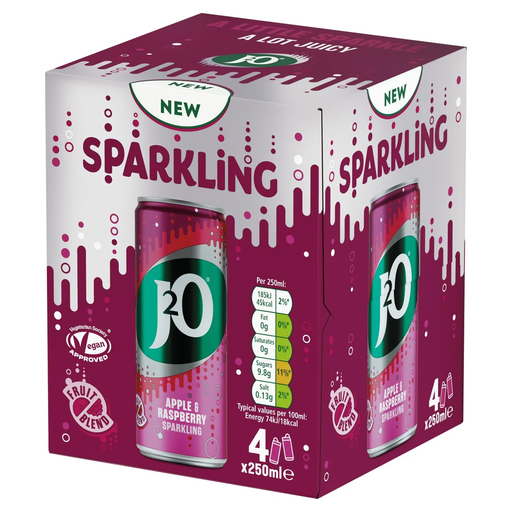
J2O Sparkling Apple & Raspberry, 4 × 250ml
A ready-to-drink mixed-fruit option rather than 100% apple juice. Its product information states 20% apple juice, 3.9g sugars per 100ml, and both sugar and sucralose in the ingredients. Check the current label if those ingredients affect your choice.
View on Joybuy
 No image available
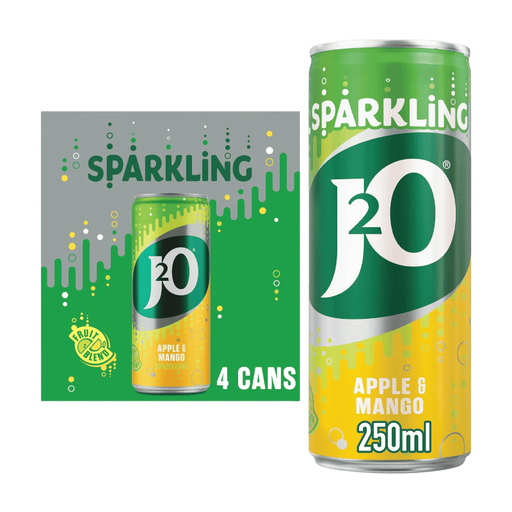
J2O Sparkling Apple & Mango, 4 × 250ml
For a sparkling mixed-fruit drink with apple and mango rather than a full-juice option. Its product information states 20% apple juice, 4% mango juice and 4.0g sugars per 100ml; the ingredients include sugar and sucralose.
View on Joybuy
 No image available
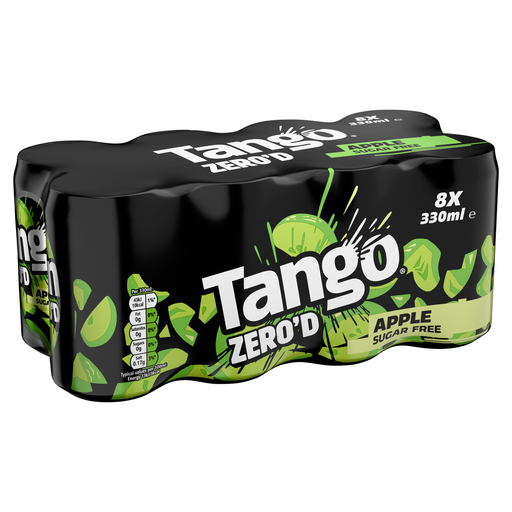
Tango Sugar Free Apple, 8 × 330ml
An apple-flavoured fizzy-drink option, not a full-strength apple juice. Its product information states 4% apple juice and 0g sugars per 100ml; the ingredients include sucralose and acesulfame K.
View on Joybuy
 No image available
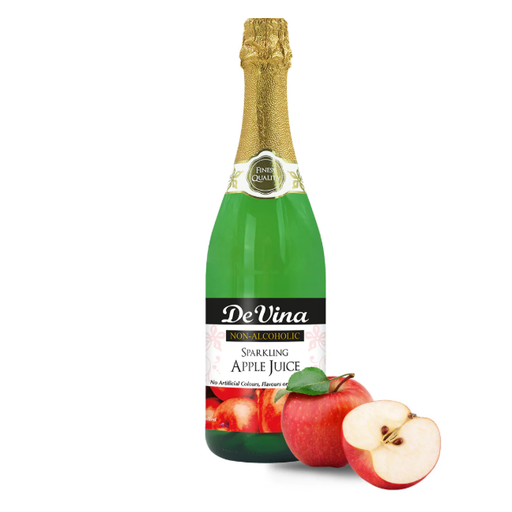
De Vina Sparkling Apple, 750ml
A larger bottle for pouring a breakfast serving. Its product information lists apple juice from concentrate and carbon dioxide; check the current pack for its juice percentage and nutrition figures before comparing it with other drinks. The product instructions advise refrigeration after opening and consumption within three days, and state that it is not suitable for children under four.
View on Joybuy
Frequently asked questions
Can 100% sparkling apple juice fit a weekday breakfast?
Yes, if you want a juice portion with your meal and account for its size. The NHS advises limiting fruit juice and smoothies to one 150ml glass a day and drinking it with a meal because these drinks are high in sugar; a 250ml can is larger than that advised portion.
Does sparkling apple water always have less sugar than apple juice?
No. Check the ingredients and compare nutrition figures stated in the same unit. M&S lists sugar as an ingredient in its Sparkling British Apple Spring Water, which contains 16% apple juice; its sugars figure is stated per 100g, so it should not be compared directly with another drink’s figure per 100ml.
How should I store an opened bottle of sparkling apple drink?
Follow the instructions on the bottle you buy. Sainsbury’s Appletiser 750ml listing says to refrigerate after opening and consume within four days; instructions for another drink may differ.
Which label details help distinguish these drinks?
Check the product name, ingredients, stated juice percentage, nutrition panel and serving size for the exact pack. For prepacked food, GOV.UK says labels must display certain mandatory information and must be accurate and not misleading; a name such as “sparkling water” does not replace reading the ingredients.


