Choose sparkling apple juice if you want a fizzy pour for Sunday brunch, but check the ingredients rather than relying on an apple-flavoured name. A 150ml can makes portions straightforward; a 750ml bottle suits a shared table if you measure the pours. The NHS advises limiting fruit juice and smoothies to a combined 150ml a day, whether the juice is sparkling or still.
Who is each format for?
The useful distinction for brunch is whether you want measured individual servings, a shared sparkling pour or still juice instead.
Hosts planning individual portions
A 150ml sparkling can gives each guest a defined serving. That volume matches the NHS guidance to limit fruit juice and smoothies to a combined 150ml a day; it does not leave room under that guidance for another juice or smoothie serving the same day.
Hosts wanting a fizzy table drink
Sparkling apple juice provides bubbles without choosing a still breakfast juice. If apple-juice content matters, check the product name and ingredient list: an apple-flavoured sparkling drink is not necessarily 100% juice.
Households deciding between sparkling and still
Choose based on whether guests actually want fizz. Appletiser listings include sparkling apple juice, while Tropicana Orchard Apple and Copella Apple Juice provide still-juice routes; check the particular pack and serving information before buying.
What should you check before buying?
Decide whether fizz matters, then compare the ingredient wording, the amount you intend to serve and how the pack will work at your table.
| Priority |
What to check |
Your needs |
| Fizz or still juice |
Check whether the product is labelled sparkling apple juice or still apple juice. Tropicana describes Orchard Apple as 100% pressed juice, not from concentrate; it is a still option, not a fizzy equivalent. |
I want bubbles for the brunch table, or I would rather serve a familiar still juice. Neither choice by itself tells me the sugar content of the particular drink. |
| Apple-juice content |
Read the food name and ingredients, not just the flavour description. ASDA Groceries and Sainsbury's list carbonated apple juice from concentrate (100%) for the Appletiser 150ml can and 6 x 250ml pack. |
If I am buying sparkling apple juice rather than an apple-flavoured drink, I want the ingredient list to make its composition clear. |
| Serving size |
Compare the pack size with the amount you plan to pour. The NHS advises no more than a combined 150ml of fruit juice and smoothies a day; a 250ml can is larger than that amount. Check sugars per 100ml and per serving on the exact pack. |
A measured serving matters to me more than assuming a whole can or the bottle's suggested nutrition serving is the right amount to pour. |
| Pack for the table |
Compare individually portioned cans with a bottle you can pour from. Before opening a larger bottle, check its after-opening storage directions and consider how much the table is likely to use. |
For separate places at the table, cans may be simpler. For a shared pour, I can use a bottle and choose the size of each glass. |
What is easy to overlook?
-
Treating a 250ml can as a small juice serving
A 250ml can exceeds the NHS recommendation of no more than 150ml a day for fruit juice and smoothies combined. ASDA Groceries lists 26g sugars per 250ml serving for its Appletiser bottle; a sparkling presentation does not remove the need to read the nutrition panel.
If you are planning around that juice guidance, choose a 150ml format or measure the amount poured from a bottle. Do not assume that another pack's nutrition figures are identical.
-
Assuming an apple-flavoured fizzy drink is 100% juice
Flavour wording alone does not establish how much apple juice a drink contains. The Appletiser can and multipack listings identify their contents as carbonated apple juice from concentrate (100%).
Read the food name and ingredient list on the product you intend to buy, particularly when comparing it with another sparkling apple drink.
-
Opening a large bottle without a plan for the rest
A shared bottle may leave some juice after brunch if guests take small pours.
Check the bottle's after-opening storage instructions and choose a pack size that fits the number of intended servings.
Relevant brand references
These examples help distinguish sparkling juice from still alternatives; a brand name alone does not establish the composition of every product it sells.
Appletiser
ASDA Groceries and Sainsbury's list sparkling apple juice in 150ml cans, a 750ml glass bottle and a 6 x 250ml pack.
- The 150ml can and 6 x 250ml pack list carbonated apple juice from concentrate (100%) in their ingredients.
- For the 750ml bottle, ASDA Groceries lists 10.5g sugars per 100ml and 26g per 250ml serving. Check the serving size rather than treating fizz as a sign of less sugar.
Tropicana
Tropicana describes Orchard Apple as 100% pressed apple juice, not from concentrate.
- It offers a still-juice route when bubbles are not part of the brunch plan.
- It does not replace a sparkling drink if fizz is what guests want.
Copella
Tesco Groceries lists Copella Apple Juice in 900ml and 1.35L sizes as a still-juice option.
- The listed sizes give a choice of larger packs for serving still juice at a table.
- Check the individual product before buying if the brunch drink needs to be sparkling.
Sparkling options on Joybuy
These products cover individual sparkling-apple-juice cans and a larger sparkling apple drink for pouring at a shared brunch table. Check the composition of the bottle if you specifically want 100% apple juice.
 No image available
Appletiser Lightly Sparkling Apple Juice 6 x 250ml
Six separate cans suit a table where guests want individual fizzy drinks. Joybuy describes the contents as carbonated apple juice from concentrate (100%). Each 250ml can is larger than the NHS recommended combined daily amount of 150ml for fruit juice and smoothies.
View on Joybuy
 No image available
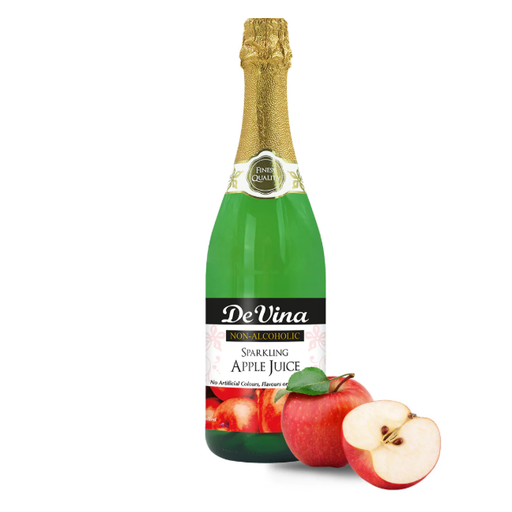
De Vina Sparkling Apple 750ml
The 750ml bottle offers a sparkling apple drink to pour for several guests. Its listed ingredients include apple juice from concentrate and carbon dioxide; check the label for the juice percentage if you want 100% apple juice. Measure servings as needed and follow the bottle's directions after opening.
View on Joybuy
Frequently asked questions
Is sparkling apple juice lower in sugar than still juice?
Not necessarily: carbonation does not establish a sugar difference. ASDA Groceries lists 10.5g sugars per 100ml for its 750ml Appletiser sparkling apple juice bottle. Compare the per-100ml nutrition labels of the exact sparkling and still products you are considering.
How much apple juice should I pour at brunch?
The NHS advises limiting fruit juice and smoothies to a combined 150ml a day. A 150ml can reaches that amount; if you buy a larger bottle, measure the pour rather than automatically using its 250ml nutrition serving as a glass size.
How can I tell whether a sparkling apple drink is juice?
Check its food name and ingredient list. The listed Appletiser 150ml can and 6 x 250ml pack specify carbonated apple juice from concentrate (100%); do not assume another apple-flavoured sparkling drink has the same composition.
What should I do with a bottle left open after brunch?
Follow the storage and after-opening directions on that bottle. Check those directions before buying a larger format if you expect to have juice left after serving.


