
24/7 Customer Support

Free returns

Same-day & Next-day Delivery

Quality Guaranteed

Unlock Your Welcome Offers: FREE Delivery | Up to 80% OFF | Free 30-day JoyPlus trial
Download the APP
Sparkling drinks can make a weekday lunch, family picnic or party feel more special, but a colourful label does not always tell you what you are buying. Flavour, bottle size, sugar content and storage requirements can vary considerably between sparkling water, fruit-flavoured sparkling drinks and juice drinks.
Before adding a multipack to your basket, look beyond the front of the packaging. The following guide highlights common buying traps, practical specifications to check and a selection of sparkling drinks suited to different UK shopping needs.
A drink may feature pictures of strawberries, peaches or tropical fruit while containing mainly carbonated water, sugar, flavourings and colourings. This is not necessarily a problem, but shoppers expecting juice should check the ingredient list and any quantitative ingredient declaration.
For a juice-based option, look for specific wording such as fruit juice from concentrate or a stated juice percentage. Appletiser, for example, lists carbonated apple juice from concentrate as its sole ingredient. By contrast, some fruit-flavoured fizzy drinks use flavourings with little or no juice.
Calorie figures can be useful when comparing products, but they do not replace checking carbohydrates and sugars. Some low-calorie soft drinks use sweeteners, while others contain a smaller amount of sugar or fruit juice.
Huayang White Peach & Sakura lists 16 kcal and 3.3g of sugars per 100ml, while Dash sparkling water lists 1 kcal and 0g of sugars per 100ml. These are substantially different drink profiles, despite both offering carbonation and fruit-led flavour.
A 20-bottle or 24-bottle case may offer convenience for a family, student household or event, but it also requires storage space and careful handling. Glass bottles can be unsuitable for some outdoor occasions, while small 200ml bottles may become expensive for everyday drinking.
Also check the instructions after opening. Some products should be refrigerated and consumed within 24 hours or a few days, while unopened drinks are generally stored in a cool, dry place away from sunlight and heat.
Read the full ingredients panel rather than relying on front-of-pack descriptions. Look for:
For example, OKF Milky Original Sparkling Drink contains milk powder and milk solids, so it is not suitable for people avoiding milk. De Vina Sparkling Pineapple Coconut contains coconut and may contain traces of soya and wheat. Huayang products also include label warnings regarding certain colours and their potential effect on children’s activity and attention. Always check the packaging supplied with your order, as formulations can change.
Comparing nutrition per 100ml gives a consistent starting point, but serving size matters too. A 500ml bottle contains five times the listed per-100ml amount. A drink showing 10g of sugar per 100ml would therefore provide approximately 50g in a full 500ml bottle.
Sparkling water with no added sugar, such as Highland Spring Sparkling Spring Water, is a different choice from juice drinks or sweetened soda. It can suit meals and regular hydration preferences, while fruit-flavoured sparkling drinks may be more appropriate as an occasional refreshment.
Choose the format around how the drinks will be used:
Check whether a product is ready to drink, whether it needs gentle shaking and whether the container is pressurised. Do not freeze carbonated drinks, and do not consume a bottle or can that is leaking, bulging, damaged or has a broken seal.
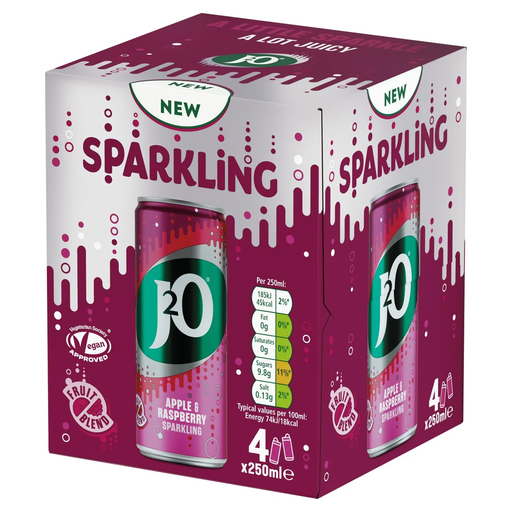
Why This Fits Their Persona: The four-pack offers a manageable way to try sparkling soft drinks for meals, casual hosting or student kitchens without committing to a large case.
The product states 20% apple juice and lists 18 kcal per 100ml, making the fruit content and energy information easier to assess than a vague fruit-fronted label.
250ml serving size; apple and raspberry flavour; contains sweetener and no listed allergens.

Why This Fits Their Persona: A six-pack of 250ml cans works for dinner parties, celebrations and non-alcoholic serving where a clearly defined juice base is preferred.
The ingredients specify carbonated apple juice from concentrate at 100%, rather than relying only on fruit imagery or general flavour wording.
100% carbonated apple juice; 250ml cans; no listed added preservatives or allergens.
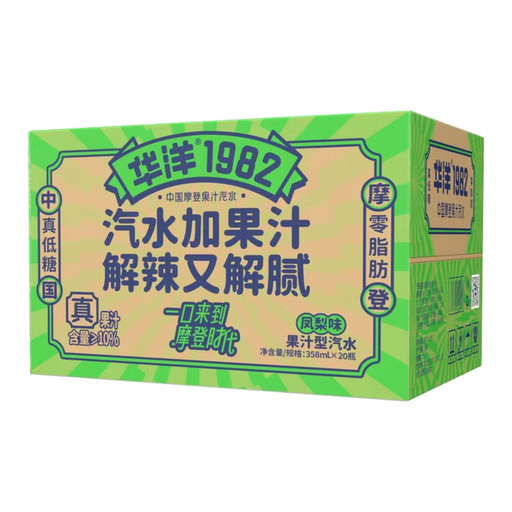
Why This Fits Their Persona: The 20-bottle format suits families, offices, back-to-school stock-ups and hosts serving several guests.
The case quantity, bottle size and nutrition information are stated clearly, helping shoppers assess storage needs and total volume before ordering.
20 glass bottles of 358ml; pineapple, apple and pear juice concentrates; 16 kcal per 100ml.

Why This Fits Their Persona: The Japanese ramune soda format brings a distinctive serving experience to Asian meals, picnics and themed gatherings.
Its 200ml quantity is clearly stated, so shoppers can account for the smaller serving, while the label identifies sugar, flavourings, colours and preservatives.
Iconic marble-sealed glass bottle; strawberry flavour; 39 kcal per 100ml.
We have compiled a complete, real-time list of products that fully satisfy these strict selection criteria and UK safety regulations.
It depends on the product. Plain sparkling water contains no sugar, while many fruit-flavoured sparkling drinks, sodas and juice drinks contain sugar or sweeteners. Check the nutrition panel and consider portion size. For regular hydration, unsweetened sparkling water may be a more suitable choice than sweetened fizzy drinks.
Carbonation usually reduces after opening. Follow the product instructions: some drinks recommend immediate consumption, while others can be refrigerated for up to 24 hours or a few days. Reseal opened bottles and keep them chilled where the label advises.
Glass bottles can provide individual servings and a traditional presentation, but they are heavier and more vulnerable to breakage than cans or plastic bottles. For outdoor events, check transport and recycling arrangements. For meals or indoor celebrations, glass formats may suit the occasion if handled carefully.