Families choosing a routine lunch drink
If your child takes a drink to school every day, water follows the advice from Cambridgeshire Community Services NHS Trust to replace fizzy drinks, including sugar-free ones.


For a routine school packed lunch, choose water rather than sparkling lemonade. Cambridgeshire Community Services NHS Trust advises avoiding fizzy drinks, including sugar-free ones, while St George’s NHS guidance identifies fizzy and acidic drinks as a tooth-erosion concern. If the school permits an occasional fizzy drink, compare the exact variant’s sugar declaration and ingredients; zero sugar does not remove the concern about fizz and acidity.
If your child takes a drink to school every day, water follows the advice from Cambridgeshire Community Services NHS Trust to replace fizzy drinks, including sugar-free ones.
If you are choosing a sparkling lemon drink occasionally, compare the precise variant rather than assuming every bottle under the same brand has the same sugar content.
Check the school’s packed-lunch policy before sending a fizzy drink. For a sweetened or zero-sugar variant, read the current pack for sweeteners and any phenylalanine declaration relevant to your child.
Decide on the routine lunch drink first, then check school rules and the exact pack if you are considering an occasional alternative.
| Priority | What to check | Your needs |
|---|---|---|
| Routine drinking | Check whether the drink is fizzy and whether its ingredients list acids. Cambridgeshire Community Services NHS Trust advises replacing fizzy drinks, even sugar-free ones, with water. | For an everyday school lunch, I would pack water rather than treat zero-sugar lemonade as an equivalent choice. |
| School policy | Read the individual school’s packed-lunch or water-only policy. Southwark Council’s water-only policy, for example, addresses drinks brought with lunch. | Before packing a fizzy drink, I want to know whether my child’s school accepts it. |
| Exact variant | Read the sugar declaration for the precise bottle or can. Keep per 100ml and per 100g figures distinct, and check the ingredients rather than relying on a brand name. | If I buy an occasional fizzy drink, the label on that variant matters more to me than a familiar name or a zero-sugar claim on another product. |
| Sweeteners | Check the current pack for sweeteners and any statement that it contains a source of phenylalanine. Do not assume every formulation has the same ingredients. | Where an ingredient declaration is relevant to my child’s dietary requirements, I need to check the pack itself. |
A zero-sugar fizzy drink can still contain acids. Cambridgeshire Community Services NHS Trust advises avoiding fizzy drinks even when they are sugar-free.
Pack water for routine school lunches; consider a zero-sugar fizzy drink only as an occasional choice if the school permits it.
Coca-Cola GB lists Sprite at 4.4g sugars per 100ml and Sprite Zero at 0g per 100ml. The variant changes what the sugar figure means.
Check the exact pack’s nutrition panel, including whether its values are stated per 100ml or per 100g.
A school’s own policy can address drinks brought from home. Southwark Council’s water-only school policy specifically mentions drinks brought with lunch.
Read your child’s packed-lunch policy or ask the school before sending sparkling lemonade.
Marks & Spencer advises customers that product information can change, so an online ingredient or nutrition listing may not describe the pack in hand.
Use the current pack to check sugars, acids, sweeteners and any relevant ingredient declaration.
R. Whites lists several carbonated lemonade formulations on its official site.
Coca-Cola GB lists standard Sprite and Sprite Zero as separate lemon-and-lime fizzy drinks.
Marks & Spencer lists sparkling cloudy lemonade and regular lemonade as distinct own-label products.
These are zero-sugar fizzy citrus options to consider only for an occasional drink where the school permits one. They are not alternatives to water for a routine packed lunch.
 No image available
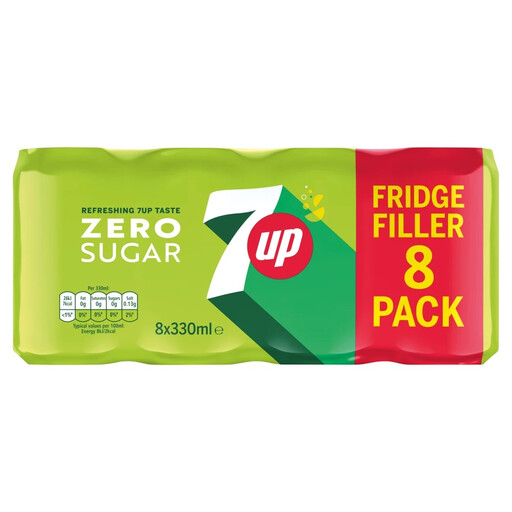
An eight-can zero-sugar fizzy option for an occasional citrus-drink choice if the school permits it. NHS dental guidance advises water instead of fizzy drinks, including sugar-free ones; check the current pack for ingredients relevant to your child.
 No image available
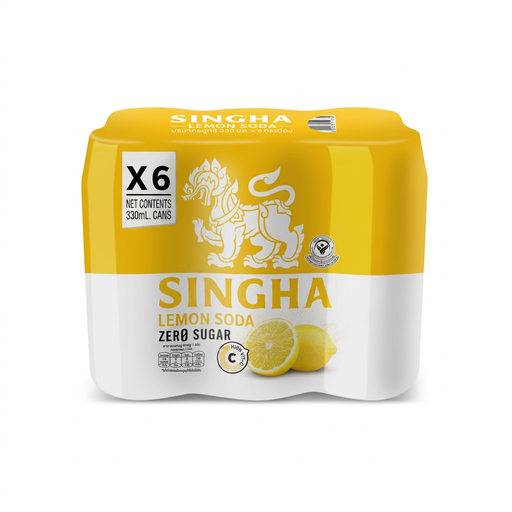
This six-can lemon soda is an occasional fizzy-drink option rather than a routine school-lunch choice. Check the school’s policy and read the current pack’s nutrition and ingredient declarations before comparing it with lemonade.
 No image available
This larger pack is relevant only if you want an occasional fizzy-drink option, not a routine packed-lunch drink. Check the exact variant before buying: the product title says Lemonade Zero, while its description names 7UP Free Pink Lemonade. Read the current pack for its ingredients and nutrition declaration.
Choose water for a routine school packed lunch. Cambridgeshire Community Services NHS Trust advises replacing fizzy drinks, including sugar-free ones, with water; St George’s NHS guidance identifies fizzy and acidic drinks as a tooth-erosion concern.
No. Coca-Cola GB lists Sprite Zero at 0g sugars per 100ml, compared with 4.4g for Sprite, but its ingredient list still includes acids. NHS dental guidance advises avoiding fizzy drinks even when they are sugar-free.
Check your child’s packed-lunch policy before sending one. Southwark Council’s water-only school policy addresses drinks brought with lunch; Department for Education school-food guidance concerns food and drink provided by state-funded schools in England, rather than deciding what your individual school accepts from home.
Compare the exact variant’s sugar declaration, its per-100ml or per-100g basis, and its ingredients. Coca-Cola GB lists Sprite and Sprite Zero at 4.4g and 0g sugars per 100ml respectively; Marks & Spencer lists its Sparkling Cloudy Lemonade and Lemonade at 3.4g and 4.4g per 100g respectively. Check the current pack rather than treating those different measurement bases as interchangeable.
Some sweetened formulations carry a statement that they contain a source of phenylalanine; Coca-Cola GB lists one for Sprite Zero, and R. Whites lists one for some formulations. If that declaration matters to your child’s dietary requirements, check the exact current pack and follow the clinical advice applicable to them.