Shoppers comparing stated sugar
If you want an orange-flavoured fizzy drink with dinner, compare sugars per 100ml before looking at the amount in a glass. Also check whether a lower-sugar option contains sweeteners you prefer to avoid.


For a TV dinner, choose a sparkling orange drink by comparing sugars per 100ml, declared juice or pulp, and sweeteners. Ocado lists M&S Diet Orange Crush at 0.2g sugars per 100ml, with 5% orange comminute and sucralose; its M&S Sparkling Brazilian Orange lists 13% orange juice and 5% comminuted oranges, but 4.4g sugars per 100ml. If you want 100% orange juice rather than fizz, choose a still juice; NHS guidance says to limit fruit juice and smoothies to a combined 150ml a day and have them at mealtimes.
If you want an orange-flavoured fizzy drink with dinner, compare sugars per 100ml before looking at the amount in a glass. Also check whether a lower-sugar option contains sweeteners you prefer to avoid.
If orange juice or fruit texture matters more to you, read the ingredient percentages. Sparkling orange drinks differ in how much juice, comminuted fruit or pulp they declare.
A sparkling orange soft drink and still 100% orange juice are different choices. If pure juice is the aim, check the product description rather than relying on orange flavour or a picture of fruit.
Decide whether you want fizz or 100% juice, then compare sparkling drinks on the same per-100ml basis before choosing a serving format.
| Priority | What to check | Your needs |
|---|---|---|
| Stated sugars and sweeteners | Compare sugars per 100ml, then the amount you expect to pour. Ocado lists 0.2g per 100ml for M&S Diet Orange Crush and 4.4g for M&S Sparkling Brazilian Orange; Tesco Groceries lists 1.2g for Orangina. Check the ingredient list for sweeteners as well as sugar. | I want to compare recipes without mistaking a smaller serving for a lower-sugar drink. Whether it contains particular sweeteners also affects my choice. |
| Orange juice and pulp | Read the declared fruit ingredients, not just the drink name. Ocado lists 5% orange comminute in M&S Diet Orange Crush, 13% orange juice plus 5% comminuted oranges in M&S Sparkling Brazilian Orange, and 16% orange juice in San Pellegrino Orange. Tesco Groceries lists 12% citrus juice and 2% citrus pulp in Orangina. | If I want juice or fruit texture in a fizzy drink, the stated ingredients help me choose between orange flavour, declared juice and pulp. |
| Juice or soft drink | Check whether the product is a carbonated soft drink or 100% juice. Tropicana UK lists orange juice as the ingredient in its still Smooth Orange. NHS guidance says fruit juice and smoothies should be limited to a combined 150ml a day and consumed at mealtimes. | I want pure orange juice with dinner, rather than assuming a sparkling drink has the same ingredients or 5 A Day status. |
| Serving format | Check the container size, outer-pack quantity and instructions for opening or storage. A multipack, a single bottle and a larger shared bottle suit different dinner arrangements. | For one meal, a defined serving is convenient; when several people are eating, I would check how much the pack contains and how to store anything left over. |
Ocado lists 5% orange comminute for M&S Diet Orange Crush and 16% orange juice from concentrate for San Pellegrino Orange. Tropicana Smooth Orange, described by Tropicana UK as 100% orange juice, is a separate still option.
Read the product description and ingredients: choose a sparkling soft drink when you want fizz, or a product labelled 100% juice when pure juice is the aim.
A bottle and a can can show different amounts per serving even when their recipes are closer on a per-100ml basis. The amount you actually drink also matters.
Start with sugars per 100ml on each label, then use your intended serving size to compare the amount in your glass.
Ocado lists sucralose in M&S Diet Orange Crush, which states 0.2g sugars per 100ml. A sugar figure alone does not tell you which sweeteners a drink contains.
Read the full ingredients panel if a particular sweetener affects your choice.
NHS guidance distinguishes fruit juice from other drinks: it advises limiting fruit juice and smoothies to a combined 150ml a day and having them at mealtimes.
If you choose still 100% juice with dinner, measure the serving. Assess a sparkling orange soft drink by its own ingredients and label rather than assuming it has the same role.
These product examples illustrate different ingredient and serving choices; their figures describe the named drinks, not every product from each brand.
Two sparkling orange drinks illustrate the trade-off between stated sugars and declared fruit ingredients.
Its named sparkling orange beverage offers a declared orange-juice percentage for shoppers comparing fruit content.
Its named sparkling orange drink is an option when citrus pulp is part of the appeal.
Tropicana Smooth Orange is a still alternative when the aim is orange juice rather than carbonation.
Innocent Tropical Juice is a still mixed-fruit alternative, not a sparkling orange drink.
These orange-flavoured fizzy drinks provide bottle and multipack options to consider with a TV dinner. Use each product's label to compare ingredients and sugars before choosing.
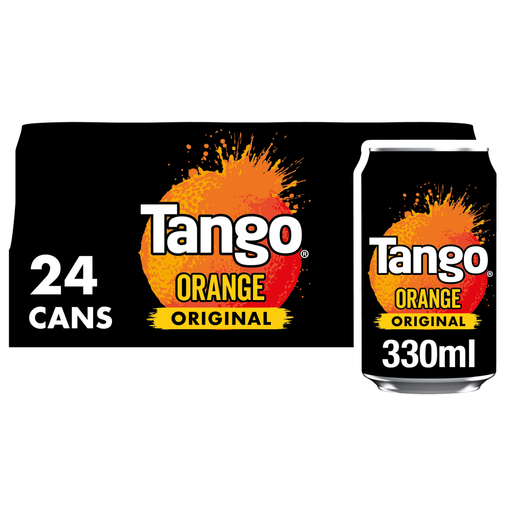 No image available
The 24 x 330ml format is worth considering when several people want an orange-flavoured fizzy drink with dinner. Compare its sugars per 100ml and ingredients with other drinks before choosing a multipack.
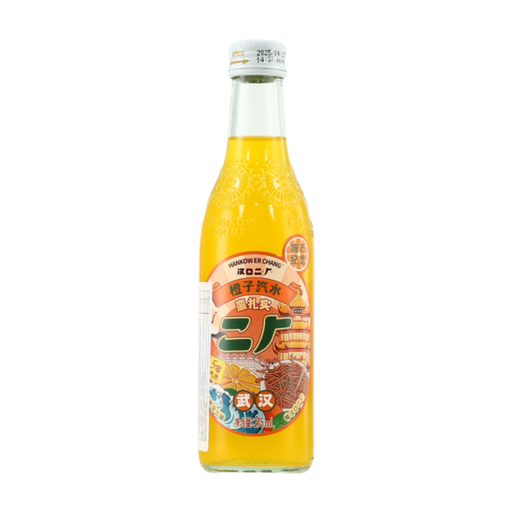 No image available
The stated 275ml bottle size may suit an individual TV dinner. If the quantity you receive matters, check the outer-pack contents alongside the sugars and ingredients on the product label.
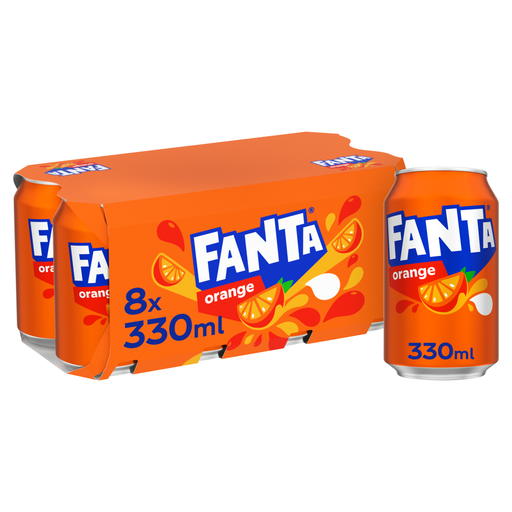 No image available
This 8 x 330ml pack offers a defined can size for a dinner drink. Check the per-100ml and per-can sugar figures separately, as well as the ingredient list.
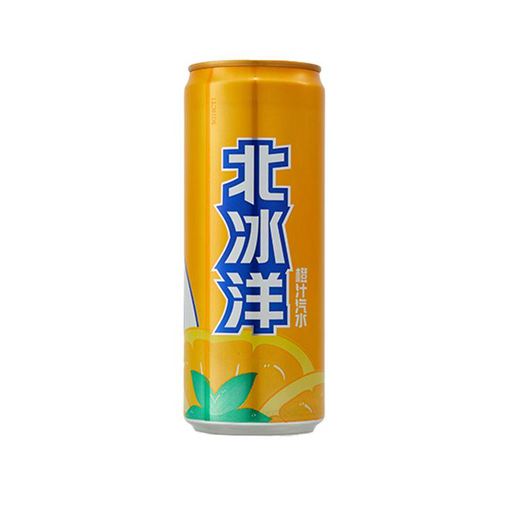 No image available
This orange juice soda has a stated 330ml quantity. If juice content or the number of containers affects your TV-dinner choice, confirm those details on the product listing before ordering.
No: the sparkling products discussed here are soft drinks with differing amounts of declared juice or fruit ingredients. Tropicana UK describes its still Smooth Orange as 100% orange juice, but it is not a fizzy drink.
Choose according to the label feature that matters to you. Ocado lists M&S Diet Orange Crush at 0.2g sugars per 100ml with sucralose and 5% orange comminute; its M&S Sparkling Brazilian Orange lists 13% orange juice plus 5% comminuted oranges, alongside 4.4g sugars per 100ml.
Do not assume it does because it tastes of orange or contains some juice. NHS guidance describes a 150ml portion of fruit juice, vegetable juice or smoothie as counting once in a day; check a sparkling drink's own product information rather than treating it as 100% juice.
The NHS advises limiting fruit juice and smoothies to a combined 150ml a day and consuming them at mealtimes. That guidance applies to juice and smoothies; it does not make a sparkling orange soft drink equivalent to pure juice.
Compare sugars per 100ml first, then check the amount you would drink and the pack quantity. Read the ingredients too: drinks with similar orange descriptions can differ in declared juice, pulp and sweeteners.