For a juice-forward sparkling drink, check the fruit percentages rather than relying on “orange” in the name: Cambridge Juice Company lists 50% orange and clementine juice, while Cawston Press lists 8% orange ingredients alongside 40% pressed apple juice. If a fizzy fruit drink suits you better, compare its ingredients, sugars per 100ml and pack size. For a regular break between meals, bear in mind that the NHS advises having fruit juice and smoothies at mealtimes and limiting them to a combined 150ml a day.
Who is choosing?
Afternoon snackers who want orange flavour with fizz
A chilled can or bottle may fit your break, but orange-labelled sparkling drinks differ in fruit ingredients, sweetening and size. Decide whether you want juice content or simply an orange-flavoured fizzy drink.
Shoppers who prioritise fruit content
Look for declared juice percentages and the type of fruit used. Cambridge Juice Company lists 50% orange and clementine juice in its sparkling cans; check the pack’s nutrition panel as well if sugars affect your choice.
Shoppers planning a regular between-meal drink
The NHS advises having fruit juice and smoothies at mealtimes, rather than as a between-meal snack, and limiting them to a combined 150ml a day. That advice matters when you are considering a juice-based drink for a daily afternoon break.
What should you check?
Start with the fruit ingredients, then compare nutrition on the same per-100ml basis and consider how much of the pack you are likely to drink.
| Priority |
What to check |
Your needs |
| Fruit content |
Read the percentage and type of orange or mixed-fruit ingredients. Check whether another juice or carbonated water forms the base, and whether the juice is from concentrate if that distinction matters to you. |
I want to know how much orange is in the drink, not just whether orange appears on the front of the pack. Cambridge Juice Company lists 50% orange and clementine juice; Cawston Press lists 8% orange ingredients and 40% pressed apple juice; Rocks Drinks lists 9% orange juice from concentrate and 2.5% whole oranges. |
| Sugars and timing |
Compare sugars per 100ml, then consider the amount in the container. Read the ingredients for sugar and sweeteners; “no added sugar” does not describe total sugars. The NHS advises having fruit juice and smoothies at mealtimes and limiting them to a combined 150ml a day. |
For a regular afternoon break, I want to distinguish a juice-based drink from a fizzy fruit drink and check how either fits my plans. Cawston Press lists 4.1g sugars per 100ml, while Waitrose lists 1.2g per 100ml for Orangina; their recipes differ as well as their figures. |
| Pack and texture |
Check the can or bottle volume against the amount you intend to pour or drink. Look at the description if pulp, sediment or sweeteners would affect your enjoyment. |
A portable pack is useful for my break, but I do not want its size to decide my portion for me. The cited product formats include Cambridge Juice Company’s 250ml can, Cawston Press’s 330ml can and the 420ml Orangina bottle listed by Waitrose. |
Common buying mistakes
-
Assuming “sparkling orange” means mostly orange juice
Recipes can be quite different. Cambridge Juice Company lists 50% orange and clementine juice, while Cawston Press lists 8% orange ingredients with 40% pressed apple juice, and Rocks Drinks lists 9% orange juice from concentrate plus 2.5% whole oranges.
Use the fruit percentages and ingredient list to decide whether you want a juice-forward blend or an orange-flavoured sparkling drink.
-
Letting the container define the serving
A 250ml can, 330ml can or 420ml bottle is larger than the NHS’s combined 150ml daily limit for fruit juice and smoothies. The NHS also advises having those drinks at mealtimes.
If you choose a juice-based option, consider how much you will drink and when. Water is another option for a routine break between meals.
-
Equating fruit sweetness with low total sugars
Cawston Press lists 4.1g sugars per 100ml in its apple-led sparkling orange drink. Tropicana’s still 100% orange juice says it has no added sugar but lists 8.4g sugars per 100ml.
Compare total sugars per 100ml, then use the container volume to understand the amount you might drink. Check added-sugar wording separately from the nutrition figure.
Brand and product references
These examples show how different orange drinks are described; they are not all the same type of product.
Cambridge Juice Company
Its Sparkling Orange & Clementine cans offer a juice-forward carbonated option.
- Cambridge Juice Company lists 50% orange and clementine juice, not from concentrate, alongside carbonated water.
- Check the current can for nutrition values before making a sugars-based comparison.
Cawston Press
Sparkling Orange is an apple-led fizzy fruit drink with orange ingredients.
- Cawston Press lists 40% pressed apple juice, 8% orange ingredients and 4.1g sugars per 100ml.
- Its recipe may not suit someone choosing primarily by orange-juice percentage.
Orangina
Waitrose describes Orangina as a sparkling orange juice drink with citrus pulp, sugar and sweeteners.
- Waitrose lists 1.2g sugars per 100ml for its 420ml bottle.
- It is a fruit drink rather than an established 100% orange juice; check the current bottle label for its recipe.
Rocks Drinks
Juicy Orange Sparkling Can combines carbonated spring water with orange ingredients.
- Rocks Drinks lists 9% orange juice from concentrate and 2.5% whole oranges.
- Natural sugar also appears in its ingredient list; check the can’s nutrition panel if sugars matter to your decision.
Tropicana
Original Orange is a still-juice alternative when orange juice matters more to you than fizz.
- Tropicana describes this product as 100% pressed orange juice, not from concentrate, and lists 8.4g sugars per 100ml.
- It does not meet a requirement for a sparkling drink.
Sparkling orange drinks on Joybuy
These Joybuy options cover orange-flavoured fizzy drinks in cans and bottles. Use their individual labels to judge fruit content and sugars; the selection is not a comparison of every type of orange juice.
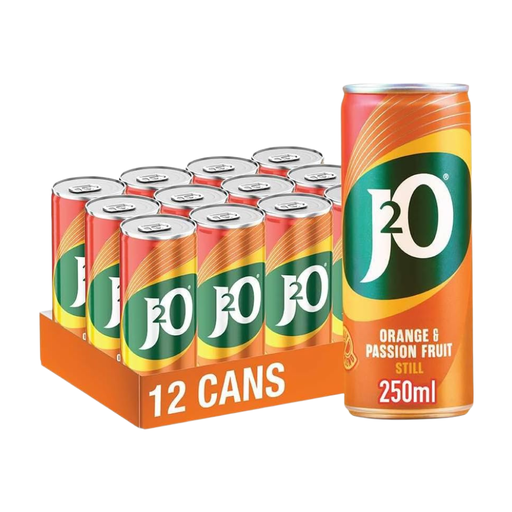 Image unavailable
J2O Orange & Passion Fruit 12 x 250ml
The 250ml can format suits a break if you want orange and passion-fruit flavours with fizz. Check the fruit-juice percentages and the current ingredient label if sugar or sucralose affects your choice.
View on Joybuy
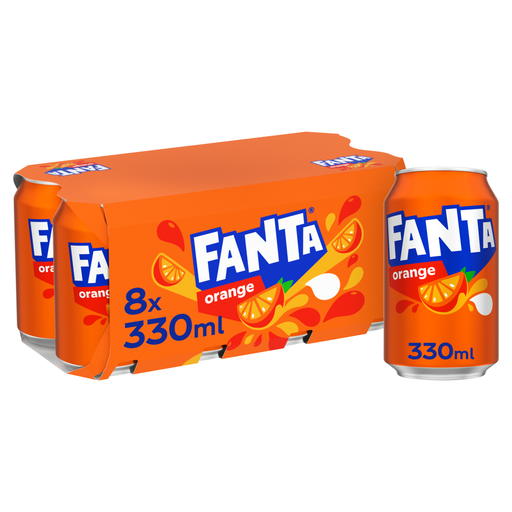 Image unavailable
Fanta Orange 8 x 330ml
This eight-can pack offers a fizzy orange drink in 330ml portions. If you are looking for a juice-forward choice, compare its fruit declaration with other products rather than treating the orange flavour as a measure of juice content; check the pack for current sugar and sweetener information.
View on Joybuy
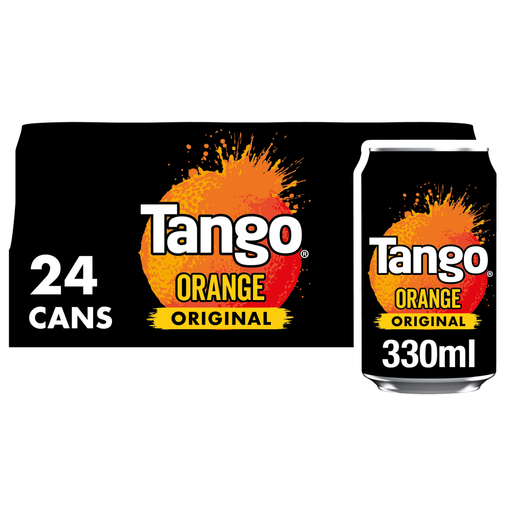 Image unavailable
Tango Orange 24 x 330ml
The 24 x 330ml format is a multipack of fizzy orange drink rather than a single-can purchase. Check its fruit declaration if juice content matters; the product information also notes aspartame, saccharin and a phenylalanine warning, so consult the current pack if these affect your choice.
View on Joybuy
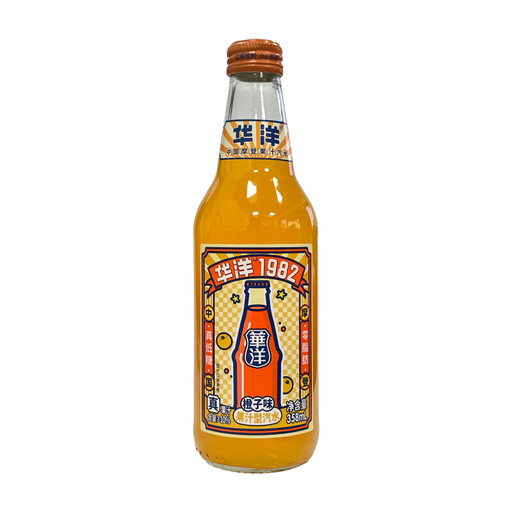 Image unavailable
Huayang 1982 Orange Juice Soda Drink 358ml
This 358ml orange-flavoured soda comes as a single bottle for a break. If the proportion of orange juice is decisive, check it on the pack rather than assuming it from “juice soda” in the name; check the current sweetener information too.
View on Joybuy
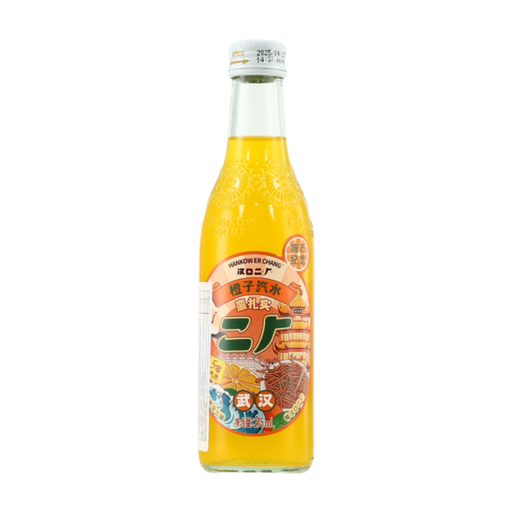 Image unavailable
Hankow Er Chang Orange Soda Drink 275ml
The 275ml bottle is another single-serve fizzy orange option. Check both the orange-juice and concentrate declarations before comparing its total orange content with another drink, and read the current label for sugars and sweeteners.
View on Joybuy
Frequently asked questions
Is a sparkling orange drink the same as orange juice?
No. Check the product description and fruit percentages: Cambridge Juice Company lists 50% orange and clementine juice in its sparkling cans, Cawston Press lists 8% orange ingredients alongside 40% pressed apple juice, and Rocks Drinks lists 9% orange juice from concentrate plus 2.5% whole oranges. An orange flavour or name alone does not establish that a drink is 100% orange juice.
What if I want sparkling orange juice between meals every day?
Consider a different drink for a regular between-meal break if your choice is fruit juice: the NHS advises having fruit juice and smoothies at mealtimes and limiting them to a combined 150ml a day. For any sparkling orange drink, check its product type and the amount you intend to drink rather than assuming a full can is a small portion.
Which label details matter when comparing fizzy orange drinks?
Start with the type and percentage of fruit ingredients, then compare sugars per 100ml and the container size. Check the ingredient list for sweeteners and other ingredients that matter to you, and use the current pack label for dietary or allergy decisions.


