
24/7 Customer Support

Free returns

Same-day & Next-day Delivery

Quality Guaranteed

Unlock Your Welcome Offers: FREE Delivery | Up to 80% OFF | Free 30-day JoyPlus trial
Download the APP
Sparkling soft drinks can suit a family meal, office fridge, picnic or celebration, but the choice is wider than it first appears. Fizzy drinks now range from traditional fruit-flavoured soda and imported soft drinks to sugar-free soft drinks, functional options and sparkling water.
The label, pack size and sweetener information matter more than colourful branding. A drink that looks suitable for everyday use may contain considerable sugar, while a “light” option may still include sweeteners or ingredients that do not suit every household.
Fruit-flavoured soda may contain only a small amount of fruit juice, with much of the taste coming from flavourings, acids and sweeteners. Check the ingredients list and the percentage of juice from concentrate rather than relying on images of fruit on the packaging.
For example, some imported soft drinks list fruit juice concentrates alongside sugar, while others use natural or artificial flavourings without a significant juice content.
Zero-sugar fizzy drinks commonly use sweeteners such as sucralose, acesulfame K, aspartame or cyclamates. These can reduce sugar and calorie content, but they are still important to check if you prefer drinks without particular sweeteners or need to avoid a source of phenylalanine.
“Low calorie” also needs context. Compare the nutritional table per 100ml and per serving, because a large bottle or glass can contain more than the reference amount shown on the front of the pack.
A small multipack may be convenient for occasional use but poor value for a party or busy office. Conversely, a 20- or 24-can case needs suitable cupboard or pantry space.
Glass bottles can create a more traditional serving experience but are heavier and more vulnerable to breakage. Cans are easier to chill and distribute, while sparkling water multipacks can be practical for regular meals and workspaces.
For UK shoppers comparing sugar-free soft drinks, inspect:
Examples vary considerably. Tango Apple Sugar Free lists 0g sugar and 3 kcal per 100ml, while 7UP Zero lists 0g sugar and 0.5 kcal per 100ml. Fanta Orange Zero Sugar lists 0.4g sugar and 3.1 kcal per 100ml. These figures are product-specific, so check the current packaging before purchase.
Traditional sparkling fruit drinks can be higher in sugar. Sangaria Ramune lists 10.2g sugar per 100g, while Bei Bing Yang Orange Juice Soda lists 10.3g sugar per 100ml. These may be better suited to occasional enjoyment than routine hydration.
If you are choosing vegan soft drinks, look for a clear suitability statement and review the allergen information. Several options in this range are listed as suitable for vegetarians and vegans, including 7UP Zero, Tango Apple Sugar Free, Tango Cherry Sugar Free and J2O Sparkling Apple & Raspberry.
Do not assume every fruit drink is interchangeable. Lotte Milkis Strawberry Soda contains milk powder and soya-derived ingredients, making it unsuitable for people avoiding dairy or soya. Imported products may also use colourings that carry UK warning statements regarding activity and attention in children. Always read the label supplied with the product.
Match the pack to how the drink will be used:
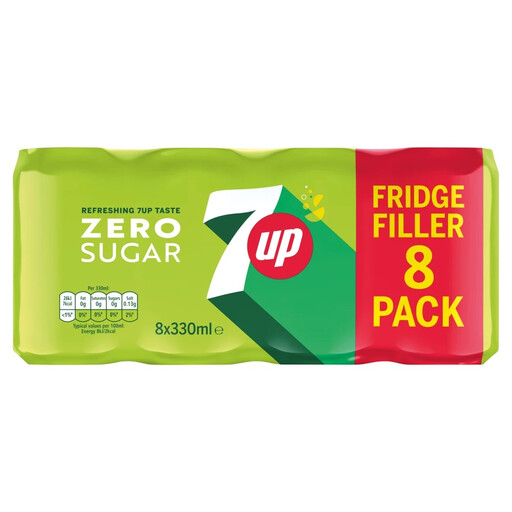
Why This Fits Their Persona: An eight-can lemon-and-lime multipack gives new buyers a manageable quantity for meals, desk storage or casual gatherings.
The label states 0g sugar and 0.5 kcal per 100ml, while also identifying its sweeteners and phenylalanine warning.
Zero sugar, caffeine-free and listed as suitable for vegetarians and vegans.
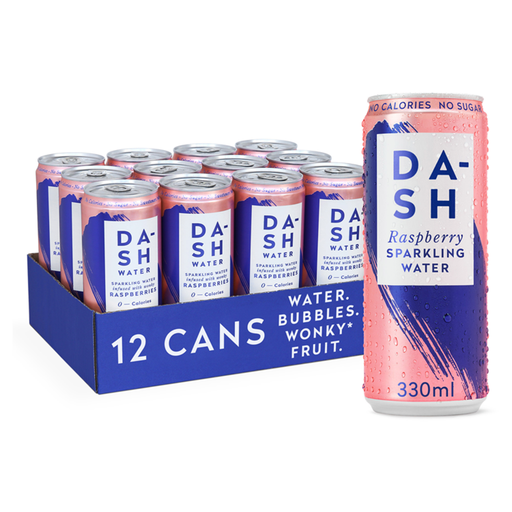
Why This Fits Their Persona: A British spring-water drink with raspberry extract suits shoppers seeking a restrained, food-friendly alternative to sweet fruit soda.
It does not rely on a high-sugar fruit claim: the listed nutrition is 1 kcal and 0g sugar per 100ml.
12 x 330ml cans, no sweeteners listed and no allergens declared.
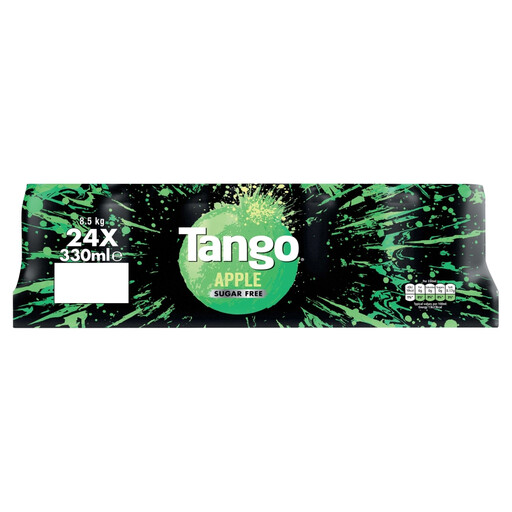
Why This Fits Their Persona: The 24-can case is suited to offices, larger households, barbecues and parties where individual servings are easy to distribute.
The pack quantity is clear, and the nutrition panel states 0g sugar and 3 kcal per 100ml rather than hiding serving size information.
Apple flavour, 330ml cans and a format designed for stock-up purchases.
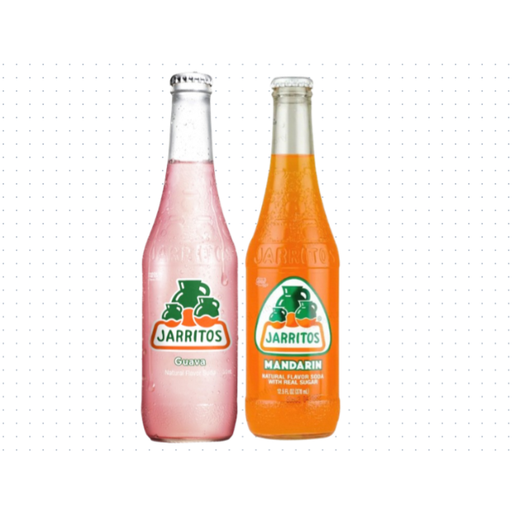
Why This Fits Their Persona: Mandarin and guava flavours offer a Mexican-inspired pairing for themed meals, gatherings or mocktail mixing.
The bundle clearly identifies its two flavours, 370ml bottle size and cane-sugar formulation, helping buyers set expectations.
Two fruit flavours, glass bottles and suitability for direct serving or cocktail mixing.
We have compiled a complete, real-time list of products that fully satisfy these strict selection criteria and UK safety regulations.
They can fit into different diets, but “sugar-free” does not mean the drink is nutritionally identical to water. Check the sweeteners, acidity, caffeine and serving size, and consume drinks as part of a varied, balanced diet.
Keep unopened cans and bottles in a cool, dry place away from direct sunlight and heat. Refrigerate before serving for a colder drink. Do not freeze pressurised cans, and handle glass bottles carefully. Once opened, reseal where possible and consume promptly according to the label.
For larger gatherings, choose soft drink multipacks with clearly portioned cans or bottles. Tango Apple Sugar Free provides 24 individual 330ml cans, while an international bundle such as Jarritos offers two flavours for food pairing. For a lower-sugar table, combine zero-sugar fizzy drinks with sparkling water and fruit-led options so guests have a wider choice.