
24/7 Customer Support

Free returns

Same-day & Next-day Delivery

Quality Guaranteed

Unlock Your Welcome Offers: FREE Delivery | Up to 80% OFF | Free 30-day JoyPlus trial
Download the APP
As a Joybuy Product Recommendation Officer, my role is to help you navigate the crowded marketplace. The demand for sparkling water has surged in the UK, with many of us seeking refreshing, healthier alternatives to sugary fizzy drinks. However, the shelves—both physical and digital—are filled with options that can be confusing. Vague labels and clever marketing can lead to purchases that don't quite meet your health goals or taste expectations.
Before you decide to buy sparkling water online, let's look at a few common pitfalls that can cause disappointment and wasted money.
To ensure you get a product you'll genuinely enjoy, focus on these three core parameters. They will help you see past the marketing and understand what's actually in the bottle or can.
Always read the ingredients. This is the most reliable way to understand what you're drinking.
Total Dissolved Solids (TDS) refers to the amount of minerals like calcium, magnesium and sodium in the water, measured in parts per million (ppm). This isn't just a technical detail; it directly impacts taste.
When you buy sparkling water online, you're often purchasing a full case of sparkling water. Consider the packaging that best suits your lifestyle.
To make your choice easier, here are a few recommendations matched to different preferences and needs.

Why This Fits Their Persona: This is for the person seeking exciting, modern flavoured sparkling water without the sugar. It offers a refreshing departure from standard citrus or berry flavours, tapping into the trend for unique Asian soda profiles.
It directly counters the "zero sugar illusion" by clearly stating it uses erythritol, a sweetener known for its clean taste. The label is transparent: 0 sugar, 0 calories and 0 fat.
The distinct white peach flavour is fragrant and authentic-tasting without being overly sweet. It's a guilt-free, sophisticated fizzy drink.
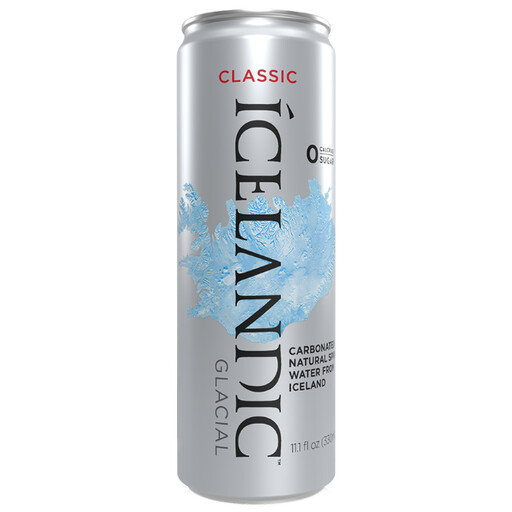
Why This Fits Their Persona: For those who appreciate water in its purest form. This is an unflavoured sparkling mineral water for pairing with fine food, making clean-tasting cocktails or simply enjoying a high-quality, refreshing drink.
It completely sidesteps the flavour and sweetener pitfalls. The ingredients are simple: natural spring water and carbon dioxide. Its quality is defined by what's not in it.
It has an exceptionally low TDS of 62 ppm, giving it a remarkably smooth and clean taste with no mineral aftertaste. The sleek aluminium can is also 100% recyclable.

Why This Fits Their Persona: This is for someone who wants a fizzy treat but is wary of zero-calorie sweeteners. They prefer a low-calorie drink where the sweetness comes from real fruit, making it one of the more wholesome healthy fizzy drinks.
It avoids the "natural flavour" trap by being transparent. The ingredients clearly list peach juice, apple juice and pear juice. It doesn't hide its sugar source or calorie count (31 kcal per 100ml).
It contains a high percentage of real fruit juice and is infused with botanicals like hibiscus and jasmine, creating a complex, aromatic and genuinely fruity flavour without artificial additives.
We have compiled a complete, real-time list of products that fully satisfy these strict selection criteria and UK safety regulations.
1. Is sparkling water as hydrating as still water? Yes. For general hydration purposes, sparkling water is considered to be just as effective as still water. The carbonation does not prevent your body from absorbing the water.
2. What is the difference between sparkling mineral water, seltzer and club soda? The main difference is the source and mineral content. Sparkling mineral water is sourced from a natural spring or well and contains naturally occurring minerals. Seltzer is simply plain water that has been artificially carbonated. Club soda is also artificially carbonated water, but minerals like potassium bicarbonate and sodium citrate are added to it to enhance the flavour.
3. How should I store a case of sparkling water to keep it fizzy? To maintain maximum fizz, store your cans or bottles in a cool, dark place away from direct sunlight. Heat can cause the carbon dioxide to escape more quickly. Once a bottle is opened, seal the cap as tightly as possible and store it in the refrigerator to slow the loss of carbonation. It's best to consume it within a day or two.