Choose plain sparkling water if you want fizz without added sugar, fruit juice or sweeteners. For flavour, check both total carbohydrate and sugars for the amount you will drink: S.Pellegrino Essenza Lemon & Lemon Zest lists 0 g of each per 330 ml can, while some drinks labelled “no added sugar” contain sugars from fruit juice. Sugar-free fizz still carries the dental-erosion consideration noted by the NHS.
Who these choices suit
The useful distinction is not simply whether sugar has been added, but what the drink contains and how much you intend to pour.
People counting carbohydrates
If you count carbohydrates as part of diabetes management, check the total carbohydrate figure for the amount you will drink. Diabetes UK advises looking beyond the front label to the nutrition panel; carbohydrate counting is particularly relevant to people using basal and bolus insulin.
People replacing sugary fizzy drinks
Plain sparkling water offers fizz without the flavourings in a sweetened soft drink. If you prefer a flavoured option, compare its sugars, total carbohydrate and ingredients rather than assuming all sparkling waters have the same composition.
Shoppers who also avoid sweeteners
Unsweetened flavoured mineral water is different from a low-sugar drink made with a sweetener. S.Pellegrino describes its Essenza range as containing no sugars or sweeteners; the Tesco and M&S flavoured examples discussed below list sucralose and steviol glycosides respectively.
What to check before choosing
Start with the nutrition panel for the amount you will drink, then use the ingredients list to distinguish plain water, unsweetened flavouring, sweeteners and fruit juice.
| Priority | What to check | Your needs |
|---|
| Total carbohydrate |
Read the figure per 100 ml or 100 g, then check the portion or bottle you plan to drink. Diabetes UK recommends the back-of-pack carbohydrate information for comparisons. |
When counting carbohydrates, I need the figure for my actual drink, not just a front-of-pack sugar claim. |
| Sugars and fruit juice |
Compare sugars with total carbohydrate and look for juice or concentrate in the ingredients. Marks & Spencer lists 6.6 g of each per 100 g for its no-added-sugar Juicy Apple and Elderflower drink, which contains 59% apple juice from concentrate. |
I want to tell a zero-sugar sparkling water apart from a juice-containing drink, even when neither has added sugar. |
| Flavour and sweeteners |
Check whether flavour comes from flavourings, fruit juice or a sweetener. S.Pellegrino Essenza Lemon & Lemon Zest lists 0 g carbohydrate and 0 g sugars per 330 ml can; Tesco Apple & Raspberry lists sucralose and 1.0 g of each per 500 ml bottle. |
If plain water does not appeal, I can choose a flavoured drink by checking its ingredients and the figures for the whole serving. |
| Carbonation |
Consider how often you drink fizzy drinks. The NHS says carbonated drinks are associated with dental erosion because of their acid content, whether or not they contain sugar or sweeteners. |
I do not want “sugar-free” to make me overlook the dental consideration when choosing an everyday drink. |
Common label mistakes
-
Treating “no added sugar” as “sugar-free”
Sugar can be present from an ingredient such as fruit juice. Marks & Spencer’s no-added-sugar Juicy Apple and Elderflower drink lists 6.6 g sugars and 6.6 g carbohydrate per 100 g.
Check the sugars and total carbohydrate figures alongside the ingredients, especially when fruit juice or concentrate appears on the label.
-
Reading only the front of the bottle
A front-label message does not tell you the total carbohydrate in the amount you drink. Diabetes UK recommends using the nutrition panel to compare carbohydrate values.
Check the per-100-ml or per-100-g figure and the portion figure; if you drink a whole bottle, use the amount for that bottle.
-
Assuming sugar-free fizz has no dental consideration
The NHS associates carbonated drinks with dental erosion because of their acid content, regardless of whether they contain sugar or sweeteners.
Keep carbonation in mind when deciding how often to have a fizzy drink; removing sugar does not remove this consideration.
-
Assuming every flavoured water is unsweetened
Flavoured products use different ingredients. Tesco Apple & Raspberry lists sucralose, while M&S Lemon and Lime lists steviol glycosides.
If you prefer to avoid sweeteners, read the ingredients of the exact variant rather than relying on “no added sugar” on the front.
Brand and product-range references
These examples show why the exact range and flavour matter more than the brand name alone.
Highland Spring
A plain sparkling-water reference for shoppers avoiding both fruit juice and sweeteners.
- Highland Spring says its sparkling range has nothing added but bubbles. Its Joybuy-listed 6 × 1 L product identifies the ingredients as natural sparkling mineral water.
- It remains carbonated. Highland Spring states that its sparkling water is around pH 4–5, and the NHS associates carbonated drinks with dental erosion.
Perrier
A plain carbonated mineral-water reference rather than a flavoured soft drink.
- Perrier describes its carbonated mineral water as sugar-free and calorie-free on its international product page.
- Check the UK label for the exact size and variant; the statement about plain mineral water should not be applied to every flavoured product.
S.Pellegrino
Its Essenza range provides an unsweetened flavoured-mineral-water example.
- S.Pellegrino states that Essenza has no sugars or sweeteners. Lemon & Lemon Zest lists 0 g carbohydrate and 0 g sugars per 330 ml can.
- Essenza is distinct from S.Pellegrino’s Zero Added Sugar sparkling drinks, which the brand says contain naturally occurring sugar.
Tesco
A flavoured, sweetener-containing example that calls for a per-bottle label check.
- Tesco Apple & Raspberry Sparkling Flavoured Water lists 1.0 g carbohydrate and 1.0 g sugars per 500 ml bottle.
- That product contains fruit juice from concentrate and sucralose, so it is not an unsweetened plain water.
M&S
Two M&S sparkling drinks illustrate why a no-added-sugar message cannot replace a nutrition check.
- M&S Lemon and Lime Sparkling Water lists less than 0.1 g carbohydrate and less than 0.1 g sugars per 100 g; it contains steviol glycosides.
- Its different Juicy Apple and Elderflower drink lists 6.6 g carbohydrate and 6.6 g sugars per 100 g despite being labelled no added sugar.
Plain sparkling water options on Joybuy
These are plain sparkling-water pack options. Compare the size you would use and check the pack’s nutrition panel if you need carbohydrate figures for your portion; this product selection does not cover the flavoured routes discussed above.
 No image available
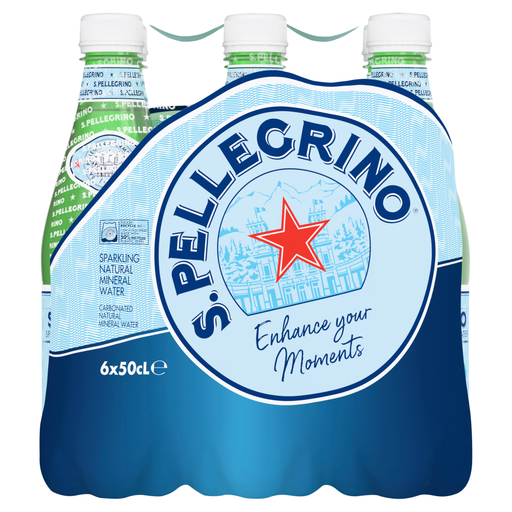
San Pellegrino Sparkling Natural Mineral Water, 6 × 500 ml
A plain sparkling-water option in six 500 ml bottles. Check the pack’s carbohydrate and sugars figures for the amount you drink.
 No image available
San Pellegrino Sparkling Natural Mineral Water, 6 × 1 L
This plain sparkling-water option comes in six 1 L bottles rather than the 500 ml format above. Use the pack label and the amount poured when checking carbohydrate and sugars.
 No image available
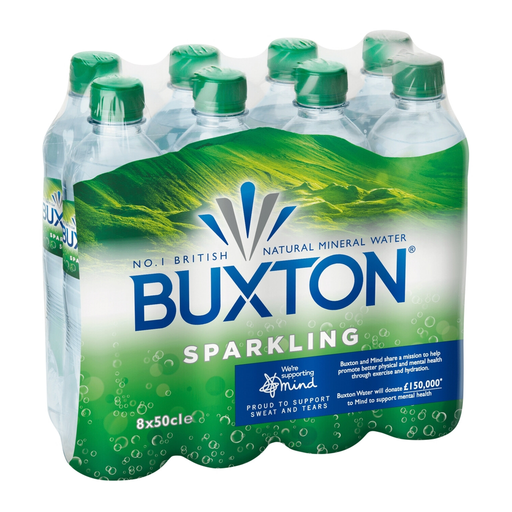
Buxton Sparkling Water, 8 × 500 ml
An eight-bottle format for choosing plain fizz instead of a flavoured drink. Check the current nutrition panel if you need a carbohydrate figure for each 500 ml bottle.
 No image available
Highland Spring Sparkling Spring Water, 6 × 1 L
For a plain-water choice, the product ingredients are listed as natural sparkling mineral water. The pack contains six 1 L bottles; check its nutrition label if you count carbohydrate for each serving.
Questions about sparkling water and sugar
Does “no added sugar” mean a sparkling drink contains no sugar?
No. Sugar can come from ingredients such as fruit juice. M&S Juicy Apple and Elderflower is labelled no added sugar but lists 6.6 g sugars per 100 g and contains 59% apple juice from concentrate, so check the nutrition panel as well as the front label.
What should I check when counting carbohydrates?
Check total carbohydrate for the amount you will actually drink, using the per-100-ml or per-100-g and portion information on the nutrition panel. Diabetes UK says carbohydrate awareness matters for people with diabetes and that counting is particularly helpful for people using basal and bolus insulin.
How can I choose flavoured sparkling water without sweeteners?
Read the ingredients of the exact flavour as well as its carbohydrate and sugars figures. S.Pellegrino states that Essenza contains no sugars or sweeteners, while Tesco Apple & Raspberry lists sucralose and M&S Lemon and Lime lists steviol glycosides.
Does sugar-free sparkling water still matter for teeth?
Yes. The NHS says carbonated drinks are associated with dental erosion because of their acid content, regardless of whether they contain sugar or sweeteners. A sugar-free label does not remove that consideration.


