What to check before choosing
Decide whether you want plain water or flavour, then compare the nutrition panel for the exact drink and serving size. Finally, confirm that the multipack contains the cans you intend to buy.
| Priority |
What to check |
Your needs |
| Total sugars |
Read “of which sugars” for the exact variant. Check whether the figure is per 100ml, per can or per serving before comparing drinks. |
I want a fizzy everyday drink without choosing a sugary soft drink by mistake. Diabetes UK advises sugar-free alternatives to sugary fizzy drinks outside hypo treatment. |
| Fruit ingredients |
Check the sugars figure as well as any “no added sugar” claim. M&S lists 7.3g sugars per 100g for its pineapple-and-passion-fruit sparkling drink, whose ingredients include apple juice concentrate. |
If I choose a fruit-flavoured drink, I want to know how much sugar is in the serving, regardless of whether sugar was added. |
| Sweeteners |
Read the named ingredients rather than assuming all sugar-free drinks use the same sweeteners. Tesco lists acesulfame K and sucralose in its Volvic Mango Passion Sparkling 4 × 330ml multipack. |
I want flavour without overlooking ingredients that matter to me. Diabetes UK notes that polyols contain carbohydrate and calories, so I may need individual advice if my insulin plan requires carbohydrate assessment. |
| Can format |
Confirm the can size, number of cans and current product label. A brand’s sparkling-water range may also include bottles or drinks with different ingredients. |
Individual cans are useful for the occasions I have in mind, but I want the pack I receive to match the format and label I checked. |
Brand and retailer references
These examples help distinguish plain water, flavoured water and fruit-based drinks; a brand name alone cannot establish a particular product’s ingredients or can format.
Highland Spring
A plain sparkling-water option if you do not require cans.
- Highland Spring describes its sparkling water as having “nothing added but bubbles”.
- Its listed 500ml, 1.5L and 6 × 1L formats are bottles; check the exact product if a can multipack is essential.
Perrier
A carbonated mineral-water reference for shoppers considering plain water.
- Perrier’s international site describes its carbonated mineral water as sugar-free and calorie-free.
- Check the UK listing for the exact product, ingredients and pack format, particularly if choosing a flavoured variant.
San Pellegrino
Check the product type: sparkling natural mineral water and fruit soft drinks are different choices.
- Sainsbury’s lists San Pellegrino Sparkling Natural Mineral Water in a 6 × 500ml bottle pack.
- Tesco lists 14.7g sugars per 330ml can for San Pellegrino Limonata. Do not transfer the mineral-water description to that soft drink.
Tesco
Its product listings illustrate why nutrition details must be checked for each flavoured multipack.
- Tesco lists 0g sugars per 330ml can and names the sweeteners for Volvic Mango Passion Sparkling 4 × 330ml.
- Confirm the current label and stock for the exact flavour before buying.
Sainsbury’s
Its sparkling-water category includes plain water, mineral water and flavoured options in different pack sizes.
- Listed examples include plain sparkling spring water in a 12 × 500ml pack and Aqua Libra flavoured sparkling water in a 4 × 330ml pack.
- Open the exact item to confirm its can format, ingredients and nutrition panel; the category listing does not establish these for every product.
M&S
Its plain mineral water and fruit-flavoured sparkling drinks call for separate label checks.
- Its pineapple-and-passion-fruit sparkling drink provides a concrete example of how to compare a no-added-sugar claim with the nutrition panel.
- That drink lists 7.3g sugars per 100g and contains apple juice concentrate; it is not interchangeable with a drink showing 0g sugars.
A Joybuy sparkling-water option
The option below is an orange-infused sparkling-water can multipack for shoppers considering a flavoured drink. Compare the current pack label with your sugar and ingredient requirements.
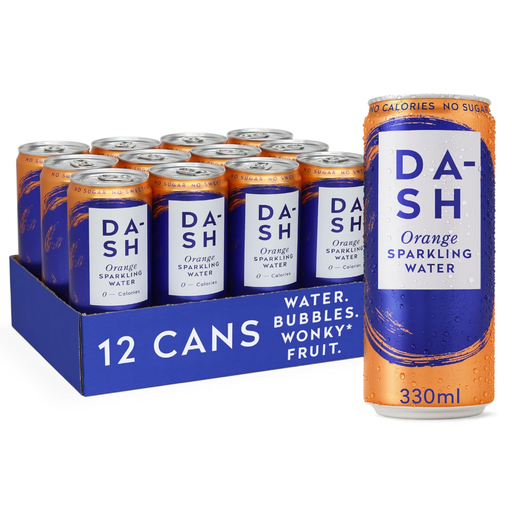 Image unavailable
DASH Water Wonky Oranges Sparkling Water 12 × 330ml
This orange-infused sparkling-water multipack offers individual 330ml servings. Check the current pack’s “of which sugars” value, serving size and ingredients before deciding whether it meets your requirements.
View on Joybuy
Common questions
Is plain sparkling water an everyday option if I have diabetes?
Plain sparkling water is a water option if you want carbonation without flavour. Diabetes UK describes water as an all-round drink and advises choosing sugar-free alternatives to sugary fizzy drinks outside hypo treatment. Follow any individual advice from your healthcare team about drinks.
Does “no added sugar” mean a sparkling drink is sugar-free?
No. M&S describes its pineapple-and-passion-fruit sparkling drink as having no added sugar, but lists 7.3g sugars per 100g and includes fruit juice ingredients. Check total sugars for the amount you intend to drink.
What should I check on a flavoured sparkling-water multipack?
Check the number and size of the cans, sugars per serving, ingredients and any named sweeteners. For example, Tesco lists 0g sugars per 330ml can for Volvic Mango Passion Sparkling 4 × 330ml and names acesulfame K and sucralose; confirm the current label for the pack you buy.
Why does Diabetes UK distinguish sugary fizzy drinks from everyday alternatives?
Diabetes UK advises using sugary fizzy drinks to treat hypos and otherwise choosing sugar-free alternatives. Follow your own hypo-treatment plan and your diabetes team’s guidance for individual treatment decisions.
Do I need to avoid every drink containing sweeteners?
Not necessarily: read which sweeteners the exact drink contains rather than treating them as one ingredient. Diabetes UK notes that polyols contain carbohydrate and calories and advises people adjusting insulin doses to seek individual guidance from their healthcare team.


