
24/7 Customer Support

Free returns

Same-day & Next-day Delivery

Quality Guaranteed

Unlock Your Welcome Offers: FREE Delivery | Up to 80% OFF | Free 30-day JoyPlus trial
Download the APP
Buying sparkling water multipacks can seem straightforward until you compare serving sizes, ingredients, packaging and total cost. A low shelf price may hide a smaller volume, while a flavour-led drink may contain sugar or sweeteners that do not match your preferences.
For UK households, offices and event organisers, the most useful comparison is not simply the brand name. It is the amount of drink, the format, the nutrition panel and how easily the packaging fits your routine.
A four-pack of 330ml cans contains 1.32 litres, while a 12-pack of 500ml cans contains 6 litres. Looking only at the headline price can make a smaller multipack appear better value.
Before ordering, calculate:
This is particularly important when comparing sparkling water 330ml, sparkling water 500ml and sparkling water 1 litre formats.
Plain sparkling spring water or sparkling mineral water generally contains water and carbon dioxide, but flavoured sparkling water may also include fruit juice, natural flavourings, acids or sweeteners. A product described as a modern soda may have a different taste and nutrition profile from fruit-infused sparkling water.
Always check the ingredients list and nutrition table per 100ml. “Zero sugar” and “sugar-free fizzy drinks” can still contain sweeteners, while a drink with fruit juice may contain naturally occurring or added sugars.
Bottled sparkling water is familiar and easy to store, but larger bottles may lose carbonation after opening. Canned sparkling water can be convenient for individual portions, although cans need to be handled carefully and disposed of through the appropriate recycling route.
Check whether the container is resealable, whether it needs refrigeration after opening and whether your household or workplace has enough cool, dry storage space.
Choose the container around its intended use:
For offices or events, larger cases can reduce the frequency of reordering. For a small household, however, an oversized case may occupy valuable cupboard space and take longer to consume.
Plain sparkling water often has 0g sugar and 0 calories per 100ml, but flavoured options vary. For example, the Dash raspberry drink lists 0g sugar and 1 kcal per 100ml, while Poppi Raspberry & Rose lists 1.1g sugar and 8 kcal per 100ml.
Read the complete panel rather than relying on front-of-pack wording. Look for:
Nutrition information should be checked against the product packaging before consumption, as formulations and labels can change.
Packaging is a practical consideration as well as an environmental one. Some products use aluminium cans, while others use PET bottles or glass-style bottles. Review:
Cano Water’s sparkling range, for instance, uses aluminium cans and offers both resealable 500ml cans and ring-pull 330ml cans. Highland Spring’s larger format includes bottles described as made with 100% recycled PET excluding the cap and label. These are product-specific features, so check the listing and physical packaging before ordering.
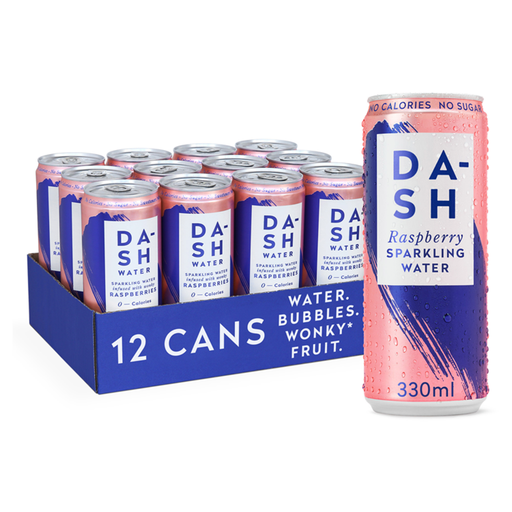
Why This Fits Their Persona: A 12-pack of 330ml cans offers portioned servings for everyday lunches, desks and small gatherings, with a raspberry flavour for shoppers who want more character than plain sparkling water.
The listing identifies the ingredients and nutrition values clearly, including 0g sugar and no sweeteners, rather than relying only on flavour-led wording.
12 x 330ml cans; raspberry extract and natural flavourings; 1 kcal per 100ml.
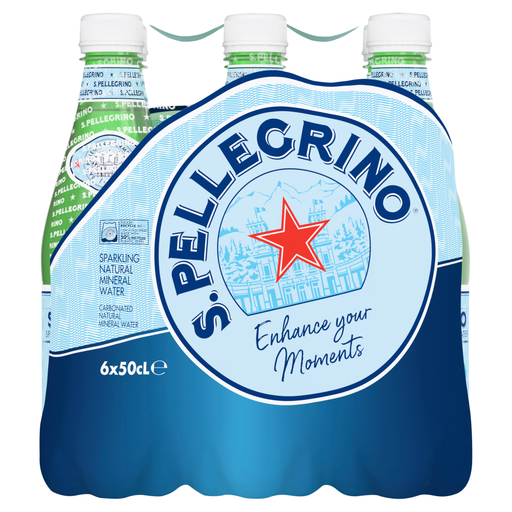
Why This Fits Their Persona: The 500ml bottles are convenient for serving with meals, hosting guests or placing at individual table settings.
The listing states natural mineral water and carbon dioxide, with 0g sugar and 0 calories per 100ml, making the contents easy to compare.
Six 500ml bottles; suitable for meals or mixers; best served chilled.
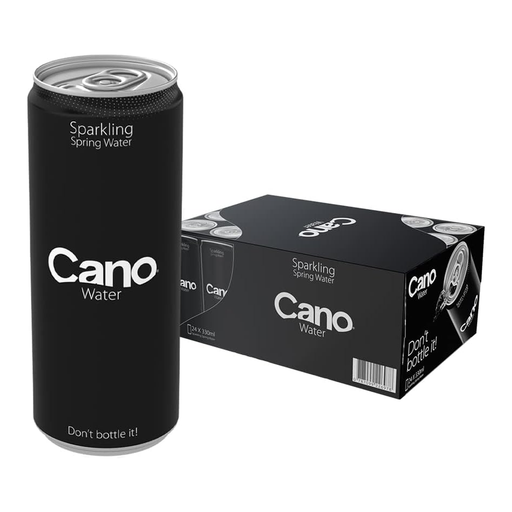
Why This Fits Their Persona: A 24-can case supplies 7.92 litres, making it suitable for shared office kitchens, family fridges and larger events.
The case volume is stated clearly, and the product uses plain natural spring water and carbon dioxide rather than hidden flavour ingredients.
24 x 330ml cans; UK spring-sourced water; aluminium packaging described as infinitely recyclable.

Why This Fits Their Persona: This larger case suits shoppers who want a fruit-flavoured drink with a zero-sugar profile for home, work or social occasions.
The nutrition panel lists 0g sugar and 0 kcal per 100ml, while the ingredients identify the sweeteners used.
24 x 330ml cans; black grape flavour; erythritol and sucralose listed in the ingredients.
We have compiled a complete, real-time list of products that fully satisfy these strict selection criteria and UK safety regulations.
They can offer a lower price per litre, but this depends on pack size, delivery charges and promotions. Compare the total volume rather than the number of containers. A 24 x 330ml case and a six-pack of 500ml bottles are not equivalent quantities.
Follow the product’s storage instructions. Many bottles should be refrigerated after opening and consumed within the stated period. Resealable cans can help preserve carbonation between servings, but the container should still be kept chilled where instructed.
For individual desk use, 330ml or 500ml sparkling water multipacks are generally easier to distribute. A 1 litre bottle can suit shared meals, but it may lose fizz if repeatedly opened. For busy offices or parties, a larger case of individual cans or bottles can reduce sharing and storage complications.