Occasional second-home hosts
Match bottle sizes to the usual number of guests and the length of their stays. Smaller bottles let you open fewer servings at a time; unopened stock still needs suitable storage between visits.


For a second home, plain sparkling water is a straightforward starting point if the aim is to avoid added sugar and sweeteners: check that the ingredients are water and carbon dioxide. If guests want flavour, distinguish drinks with no sugars or sweeteners from no-added-sugar drinks that contain sweeteners or naturally occurring fruit sugars. Choose bottle sizes around the length of each stay and follow the storage instructions on the bottles you buy.
Match bottle sizes to the usual number of guests and the length of their stays. Smaller bottles let you open fewer servings at a time; unopened stock still needs suitable storage between visits.
Check both the sugars declaration and ingredients. Plain water and a flavoured drink labelled no added sugar are not necessarily equivalent: the latter may contain sweeteners or fruit juice.
Decide whether sweeteners or fruit sugars are acceptable before selecting a flavour. Sugar content and the acidity of a fizzy drink are separate considerations.
Start with what the drink contains, then choose a bottle size you are likely to finish during a visit.
| Priority | What to check | Your needs |
|---|---|---|
| Total sugars | Read the sugars value per 100ml or per 100g, using the unit on the label. Check for juice as well as the no-added-sugar claim: the Advertising Standards Authority explains that the claim concerns added sugars and foods used for sweetening, not the absence of all sugars. | I want plain or very-low-sugar stock, rather than assuming every no-added-sugar fruit drink has the same sugar content. |
| Sweeteners | Look for named sweeteners in the ingredients. Sainsbury's Blackcurrant & Cherry sparkling flavoured water, for example, is labelled no added sugar but lists sucralose; its sugars declaration is below 0.5g per 100ml. | If the household avoids sweeteners, I need the exact flavoured variant to confirm their absence, not just a no-added-sugar label. |
| Flavour | Distinguish plain water, flavoured water without sugars or sweeteners, sweetener-containing drinks and juice-based drinks. S.Pellegrino describes Essenza as having no sugars or sweeteners; M&S lists over 60% juice and 6.6g sugars per 100g for its Apple & Elderflower drink. | Guests may want flavour, but I can choose it according to whether they accept sweeteners, fruit sugars or neither. |
| Bottle size | Compare the bottle size with the number of people staying and the likely time until the next visit. Check each product's instructions for opened bottles rather than applying one timeframe to every brand. | For a short solo stay, I would rather open a small bottle; for a group, a larger bottle may be practical if it will be finished. |
| Storage | Check the best-before date and the unopened-storage directions. Tesco advises cool, dry storage out of direct sunlight for its cited sparkling mineral water, followed by refrigeration and consumption within three days of opening. | Stock will sit between visits, so I need a suitable place for unopened cases and a plan for bottles opened during a stay. |
| Acidity | Consider sugar and acidity separately. Northumbria Healthcare NHS Foundation Trust notes that sugar-free fizzy drinks can still be acidic and contribute to tooth erosion. | If frequent fizzy drinks or dental erosion are concerns, removing added sugar alone does not settle the choice. |
Fruit sugars can remain in a drink without added sugar. M&S lists 6.6g sugars per 100g for its no-added-sugar Apple & Elderflower drink.
Compare the sugars declaration and ingredients if low total sugar is the reason for choosing the drink.
Sainsbury's no-added-sugar Blackcurrant & Cherry sparkling flavoured water contains sucralose.
If sweeteners are unwanted, check the ingredients of the exact flavour rather than relying on the front-of-pack claim.
An opened bottle may remain unfinished when a stay ends. Tesco instructs buyers to refrigerate its cited sparkling mineral water after opening and consume it within three days.
Choose smaller bottles for individual servings and larger ones when the expected group can finish them within the product's stated period.
Product storage directions call for protection from direct sunlight; Buxton also advises keeping bottled water away from solvents and chemicals.
Use a cool, dry indoor storage spot and check best-before dates when rotating stock between visits.
Tesco lists plain sparkling mineral water, including a 2L bottle that may suit shared stays.
Its sparkling-water range includes plain multipacks and no-added-sugar flavoured drinks.
Highland Spring describes its plain sparkling spring water as water with bubbles added.
S.Pellegrino Essenza is a flavoured sparkling mineral-water option for those checking both sugar and sweeteners.
Perrier's manufacturer describes its plain carbonated mineral water as sugar-free and calorie-free.
M&S Apple & Elderflower is a juice-based no-added-sugar sparkling drink rather than plain sparkling water.
These plain sparkling-water bottles offer 500ml sizes for opening individually and 1L bottles for shared stays. For any pack, check the delivered label for ingredients, best-before date and storage instructions.
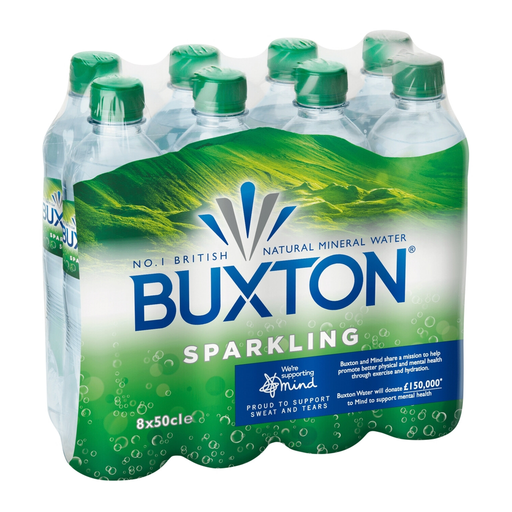 No image available
The eight 500ml bottles provide smaller portions to open during short stays. Check the bottle for opened-storage directions before leaving any unfinished water between visits.
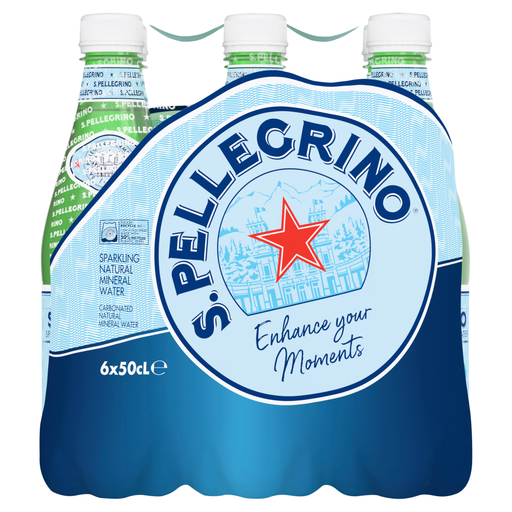 No image available
Six 0.5L bottles allow individual servings to be opened as needed. Check the bottle label for its best-before date and instructions after opening.
 No image available
The six 1L bottles are a larger format to consider for shared stays. Plan to finish opened bottles according to the instructions on the pack.
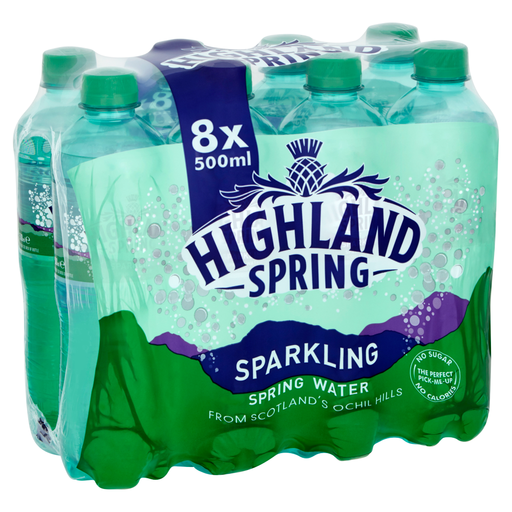 No image available
The 500ml bottles suit occasions when guests will open one serving at a time. Check the pack's storage directions when putting unopened bottles away between visits.
 No image available
Six 1L bottles offer a larger format for visits with more than one guest. Compare expected use with the pack's instructions for storing opened bottles.
No. The Advertising Standards Authority explains that the GB no-added-sugars claim concerns added sugars and foods used for sweetening; naturally occurring sugars may remain. M&S, for example, lists 6.6g sugars per 100g for its no-added-sugar Apple & Elderflower drink. Read the sugars declaration if total sugar matters to your choice.
Yes. Sainsbury's Blackcurrant & Cherry sparkling flavoured water lists sucralose. If you want neither sugar nor sweeteners, check both the nutrition panel and ingredients of the exact product; S.Pellegrino describes its Essenza range as having neither.
Follow the bottle's directions and check its best-before date. Tesco advises keeping its cited sparkling mineral water cool, dry and out of direct sunlight; Buxton also advises storing bottled water away from solvents and chemicals.
Follow that product's refrigeration and consumption instructions rather than leaving an opened bottle until the next visit. Tesco says to refrigerate its cited sparkling-water products and consume them within three days of opening.
No. Northumbria Healthcare NHS Foundation Trust notes that sugar-free fizzy drinks can still be acidic and contribute to tooth erosion. Consider acidity separately from the sugars declaration when deciding what to keep for frequent drinking.