Fizzy-drink switchers
If flavour matters at lunch, decide whether you are comfortable with sweeteners as well as checking the no-added-sugar wording. Sainsbury’s and Tesco both describe flavoured examples that contain sweeteners.


Choose plain sparkling water if you want bubbles without a flavoured-drink formulation; choose a flavoured no-added-sugar drink if you want flavour and accept any sweeteners listed on its label. If you want flavour but avoid sweeteners, look for an explicit no-sugars, no-sweeteners statement on the exact product. For one desk lunch, a smaller portion is easier to finish than a multi-serving bottle that needs storing after opening.
If flavour matters at lunch, decide whether you are comfortable with sweeteners as well as checking the no-added-sugar wording. Sainsbury’s and Tesco both describe flavoured examples that contain sweeteners.
Plain sparkling water is one route. If you want flavour too, check that the exact drink explicitly states it contains no sweeteners rather than relying on a no-added-sugar claim.
A larger bottle can make sense when several people will use it. Check its serving count and instructions for storing it after opening before choosing it over an individual portion.
Start with the formulation, then choose a pack you can finish or store as directed.
| Priority | What to check | Your needs |
|---|---|---|
| Sugar and sweeteners | Read the sugars figure per 100ml and the ingredient list. If avoiding sweeteners, look for an explicit statement about them on the exact drink. | I want to know whether the drink is simply labelled no added sugar or also contains no sugars and no sweeteners. |
| Lunch portion | Compare the volume of an individual portion with the bottle’s serving count. Check whether a larger bottle needs refrigerating after opening. | One portion suits my lunch; a multi-serving bottle makes more sense if I can share it or keep it in a fridge. |
| Drinking pattern | Consider whether you will have the drink with lunch or keep sipping it through the day. Oxford Health NHS Foundation Trust identifies fizzy and fruit-flavoured drinks as acidic-drink examples and advises reducing how often fizzy drinks are consumed. | I would rather have one drink with lunch than leave a fizzy drink open at my desk all afternoon. |
| Exact product | Check the flavour, pack size, ingredients and nutrition panel when choosing. Different product lines from the same brand need not have the same formulation. | If I am avoiding sweeteners, the label on the particular flavour matters more than the brand name alone. |
Sainsbury’s Apple & Elderflower lists acesulfame K and sucralose despite its no-added-sugar label; Tesco’s Apple & Raspberry is also described as containing sweetener.
Read the ingredients if avoiding sweeteners is part of your choice. Plain sparkling water or a drink explicitly labelled without sweeteners may fit instead.
Sainsbury’s lists four servings for its 1L Apple & Elderflower bottle and instructs customers to refrigerate it after opening and use it within three days.
Choose a portion you expect to finish at lunch, or check that you can store the remainder as the label directs.
Oxford Health NHS Foundation Trust includes fizzy and fruit-flavoured drinks among acidic-drink examples and explains that acid can wear away tooth enamel.
Consider having a fizzy drink with lunch rather than sipping it repeatedly throughout the workday.
Check the product line as well as the brand: plain waters and flavoured drinks can have different ingredients.
Sainsbury’s describes its 1L Apple & Elderflower sparkling drink as no added sugar.
Tesco describes its Apple & Raspberry sparkling drink as a no-added-sugar flavoured water in a 4 × 500ml pack.
Tesco describes Volvic Touch of Strawberry Sparkling as a flavoured drink with sweeteners in 330ml cans.
S.Pellegrino offers plain sparkling mineral water and the flavoured Essenza range.
Highland Spring’s plain sparkling-water range includes 500ml and larger bottles.
Perrier describes its plain carbonated mineral water as containing no sugar.
These options include plain sparkling water in individual and larger bottles, orange-infused sparkling water and a compact soda-water multipack. Check the exact label if avoiding sweeteners matters to you.
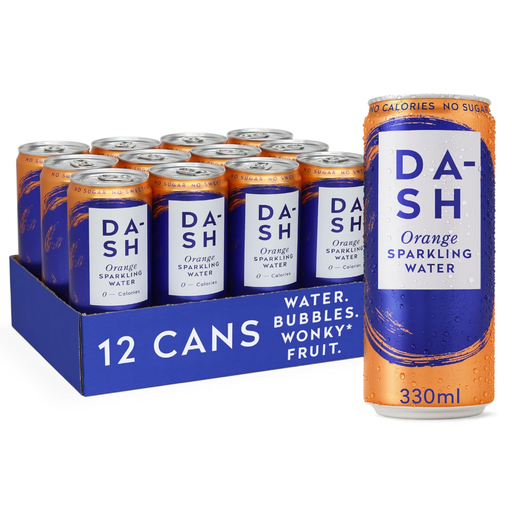 No image available
The 330ml portions offer an orange-infused option for an individual lunch. Check the current ingredients and nutrition panel if sugar or sweeteners determine your choice.
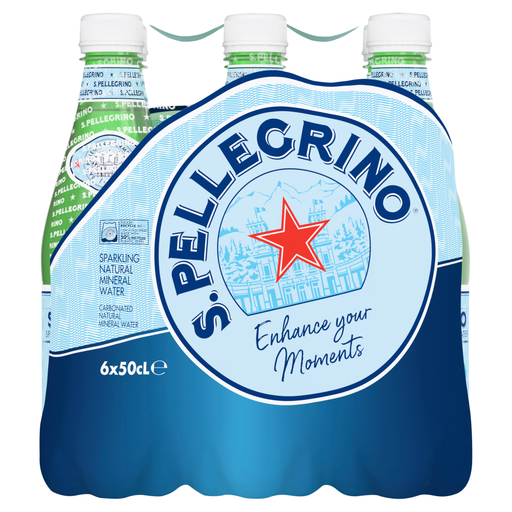 No image available
Take one 0.5L bottle for a plain sparkling-water lunch drink rather than a fruit-flavoured option.
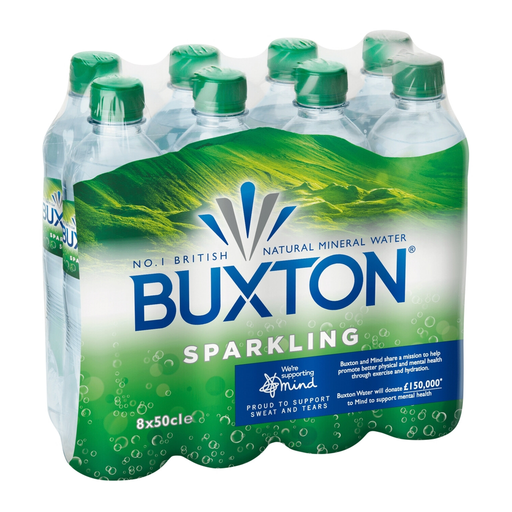 No image available
This pack divides into eight 500ml portions if you want one plain sparkling-water bottle with lunch.
 No image available
The 1L bottles are worth considering when you can share or store a larger plain sparkling-water bottle. Follow the pack’s instructions after opening.
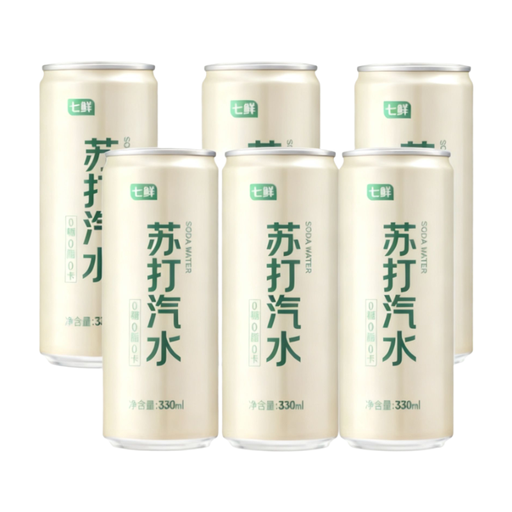 No image available
Its 330ml portions offer a compact carbonated drink for lunch. Check the current pack label before choosing it if you need to avoid sweeteners.
No. That wording alone does not tell you whether the drink contains naturally occurring sugars. Check the sugars figure per 100ml and the ingredients on the exact product.
Yes. Sainsbury’s lists acesulfame K and sucralose in its no-added-sugar Apple & Elderflower drink, while Tesco describes its Apple & Raspberry drink as containing sweetener. Check the ingredients if you want to avoid them.
A 330ml or 500ml portion is easier to plan as one lunch drink than a multi-serving bottle. If choosing a larger bottle, check its serving count and whether you can store what remains as directed.
Sugar-free wording does not settle acidity. Oxford Health NHS Foundation Trust identifies fizzy and fruit-flavoured drinks as acidic-drink examples and advises reducing how often fizzy drinks are consumed.
Follow the instructions for that bottle. Sainsbury’s says its 1L Apple & Elderflower sparkling drink should be refrigerated after opening and used within three days.