For a small group reviewing a draft in a noisy office, choose a speakerphone around voice pickup, noise handling and where colleagues will sit, rather than speaker output alone. A portable small-room model may suit a desk-side discussion; consider wider or expandable coverage when participants regularly sit farther apart. Noise reduction can help remote participants hear the discussion, but it cannot make an open-office conversation private.
Who needs a speakerphone for draft reviews?
Small, ad-hoc review groups
If colleagues gather around a desk while others join remotely, prioritise two-way conversation and a pickup area that covers every seat. Jabra lists full duplex, echo cancellation and a pickup range of up to 2.5 m for its Speak2 75; compare that range with your layout rather than assuming it applies to every portable model.
Teams working near office noise
Nearby conversations and typing can compete with a draft discussion. Noise-focused microphone processing is worth considering, provided the speakers can sit within the stated pickup zone. Yamaha specifies a 1 m pickup radius for the open-workspace mode on its discontinued YVC-330.
Groups with recurring larger reviews
When more colleagues need to contribute from around a room, check participant guidance and expansion options alongside microphone placement. EPOS positions the EXPAND 80T for up to 16 in-room participants and offers expansion microphones.
What matters when choosing one?
Start with the usual seating layout and the office noise around it. Then check how the speakerphone connects to the laptop and meeting service used for the review.
| Concern |
What to check |
Who this matters to |
| Voice pickup amid noise |
Look for directional or beamforming microphones and stated call-noise, echo or reverberation processing. Keep speakers within the stated pickup area. |
When typing and nearby conversations compete with our voices, I want remote colleagues to follow the wording discussion. Around 46% of consumers would put voice pickup first. |
| Group coverage |
Compare the farthest seat with the model’s pickup range and room guidance; check whether microphones or a second unit can extend coverage. |
If everyone around the table needs to contribute, I cannot choose on participant count alone and risk distant speakers being missed. Roughly 27% of consumers would make group coverage their primary concern. |
| Workflow compatibility |
Confirm the laptop connection, any supplied adapter or dongle, and support for the meeting service used by the office. |
For a short review call, I need the device to work with our existing laptop and conferencing setup without changing the workflow. Around 18% of consumers would prioritise compatibility. |
| Portability |
Check the connection and power arrangement for moving between desks, while keeping the model’s coverage limits in mind. |
When reviews move between desks or rooms, I would rather carry one small unit than rely on a fixed meeting-room setup. Approximately 9% of consumers would put portability first. |
Buying mistakes to avoid
-
Choosing by participant count alone
A stated group size does not tell you whether the person at the far end of your table will be within microphone range, particularly in a reverberant room.
Sketch the usual seating layout and compare the farthest speaker’s distance with the exact model’s pickup guidance and any expansion options.
-
Using noise reduction as a privacy measure
Processing intended to improve the audio sent to remote participants does not stop people nearby from hearing a sensitive draft discussion.
Move confidential reviews to a private room or change how the discussion is held. Treat a close-range mode as an audio feature, not a privacy control.
-
Assuming every connection works with every meeting service
Connectors, supplied accessories and conferencing certifications differ between models and variants.
Check the host laptop’s connector, what comes with the speakerphone and whether the exact variant supports the office’s meeting service.
-
Planning around a model without checking availability
Yamaha identifies the YVC-330 as discontinued, so its open-workspace specifications are useful for comparison but do not establish it as a current purchase option.
Before ordering any exact model, check current availability and support arrangements. Consider a discontinued unit for an existing fleet only after checking that it remains suitable to use.
Relevant brands for reference
Jabra
Jabra’s Speak2 75 is a portable speakerphone specified for rooms up to 4.5 m × 4.5 m.
- Jabra specifies four microphones, full duplex, echo cancellation, call-noise reduction and a pickup range of up to 2.5 m for this model.
- Its super-wideband experience depends on compatible conferencing software and device support; check the exact setup before relying on it.
EPOS
The EXPAND 80T is positioned for larger in-room groups, with an option to add expansion microphones.
- EPOS specifies six adaptive beamforming microphones and lists the EXPAND 80T as Microsoft Teams-certified.
- Confirm that its room coverage and expansion options match your seating layout rather than choosing extra capacity for a small desk-side group.
AnkerWork
AnkerWork positions the PowerConf S500 for small-to-medium-room discussions of up to 12 people with one unit.
- AnkerWork lists four microphones, full duplex and Zoom Rooms and Google Meet certification for the PowerConf S500.
- Check the exact connection accessories and seating coverage needed for your review; certification for one service is not certification for another.
Yamaha
Yamaha’s YVC-330 provides a reference point for close-range voice pickup in an open workspace.
- Yamaha specifies a 1 m pickup radius in SoundCap mode, intended to limit distracting open-workspace noise.
- Yamaha identifies the YVC-330 as discontinued. Its close pickup zone also requires intended speakers to sit near the unit.
Joybuy options for small-group reviews
These portable speakerphones are relevant to colleagues gathered for a small draft review. Check each model’s connection and pickup area against your seating layout; the options here do not represent every approach to a larger room.
 No image available
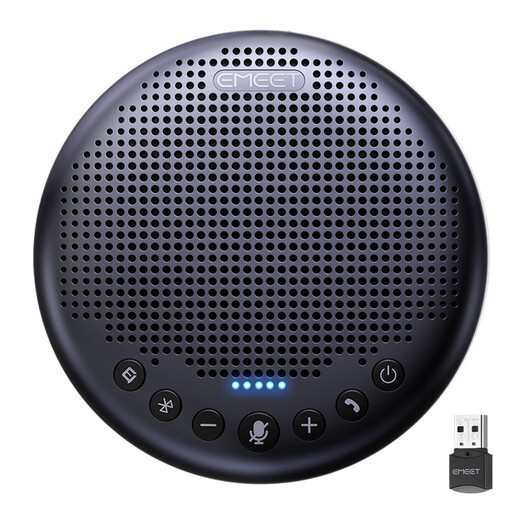
EMEET Lunaplus 8-Mic Bluetooth Conference Speaker
Consider this for a group gathered around a shared unit where Bluetooth is useful. The product title specifies eight microphones, 360° voice pickup, AI noise reduction and a 5W speaker; check the pickup area against the actual seating layout rather than treating those features as a coverage guarantee.
View on Joybuy
 No image available
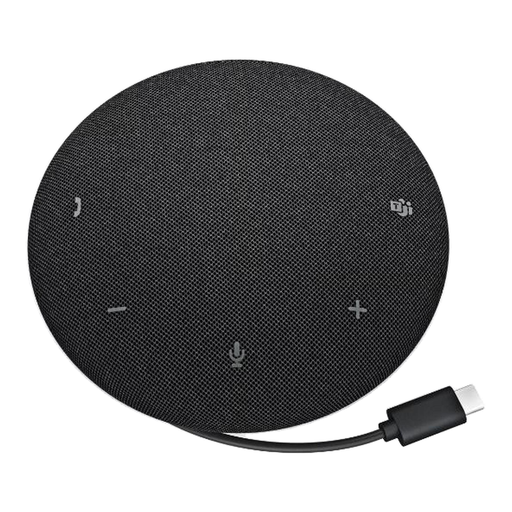
DELL Pro Wired Speakerphone SP325
Consider this for a desk-side review where a wired speakerphone suits the office setup. Confirm the connection required by your laptop and whether the cable and microphone pickup area allow the unit to sit near everyone who needs to speak.
View on Joybuy
Common questions
Will a noise-reducing speakerphone make an open office private?
No. Noise reduction does not prevent nearby colleagues from overhearing a local conversation. Use a private room for confidential draft discussions; a close-range pickup mode, such as the 1 m SoundCap mode Yamaha specifies for the YVC-330, is an audio feature rather than a privacy measure.
Where should the speakerphone sit during a draft review?
Place it among the people who need to speak, then compare the farthest seat with the exact model’s stated pickup range or zone. A small unit at one end of a long table should not be assumed to capture distant speakers just because it has noise processing.
Does our office need a Teams-certified speakerphone?
If your office uses Microsoft Teams and needs its supported controls, check certification for the exact model and variant. EPOS lists the EXPAND 80T as Teams-certified, while AnkerWork lists Zoom Rooms and Google Meet certification for the PowerConf S500; these platform claims are not interchangeable.
What should a UK office do with an old speakerphone?
Use your organisation’s route for reusing or recycling unwanted electrical equipment rather than treating a speakerphone as ordinary rubbish. GOV.UK’s guidance on waste electrical and electronic equipment describes measures encouraging recovery, reuse and recycling; check your business waste procedure and any supplier take-back arrangement.


