What matters when choosing?
Start with the distance from the speakerphone to the furthest learner, then check two-way audio and your teaching device’s connection. Treat expansion as a separate decision about future room layouts.
| Concern |
What to check |
Who this matters to |
| Voices from every seat |
Measure the furthest seat from the proposed central position. Compare that distance with a pickup specification for the exact model, then test a call from the usual seats. |
If learners sit across the table, I need remote participants to hear quieter voices without moving the device between speakers; roughly 36% of consumers would put coverage first. |
| Natural two-way dialogue |
Look for an explicit full-duplex specification and test brief overlapping speech in the meeting app. Check echo in the actual room. |
When learners practise acknowledgements and turn-taking, I do not want one side of the call to disappear as another person responds; about 29% of consumers would prioritise dialogue flow. |
| Teaching-device setup |
Check the exact connector, any adapter needed and whether Bluetooth use fits local IT rules. Select the speakerphone as both input and output in the meeting app. |
If I teach in different rooms or switch devices, I need to start the lesson without troubleshooting the connection; around 21% of consumers would make flexible setup their main concern. |
| Room growth |
Check whether the exact base model accepts additional microphones, whether they come separately and where a longer table would place them. |
If the discussion circle is likely to grow, I want voices at new seats to remain within reach without replacing the setup; roughly 14% of consumers would put expansion first. |
Joybuy speakerphones for small-group teaching
These options cover a portable Bluetooth speakerphone and a wired tabletop speakerphone for audio-only lessons. Compare their connections with your teaching device, and check voice pickup from the seats your learners normally use.
 No image available
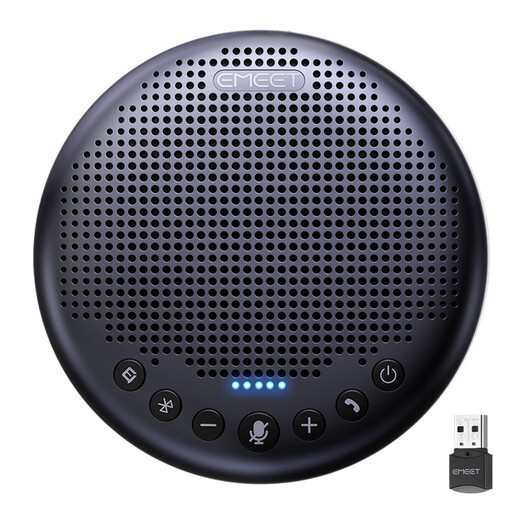
EMEET Lunaplus 8-Mic Bluetooth Conference Speaker
Consider this portable option when the teaching group meets around a table in different rooms; check that remote participants can hear someone at the furthest seat.
The product name specifies eight microphones, Bluetooth, 360° voice pickup, AI noise reduction and a 5W speaker. Confirm the connections needed by your teaching device and how the intended room layout works in a test call.
View on Joybuy
 No image available
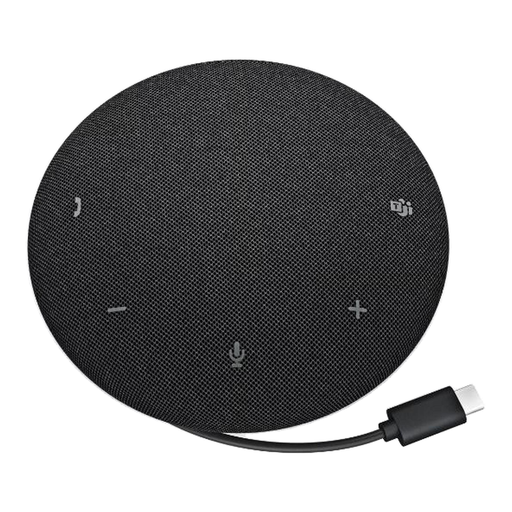
DELL Pro Wired Speakerphone SP325
Consider this wired model when the teaching computer can remain near the table. Check that its cable reaches a useful central position and that the connector suits the computer.
If learners often speak while someone remote is responding, confirm full-duplex support for the exact model before choosing it for those lessons.
View on Joybuy
Common questions
Can a personal speakerphone cover a small conversation class?
It can work if every usual seat is within the model’s stated pickup range and a remote call confirms that quieter learners can be heard. Yealink specifies 1.5 m pickup for the personal-use CP700; measure the table rather than treating a small room as proof that it will cover the group.
Why does full-duplex audio matter for conversation practice?
Full duplex is designed to let people at both ends of a call be heard at the same time, which matters when learners respond or briefly overlap. It cannot compensate for a poorly placed microphone or troublesome room echo, so test an ordinary exchange from the usual seats.
How should I set up a speakerphone before a lesson?
Put it near the centre of the learners, select it as both microphone and speaker in the meeting app, and make a test call with someone at the furthest usual seat. Check the connector and cable reach before settling on the table position.
Which conformity marking should I check for Great Britain?
For products within the scope of its guidance for England, Scotland and Wales, GOV.UK stated in March 2026 that CE marking continues to be recognised alongside or in place of UKCA marking where the relevant requirements are met. Confirm the documentation applicable to the exact product and its destination; Northern Ireland follows different marking processes.


