Small-table hybrid meeting hosts
If a few people gather around a laptop or table, you need a connection that works with the meeting computer and audio that lets both sides of the call speak during discussion.


Choose a speakerphone by the distance to the farthest person at the table, how often people speak at once and how the meeting computer will connect. If remote attendees must see people or planning materials, assess the camera and lighting separately: an audio-only speakerphone cannot make a dim room visible.
If a few people gather around a laptop or table, you need a connection that works with the meeting computer and audio that lets both sides of the call speak during discussion.
When participants sit farther from the unit, its stated pickup distance, room coverage and any expansion options matter more than how easily it fits in a bag.
If remote attendees must see people, a board or physical documents, plan for visual capture and suitable lighting as well as meeting audio.
Start with the seating layout and conversation style, then check the host connection and whether remote attendees need to see the room.
| Concern | What to check | Who this matters to |
|---|---|---|
| Overlapping discussion | Check full-duplex audio and the stated echo and noise handling for the exact model. | If people interrupt or respond quickly, I need both sides of the call to keep speaking without taking turns; around 33% of consumers put simultaneous discussion first. |
| Table coverage | Compare the farthest seat with the stated microphone pickup distance and the room layout with the stated coverage. | At a long table, I need voices from the far seats to reach remote attendees; around 27% of consumers prioritise coverage as their main concern. |
| Computer and platform setup | Match the host computer’s connection to the exact model, and check any required platform controls or variant-specific certification. | When I set up the call, I need the device to connect through the available port and provide any controls my organisation requires; roughly 20% of consumers put setup compatibility first. |
| Visibility in a dim room | Decide what remote attendees must see, then assess a camera, lighting and a way to share planning materials. | If remote colleagues need to follow a board or see who is speaking, clear audio alone will not do; about 20% of consumers place visual access first. |
A long table can put the farthest speaker beyond a unit’s stated pickup range even when the group is small. Jabra specifies up to 2.5 m for Speak2 75; HP specifies up to 3 m for Poly Sync 60.
Measure from the intended speakerphone position to the farthest regular speaker, and compare that distance with the exact model’s stated range.
Connection options differ by model. Jabra lists USB-A and USB-C for Speak2 75 and describes its Bluetooth use for smartphones and tablets; Poly lists USB computer connection and Bluetooth smartphone connection for Sync 60.
Check the host device, its available ports and any required dongle before choosing how to connect.
An audio-only device cannot show remote attendees the people or planning materials in a dim room. Logitech BCC950 includes a camera, but its stated features do not establish how well a particular dim room will appear on video.
Check the room’s lighting and the visibility of boards or documents separately from the audio setup.
EPOS identifies EXPAND 80T as Microsoft Teams-certified and distinguishes it from the standard EXPAND 80. Microsoft describes Teams call controls and operation without extra configuration for certified devices.
Record the full model suffix and confirm the precise variant’s status if your organisation requires Teams certification.
Jabra positions Speak2 75 as a portable speakerphone for rooms up to 4.5 m × 4.5 m.
Poly Sync 60 is specified for larger-table meetings in rooms up to 6 m × 6 m.
EPOS positions EXPAND 80 for groups of up to 16 in-room participants, with optional expansion microphones for up to 32.
Logitech describes BCC950 as a combined camera and speakerphone for small rooms or teams of one to four people.
These meeting speakerphones offer different connection approaches for a planning table. Check their fit against your seating layout and meeting computer; arrange video and lighting separately if remote attendees need to see the room.
 No image available
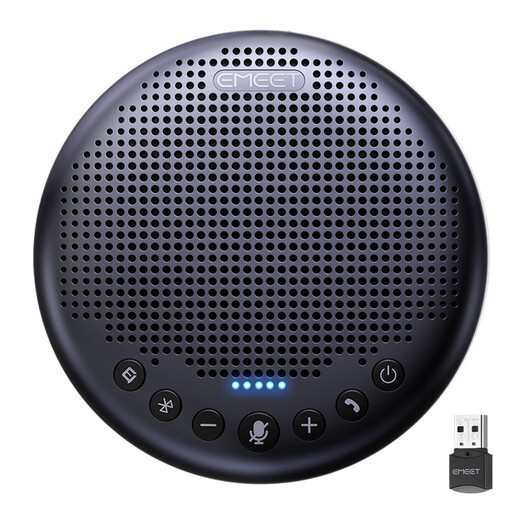
Consider this for a group discussion where Bluetooth is the intended connection. The product name states 360° voice pickup; check whether the microphone reaches the farthest seat and whether the intended host device supports your connection method.
 No image available
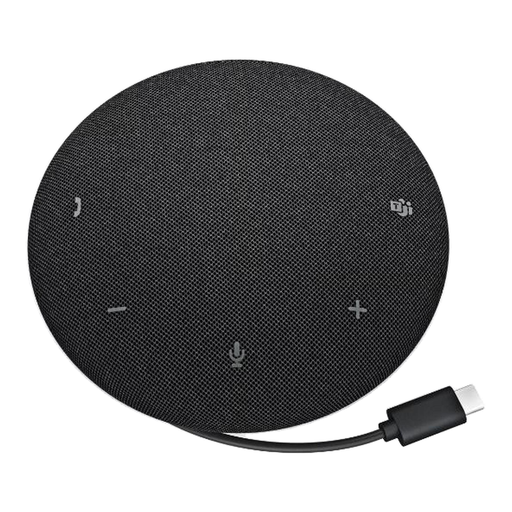
Consider this for a compact planning table where a wired connection suits the meeting computer. Check the distance to the farthest participant, and confirm full-duplex and echo handling if people regularly speak over one another.
Not for audio alone: choose by pickup distance, table coverage, simultaneous speech and connection method. If remote attendees need to see people or planning materials, assess the camera and lighting as a separate part of the setup.
Use a connection explicitly supported for the host device and exact speakerphone. Jabra lists USB-A and USB-C for Speak2 75 and describes Bluetooth use for smartphones and tablets, while Poly lists USB computer connection and Bluetooth smartphone connection for Sync 60.
Look for certification if your organisation requires the Teams-specific operation and call controls Microsoft describes for certified devices. Check the precise variant: EPOS identifies EXPAND 80T as certified, not the standard EXPAND 80.