What matters when choosing?
For a local-history talk with several possible speakers, check seating coverage first, then confirm the host-device connection and rehearse the call setup. Portability matters more if the kit regularly moves between venues.
| Concern | What to check | Who this matters to |
|---|
| Voices around the table |
Compare the furthest seat with the stated pickup distance; check the room rating and planned position. |
If people contribute from different seats, I need more than the nearest voice to reach remote listeners. Around 40% of consumers would put room-wide voice capture first. |
| Laptop and call setup |
Confirm the laptop connector, intended USB or Bluetooth method, and audio-device selection in the call software. |
When a volunteer starts the call on a shared laptop, I want a connection we can set up and test before people arrive. Reliable host-device setup would come first for around 30% of consumers. |
| Portability and power |
Check the stated talk time, charging arrangements and whether a carrying case is included. |
If the talk moves between venues, I need to carry the unit and have it ready for the full session. Around 20% of consumers would make portability and power their primary concern. |
| Controls for occasional hosts |
Look for accessible mute and volume controls, then try them in the event’s call platform. |
When I only host occasionally, I want to find mute and volume without interrupting the discussion. Simple operation would be the first priority for around 10% of consumers. |
Joybuy speakerphones for this talk
These choices cover a wired option for a laptop-led talk and a Bluetooth conference speaker for a group setting. Compare each one with the room layout and the connection you intend to use.
 No image available
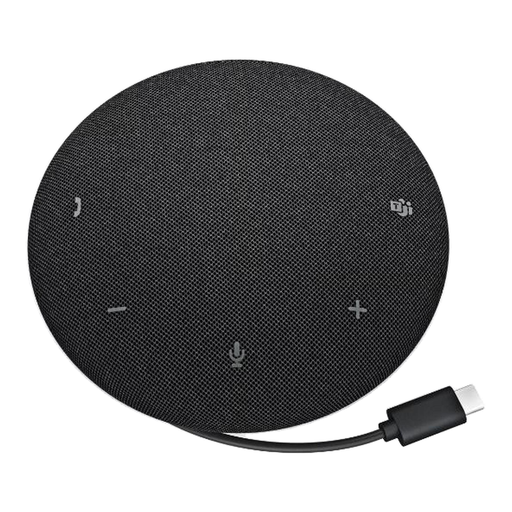
DELL Pro Wired Speakerphone SP325
A wired choice for a talk hosted from a laptop. Check that its cable reaches the intended central position and that the connection suits the host device; confirm the room coverage and conversational-audio features you need before choosing it.
View on Joybuy
 No image available
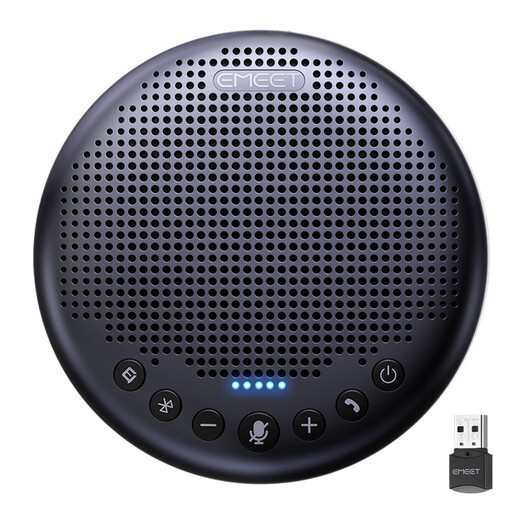
EMEET Lunaplus 8-Mic Bluetooth Conference Speaker
A group-meeting option to consider when people may speak from different sides of the table. It is listed with eight microphones and 360° voice pickup, but that does not establish the distance it will cover in your room. Confirm the connection modes, included accessories and applicable product documentation for the exact model.
View on Joybuy
Common questions
When is a portable speakerphone too small for the room?
It is a poor fit if the planned seating puts speakers beyond its stated pickup range; the room label alone cannot settle that question. Jabra specifies pickup up to 2.3 m for the Speak2 55, while HP lists up to 2 m for the Poly Sync 20+. Measure from the unit’s intended position and test the furthest seat, particularly if people will move while speaking.
Should we use USB or Bluetooth for the talk?
Start with a connection confirmed for the actual host device and test it in the call software. USB can provide a straightforward laptop setup, but check the connector; Bluetooth support varies by model and may be intended for mobile devices rather than the computer you plan to use. Jabra specifies smartphone and tablet Bluetooth use for the Speak2 55.
What should we test before attendees arrive?
Use the event’s laptop and call platform to make a two-way test call from the furthest expected seat. Select the speakerphone as both microphone and speaker, then check mute and volume. AnkerWork’s PowerConf S500 guidance notes that manual selection in the computer or conference software may be necessary.
What should we check when buying a Bluetooth speakerphone for use in Great Britain?
Check the conformity information supplied for the exact product, not just its listing. GOV.UK’s Great Britain guidance identifies safety, electromagnetic compatibility and radio-spectrum protection as matters covered by the Radio Equipment Regulations 2017. If the speakerphone will be used in Northern Ireland, check the applicable requirements there separately.


