Solo home-office attendees
You listen from a desk and occasionally ask a question, but would rather not wear a headset throughout the talk. A speakerphone lets others nearby hear the session too, so consider whether that suits your room.


For one person joining a local history talk from a desk, start by checking a compact speakerphone’s computer connection, microphone pickup and echo-control features. Wider room pickup and cordless operation matter more if another person will contribute or you will move around, but they do not replace a quiet setting or make listening private.
You listen from a desk and occasionally ask a question, but would rather not wear a headset throughout the talk. A speakerphone lets others nearby hear the session too, so consider whether that suits your room.
If typing or household sounds may be audible when you speak, look at the exact model’s microphone and echo-control features. Reducing noise at its source still matters.
If another local listener may ask questions, or you speak from different positions, check whether the stated pickup area covers where both of you will sit.
Match the connection to the device you will use for the talk, then assess pickup and echo handling for your seating position. Consider wider coverage and battery operation if the session will involve more than one local speaker or a position away from the desk.
| Concern | What to check | Who this matters to |
|---|---|---|
| Two-way conversation | Check whether the exact model specifies full-duplex audio and echo cancellation, and whether its stated pickup range covers your desk position. | If I want to ask a question without cutting across the presenter or being hard to hear, clear two-way audio comes first. Around 46% of consumers would make this their primary concern. |
| Connection and setup | Match USB-C or USB-A to your computer, check any Bluetooth device restrictions and confirm you can select the unit in the meeting app. | When joining from my usual computer or sometimes a phone, I want to know the speakerphone will connect to that device and be selected for the call. For around 36% of consumers, connection certainty would take priority. |
| Shared-room coverage | Compare stated pickup coverage with both seating positions; check the battery claim if you will use the unit away from a USB port. | Another person may join me locally, or I may speak away from the desk, so a fixed close-range position may not suit the session. Wider, more flexible coverage would be the main need for around 18% of consumers. |
More microphones may serve a wider seating area, but do not establish clearer speech for one person at a desk. Wider pickup can also capture nearby activity.
Compare the stated pickup area with where people will sit, and check full-duplex and echo-control features if you expect to speak during a lively discussion.
A model’s wired and wireless connections may serve different devices. Even after connecting it, your meeting app may still use the computer’s built-in microphone.
Confirm the exact model’s supported connection for your device, then select the speakerphone as both input and output before the talk.
Manufacturer noise-reduction features cannot guarantee the same result for every noise source, distance or room.
Position the unit near the person speaking, reduce avoidable background noise and try the meeting app’s audio test from your usual seat.
Availability can change by model and seller; a search result alone does not establish that the exact variant can be ordered.
Check the product-detail page for the model, connector variant, current availability, seller warranty and return terms before checkout.
The Speak2 range is relevant to a solo or small home-office setup where both computer and mobile-device connections matter.
The Sync range includes compact speakerphones for desk-based calls where a stated room size and pickup range help with placement.
PowerConf models are worth considering when the talk may involve voices from more than one position or cordless use.
These Joybuy choices cover a wired desk speakerphone and a Bluetooth conference speaker for consumers considering more flexible room pickup. Compare each listing with the device and seating arrangement you will use for the talk.
 No image available
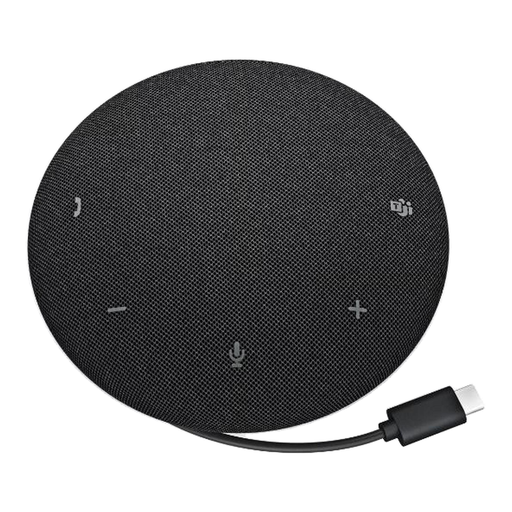
Consider this wired model if you normally join the talk from one desk and prefer a cable connection. If overlapping conversation matters, confirm its full-duplex and echo-control features before choosing it.
 No image available
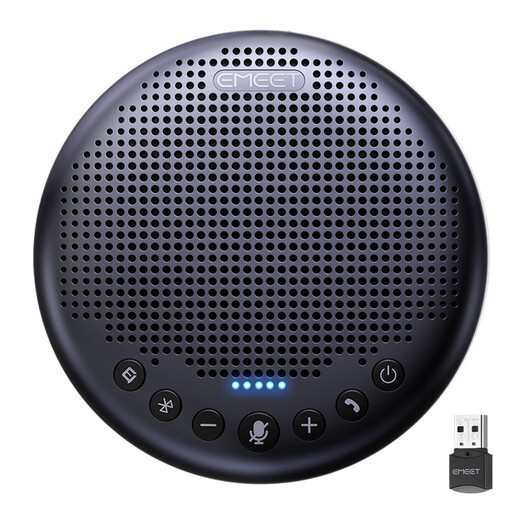
Consider this model if voices may come from different positions around the room. Its title lists eight microphones and 360-degree pickup; confirm the seating distance it covers and the exact wired and wireless connection options before buying.
Use a compatible USB connection if you normally join from one computer; Bluetooth is useful if the exact model also supports the phone or tablet you use. For example, Jabra lists USB-C, USB-A and Bluetooth for smartphones and tablets on the Speak2 55. Check your device and select the speakerphone in the meeting app before the session.
Select the speakerphone separately as the microphone input and speaker output, then run the meeting app’s audio test before joining. AnkerWork’s setup guidance notes that selecting the audio device in the computer or conferencing software may be necessary.
Choose a platform-specific variant if you need its dedicated controls or your organisation requires it. Jabra lists separate Microsoft Teams and Unified Communications variants of the Speak2 55, so match the exact item number to the platform you use.
Check the warranty and return terms for the exact model and seller before ordering, along with any firmware-support information relevant to your device. HP states a two-year limited warranty for the Poly Sync 20+ USB-A in its product material; that model-specific statement should not be assumed for other Poly listings.