Households with adult-controlled playlists
If an adult chooses songs on a phone or tablet, a Bluetooth speaker keeps playback tied to that familiar device. The adult remains responsible for choosing content and managing volume.


A compact Bluetooth speaker suits a small living room when an adult will choose songs on a phone or tablet. Choose a screen-free children’s audio player instead if the child should start familiar content independently; consider a Wi-Fi speaker if app-based home listening matters beyond this one room. Whichever route you choose, prioritise comfortable volume and check setup, age guidance and charging arrangements.
If an adult chooses songs on a phone or tablet, a Bluetooth speaker keeps playback tied to that familiar device. The adult remains responsible for choosing content and managing volume.
Yoto and tonies offer physical cards or figures for starting familiar songs and stories without handing over a phone screen. Check the chosen player’s age guidance, setup needs and accessory warnings.
Accessible volume controls matter when listening is close-range or part of a quiet routine. The NHS notes that children are often more sensitive to loud noises than adults; seek medical advice if everyday sounds are painful or distressing.
Choose when: An adult will start children’s-song playlists from a phone or tablet and also wants to use the speaker for other household audio.
Trade-off: Playback depends on a paired source device, rather than giving the child a dedicated physical-content system.
Choose when: The child should be able to start familiar songs or stories using cards or figures without handling a phone.
Trade-off: Yoto Mini and Toniebox 2 have their own content systems and require Wi-Fi for setup; check which content is included.
For either route, decide who should control playback before weighing quieter listening, routine features and portability. In the table, each percentage refers to consumers who put that concern first for this small-living-room choice.
| Concern | What to check | Who this matters to |
|---|---|---|
| Adult-controlled playback | Phone or tablet Bluetooth compatibility, accessible controls and charging method. | If I already choose the songs on my phone, I want to start playback without managing a separate content system. Around 33% of consumers put straightforward adult-controlled playback first. |
| Screen-free independence | How the child starts content, age guidance, Wi-Fi setup and what cards or figures are included. | A child who wants to choose familiar audio without borrowing a phone needs a way to handle the content independently. For around 27% of consumers, that child-led access is the primary concern. |
| Gentle listening and routines | Volume controls at the child’s listening position and any relevant bedtime settings. | When songs are part of winding down, I care about keeping playback comfortable and predictable rather than maximising loudness. Gentle listening or routine control comes first for around 27% of consumers. |
| Portability and protection | Carry size, the stated scope of any IP rating and the included charging equipment. | If the speaker will move around the home or go outside, I need to know how it handles carrying and possible splashes. Around 13% of consumers prioritise portability and protection above the other concerns. |
A high output claim does not tell you whether close-range playback will be comfortable for a child. The NHS notes that children are often more sensitive to loud noises than adults.
Check that you can adjust volume easily at the usual listening position. If everyday sounds are painful or persistently distressing, seek medical advice rather than changing speakers to get more output.
Yoto says its cited Mini bundle requires the Yoto app and Wi-Fi; tonies says Toniebox 2 needs Wi-Fi for setup and uses separately sold content products.
Check the setup steps, included content and box contents for the exact player before choosing it over phone-led Bluetooth playback.
A suitable USB wall adaptor may also be needed: tonies says one is not included with Toniebox 2.
The cited Yoto Mini bundle carries a small-parts choking warning for children under 36 months. Toniebox 2 has its own age guidance and a warning concerning flashing lights and epilepsy.
Read the warnings for the exact player and its accessories before allowing a child to handle them.
An IP67 claim concerns dust and water ingress under the rating’s conditions; it does not establish age suitability, safe content or protection from every form of misuse.
Consider an IP rating for the intended exposure to dust or water, then check age guidance and charging arrangements separately.
The compact Go 4 is an example of a Bluetooth speaker for adult-controlled playback from a phone or tablet.
SoundLink Flex (2nd Gen) is a portable Bluetooth option to consider if the family will also use the speaker away from the living room.
Roam 2 combines Bluetooth playback with Wi-Fi features for households interested in app-based home listening.
Yoto Mini uses cards for children who are ready to start familiar audio without navigating a phone screen.
Toniebox 2 uses Tonie figures to let children start songs and stories through a physical content system.
This compact Bluetooth option fits the adult-controlled route: choose songs on a compatible phone or tablet, then use the speaker for playback. If child-led selection is the priority, compare the screen-free player considerations above before deciding.
 No image available
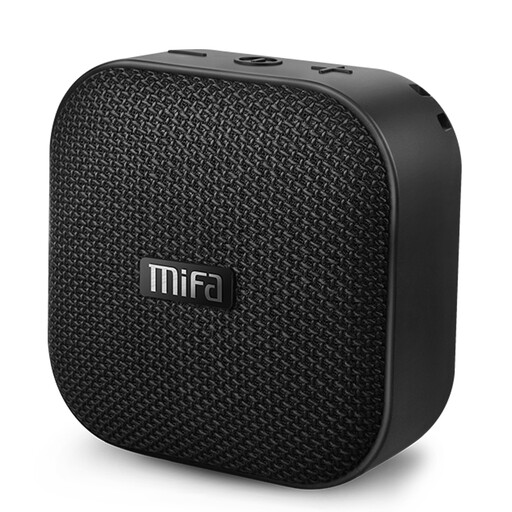
A compact Bluetooth choice for playing an adult’s selected songs from a compatible device in the living room.
If easy volume changes, session length or use near spills matters, confirm the controls, battery and charging details, and the stated scope of water protection before buying.
It can suit close-range listening when an adult controls songs from a phone or tablet. Check that its controls make comfortable volume easy to maintain; JBL’s stated 4.2 W output for the Go 4, for example, is not a guarantee of how any room will sound.
Consider a screen-free player when the child should start familiar songs or stories without handling your phone. Yoto Mini uses cards and Toniebox 2 uses Tonie figures; check each model’s age guidance, Wi-Fi setup and included content.
Lower or stop playback if it is uncomfortable or painful. The NHS advises seeking medical advice if everyday sounds feel too loud or painful; a more powerful speaker is not a solution to sound sensitivity.
Check the box contents for the exact model. Bose says SoundLink Flex (2nd Gen) has no included power adaptor, and tonies says Toniebox 2 includes a short USB-C cable but no wall adaptor.