What matters when choosing?
Work out where two speakers and the listening seat can go before deciding between an active system and passive speakers. Then check whether the chosen system connects to the sources you actually use.
Active stereo pair
Choose when: You want streaming or TV connections without a separate amplifier and have room to separate both speakers.
Allow for: Mains power at the planned positions and suitable network coverage if you rely on Wi-Fi streaming.
Passive speakers and amplifier
Choose when: You already have a compatible amplifier or want to select your speakers and other components separately.
Allow for: Speaker cable, an amplifier and, for some standmount models, separate stands; larger cabinets also need a workable position under the eaves.
| Concern | What to check | Who this matters to |
|---|
| Stereo presentation |
Check for two separate channels, similar speaker heights and a listening seat that can sit roughly equal distances from both. |
If I settle in for an album, I want the lead vocal centred and the instruments distinguishable rather than sound coming from one spot. Around 36% of consumers put stereo presentation first. |
| Fit under the eaves |
Measure usable speaker and stand positions, including cabinet depth and room to adjust distance from nearby walls. |
Sloping walls leave me with few sensible positions, so I need speakers that fit without pushing one channel into a corner. For around 29% of consumers, room fit is the main concern. |
| Connections and simplicity |
Match the inputs to your TV, computer and music sources; for an active system, check power and Wi-Fi coverage where it will sit. |
I want to switch between streaming and other sources without assembling a separate amplifier system. That simplicity comes first for around 21% of consumers. |
| Bass and shared spaces |
Check whether placement can be adjusted away from corners and whether any planned subwoofer has usable controls. |
Music should be enjoyable in the loft without bass becoming intrusive elsewhere in the home. Around 14% of consumers make controllable bass their primary concern. |
Joybuy products for this setup
These options cover passive bookshelf speakers, compact active speakers and a wireless tabletop speaker. For country music from a main listening seat, check whether the exact purchase provides two speakers or requires a second unit before planning a stereo layout.
 No image available
HiVi-Swans DIY3.1 passive bookshelf speakers, pair, 6.5-inch
A passive stereo-pair option if you have a compatible amplifier and space to place both speakers evenly.
The product description lists a 6.5-inch bass-midrange driver, 28 mm soft-dome tweeter, 8 Ω impedance and 86 dB sensitivity. Check cabinet dimensions and suitable wall clearance against the planned positions.
View on Joybuy
 No image available
Edifier M60 multimedia speakers, Bluetooth 5.3
Consider this compact active option if you want Bluetooth, USB-C and AUX sources, but confirm that the supplied contents provide the two-speaker arrangement you need.
The description lists 3-inch mid-low drivers, 1-inch tweeters and angled stands. Check whether the available loft positions allow the speakers to be separated and placed symmetrically.
View on Joybuy
 No image available
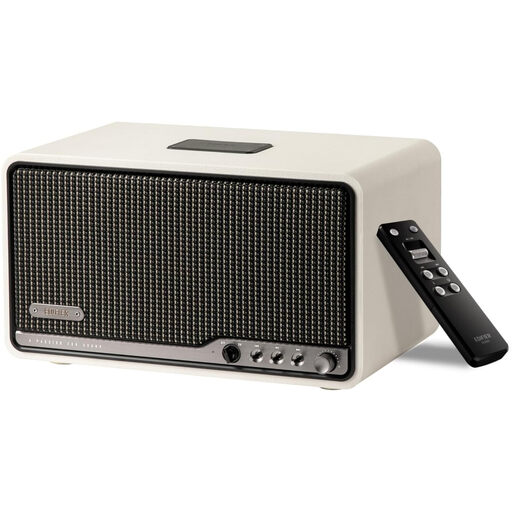
EDIFIER S300 wireless tabletop speaker, Ivory
This listing is for one speaker. If you want a separated stereo setup, check the requirements for obtaining and pairing a second compatible S300.
The listing specifies Bluetooth 5.4, AirPlay 2, USB-C and AUX. Confirm the cabinet dimensions and suitable placement clearance before assigning it a position in the loft.
View on Joybuy
 No image available
HiVi-Swans D3.1MKII passive bookshelf speakers, 2-way
This passive bookshelf model is worth considering if you can accommodate an amplifier; confirm how many speakers are supplied before planning a stereo pair.
The description lists a 6.5-inch mid-bass driver, 28 mm soft-dome tweeter, rear bass-reflex design and 8 Ω impedance. Check cabinet dimensions and rear-wall clearance for the intended positions.
View on Joybuy
Questions about loft speakers
Do I need speakers made specifically for country music?
No genre-specific speaker type is necessary for this choice. If you mainly listen from one seat, prioritise a separated stereo pair that you can position for a centred vocal and distinct instruments, then check its fit and connections against the loft.
How far apart should stereo speakers be in a converted loft?
Start with the speaker maker’s instructions and adapt them to the available space. KEF suggests 1,800–2,400 mm between speakers, equal distances to the listening seat and experimenting with 300–1,000 mm of clearance from the wall behind them; these are starting points, not requirements for every speaker or loft.
Can I add ceiling speakers or new sockets during a loft conversion?
Check the requirements for the particular work before installing fixed wiring or new sockets. In England, GOV.UK’s Approved Document P provides guidance on electrical safety in dwellings; a competent installer or local building control can advise on the applicable route. Check local requirements elsewhere in the UK rather than assuming the England guidance applies.
Should I buy larger speakers if bass sounds weak?
Try adjusting the existing speakers and listening position before changing speaker size. Distance from walls and the relationship between the left and right positions can affect the result; if you later consider a subwoofer, check that its controls suit a shared home.


