Dance-playlist hosts
You want one speaker for a large living room and put bass-oriented hardware and room placement ahead of low carrying weight.


For dance playlists in a large living room, start with a substantial party speaker if you want one cabinet, then check its placement, weight and power arrangements rather than choosing by a battery-life claim alone. JBL’s PartyBox 520 is a single-speaker option with two woofers; Sony’s SRS-XV800 adds an optical TV input, while a Bose S1 Pro+ pair makes more sense when stereo placement and live-input mixing are priorities.
You want one speaker for a large living room and put bass-oriented hardware and room placement ahead of low carrying weight.
You play playlists but also want to assess TV, karaoke or guitar connections before committing to a speaker.
You are willing to position and manage two speakers if stereo separation or microphone and instrument mixing matters more than a single cabinet.
Decide whether one cabinet or a two-speaker layout fits the room, then check output specifications, power arrangements and any connections you will actually use.
| Concern | What to check | Who this matters to |
|---|---|---|
| Dance-playlist scale | Compare the exact model’s output rating and woofer configuration, but do not treat watts as a cross-brand loudness ranking. | If I want one speaker for bass-led playlists across a large room, I need to judge its hardware alongside where it will stand. Around 36% of consumers put dance-playlist scale first. |
| Placement and session length | Check mains operation, stated battery runtime and whether the battery arrangement suits your intended location. | When I may move the speaker away from a socket, I care about keeping a playlist running without an awkward power setup; around 29% of consumers put placement and session length first. |
| Other entertainment uses | Check the precise TV, microphone, guitar or DJ connections needed for your equipment. | If the same speaker will serve playlists and karaoke or TV, I need the right connections rather than Bluetooth alone. Around 21% of consumers make those additional uses their primary concern. |
| Handling and layout | Measure the storage route and compare cabinet weight, handles or wheels; confirm pairing compatibility if planning two speakers. | I need to move and store the equipment between gatherings, or find room for a stereo pair; around 14% of consumers put handling and layout first. |
A stated maximum playback time does not establish how long a speaker will run at your chosen volume with lighting and inputs in use.
Plan where a mains cable can reach for long sessions, and check the battery arrangements for the exact model.
A compatible spare battery may need to be obtained separately.
JBL lists the PartyBox 520 at 26 kg. Wheels do not remove the need to lift a speaker over a threshold or find somewhere to store it.
Measure doorways, storage space and the route to the intended listening position before choosing a large cabinet.
Sony specifies IPX4 protection for the SRS-XV800 when vertical and IPX2 when horizontal; orientation changes its stated protection.
Check the rating for the position you intend to use, and keep drinks away from the speaker and power connections.
In England, councils must investigate noise complaints that could amount to a statutory nuisance, according to GOV.UK. Using a speaker indoors does not rule out an effect on neighbours.
Keep late-night bass and volume in check, particularly near shared walls; do not assume one volume setting suits every home.
The PartyBox models are relevant if you want a single party-speaker cabinet for dance playlists.
The SRS-XV800 is worth considering when TV connection and sound directed around the room matter alongside playlists.
The S1 Pro+ pair suits plans built around stereo placement and microphone or instrument mixing rather than one party-speaker cabinet.
These single-cabinet party speakers are choices to assess for dance playlists. If TV audio, stereo placement or live-input mixing drives your decision, check those requirements separately rather than assuming every model serves the same role.
 No image available
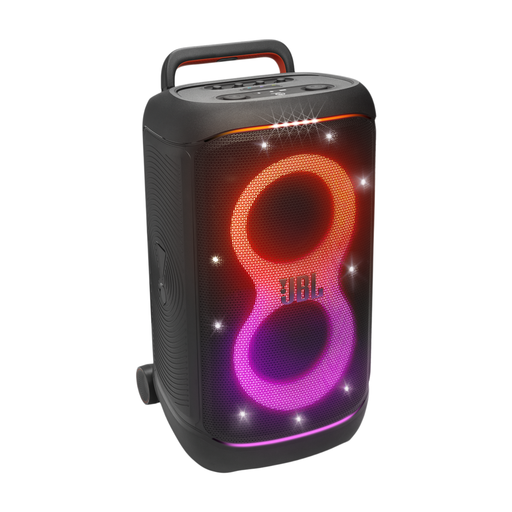
Consider this single cabinet if dance playlists are the main use and you have room to position and store it.
JBL specifies 400 W output, two 7.5-inch woofers and a weight of 26 kg. Check the power and battery arrangements for the length and volume of your sessions.
 No image available
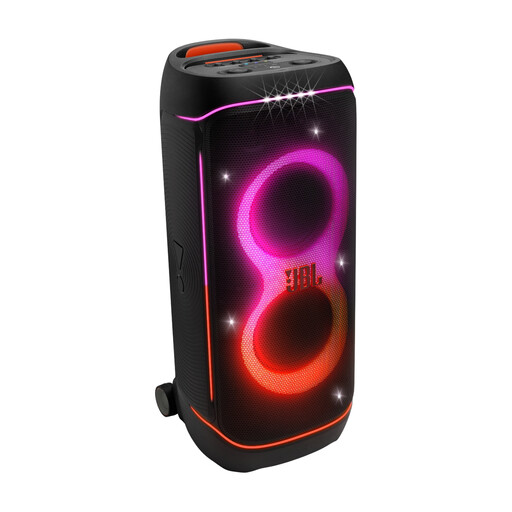
Consider this single-cabinet option if a light show is part of your dance-playlist setup.
Batteries are not included. Check its power requirements, the space it needs and how you will move it before choosing a position.
 No image available
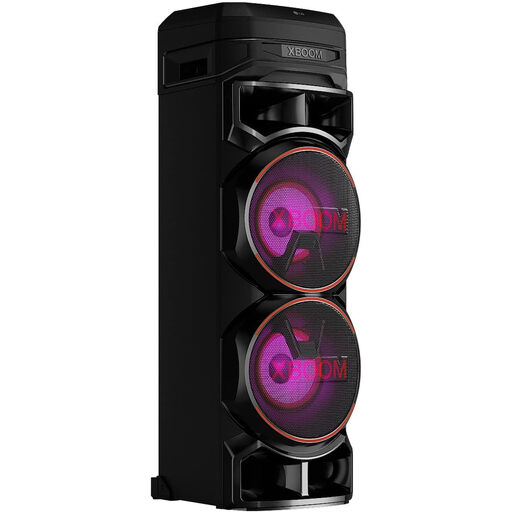
This is a party-speaker option to assess if you plan to play playlists from a Bluetooth source.
Check its output specifications against your intended room and listening level, along with its power requirements and storage space.
 No image available
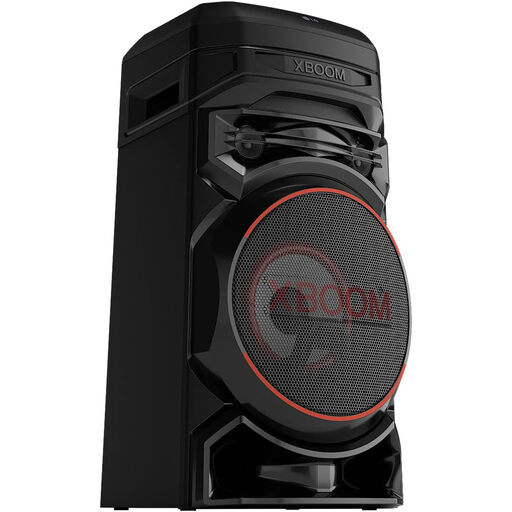
Consider this Bluetooth party speaker if you want one cabinet for playlists and can assess it against the size of your living room.
Check the output rating, power arrangement and available space before relying on it for a long session.
No: a watt rating alone cannot tell you how loud different brands will sound in your living room. Check the exact model’s woofer configuration, placement needs, connections and weight as well; JBL’s stated 400 W for the PartyBox 520 is one specification, not a cross-brand loudness result.
Two speakers can make sense if you can place them apart and the exact models support the pairing mode you want. JBL says two PartyBox 520 units can form a stereo pair via Auracast, while Bose lists stereo and Party Mode for its S1 Pro+ pair; allow space and plan power for both units.
Yes, if its input matches an audio output on your television. Sony lists an optical digital input on the SRS-XV800; check your TV’s output and the cable you would need before buying.
Yes: indoor music can still affect neighbours. GOV.UK says councils in England must investigate complaints about noise that could be a statutory nuisance, so consider volume, bass and proximity to shared walls when placing the speaker.