Focused acoustic-music listener
If you can position two speakers for deliberate left and right listening, both powered and passive stereo pairs are worth considering. A passive pair also needs a suitable amplifier.


Choose a powered stereo pair if you want separate left and right speakers without selecting an amplifier; choose passive speakers if you already have, or want to choose, a compatible amplifier. A compact wireless speaker makes app-based listening simpler to set up, but check whether one unit gives you the stereo presentation you want and whether your wired sources need an adapter.
If you can position two speakers for deliberate left and right listening, both powered and passive stereo pairs are worth considering. A passive pair also needs a suitable amplifier.
If you usually start music from a phone, tablet or streaming service, look at built-in amplification and the wireless connections you will actually use before adding separate equipment.
If shelves or desk space limit placement, compare the space needed for a pair with a single-speaker arrangement. Check the intended source connection, power access and any required cable or adapter.
For folk music in a hobby room, decide how much you value a separate left and right setup before comparing connections and placement.
Choose when: You want two speakers for music without selecting a separate amplifier.
Trade-off: The system's built-in inputs determine which sources connect directly, and you still need space for both speakers.
Choose when: You have a compatible amplifier or want to select that component separately.
Trade-off: The amplifier and speaker cable are essential parts of the system, not optional additions.
Choose when: Compact placement and app-based playback matter more to you than a conventional two-speaker arrangement.
Trade-off: Check the setup requirements and whether analogue playback needs an adapter; do not assume one unit meets your stereo preference.
| Concern | What to check | Who this matters to |
|---|---|---|
| Stereo presentation | Check whether you can position two speakers for your listening seat and, for passive models, match them with a suitable amplifier. | If I sit down to listen to singing and acoustic instruments, I want a deliberate left and right setup. Roughly 36% of consumers would put stereo presentation first. |
| Simple setup and sources | List the devices you own, then confirm the required inputs and any adapter before choosing a system. | I want to play music from my phone and CD player without sorting out a separate amplifier. Around 29% of consumers would prioritise simple setup and source compatibility. |
| Room fit | Measure the intended shelf, desk or stand position, allowing for power and cable routes. | Where a pair would crowd my hobby-room desk, I need a setup that fits the available space. About 21% of consumers would put room fit first. |
| Streaming and control | Confirm your preferred service, phone platform, Wi-Fi access and control method. | I mainly stream from my phone and want to control playback through an app. Roughly 14% of consumers would make streaming and control their primary need. |
Passive speakers need a separate amplifier. For example, KEF specifies a 15–180W amplifier requirement for the Q Concerto Meta.
If you do not own a suitable amplifier, account for amplifier compatibility and speaker cable when comparing passive speakers with a powered pair.
Sonos specifies a Line-In Adapter for an analogue connection to Era 100, while Q Acoustics lists multiple source inputs for the M20.
Write down each source you expect to use and check the exact input, cable and adapter needed for your chosen model.
Q Acoustics describes the passive 3030i as its largest bookshelf or standmount model and states a 46Hz response. That specification does not tell you how it will sound in your room.
Measure the intended speaker positions and check the space needed for stands, power access and cables before deciding.
An old speaker needs an appropriate electrical-waste route when you replace it.
Check a local recycling point or ask the retailer about like-for-like take-back; GOV.UK provides guidance on electrical-product recycling and retailer take-back.
Its 3030i and M20 illustrate different ways to build a two-speaker hobby-room system: passive standmount speakers or an integrated powered pair.
The Q Concerto Meta is a passive standmount option for a system built around a separately chosen amplifier.
The Era 100 represents a compact Wi-Fi and Bluetooth route for listeners who favour app-based room playback.
These choices cover powered desktop and tabletop speakers alongside passive bookshelf pairs. Decide whether you want a ready-to-connect speaker arrangement or are building a system with a separate amplifier; check the requirements of each model.
 No image available
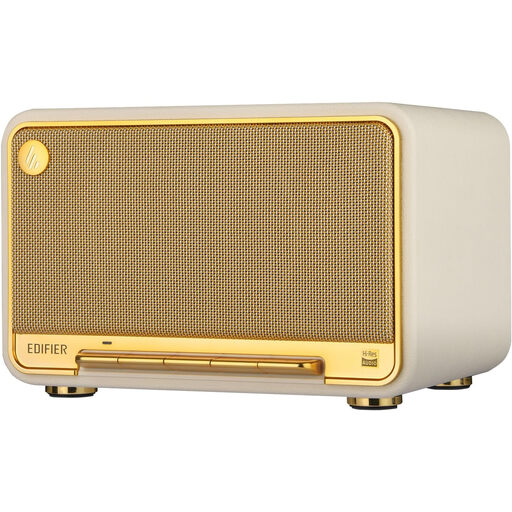
Consider this speaker pair if you want desktop stereo listening with both wireless and wired source options.
The listed specifications include 66W RMS, Bluetooth 5.3, USB-C and AUX inputs, a 3-inch mid-bass driver and a 1-inch tweeter. Check that your intended surfaces and listening position suit a pair.
 No image available
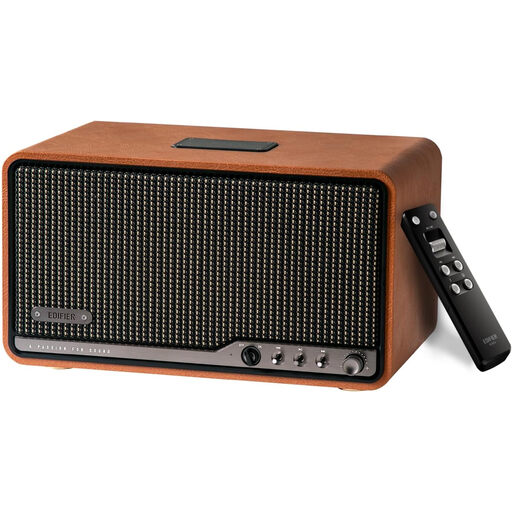
This single tabletop speaker may suit you if convenient placement and several playback options matter more than a separate left and right pair.
Its listed features include 60W RMS, Bluetooth 5.3, AirPlay 2, USB-C, AUX and app control. If stereo separation is important, check whether the arrangement you want is possible before buying; also consider how you will power it during regular room use.
 No image available
Consider this single tabletop speaker if you want a wireless option and may later arrange left and right playback.
A stereo pair requires a second S300 and app configuration. Check the space available for either one unit or two before choosing that arrangement.
 No image available
This pair suits a conventional stereo setup if you have, or plan to choose, a compatible amplifier.
The listed specifications include an 8-ohm impedance, a 10–120W range, a 6.5-inch mid-bass driver and a 28mm tweeter. Check amplifier compatibility, allow for speaker cable and confirm the cabinets fit your intended positions.
 No image available
Consider this pair if you want passive left and right speakers and are prepared to match them with an amplifier.
The product name identifies a 6.5-inch pair. Confirm amplifier compatibility, allow for speaker cable and measure the available shelf or stand space before buying.
Choose a powered pair if you want amplification built into the speaker system; choose a passive pair if you want to select a compatible amplifier separately. Q Acoustics lists the M20 as powered, while KEF specifies a 15–180W amplifier requirement for its passive Q Concerto Meta.
You can connect one only where the chosen speaker system and source have suitable connections. Q Acoustics lists a turntable among the sources for M20; Sonos says Era 100 needs its Line-In Adapter for an analogue source. Check the turntable's output and whether a phono stage is needed.
For relevant products in Great Britain, GOV.UK says a UKCA or CE mark indicates that the manufacturer believes the product meets applicable requirements. It does not tell you about sound quality or connection compatibility; Northern Ireland has separate processes, so check the applicable product information with the seller.
Use an appropriate electrical-waste recycling route rather than household rubbish. GOV.UK guidance also describes like-for-like retailer take-back when you buy a replacement electrical product; check the collection arrangements with the retailer.