Start with space for a left-right stereo pair, then choose a system that connects to the way you play albums. Powered speakers reduce the need for separate components if their inputs suit your sources; passive speakers need an amplifier but allow you to choose one with a phono stage for a compatible turntable. Compact streaming speakers suit rooms used with a laptop or TV too, but their analogue inputs vary by model.
Who is this for?
Hobby-room stereo listeners
If you have room for two speakers and a listening position, plan their placement before choosing cabinet size. Richer Sounds recommends dedicated stands for conventional standmount speakers rather than assuming any shelf will do.
Vinyl-system planners
If you use or plan to add a turntable, its PHONO or LINE output determines what must sit between it and a standard line input. Rega Research explains that a moving-magnet phono signal needs a suitable phono stage to reach line level.
Low-clutter, multi-source listeners
If the room also serves a laptop, TV or streaming source, speakers with built-in amplification may reduce separate components. Check the exact inputs if you also want to connect a turntable by cable: KEF says its LSX II LT has no 3.5 mm analogue input.
What matters when choosing?
Choose the system layout around your main album source, then check whether two speakers can be placed for stereo listening. Powered, passive and compact streaming systems differ most in where amplification sits and which connections the particular equipment provides.
Powered stereo speakers
Choose when: You want amplification in the speaker system and have a line-level album source.
Trade-off: A standard line input cannot take a phono-level turntable signal without a suitable phono stage.
Passive speakers and amplifier
Choose when: You want a wired vinyl setup with an integrated amplifier that has a compatible phono stage; Rega Research’s io amplifier is one example with a moving-magnet phono stage.
Trade-off: You must accommodate the amplifier, speaker cable and separate components.
Compact streaming speakers
Choose when: Streaming, a laptop or TV are important sources alongside albums; KEF lists digital and wireless connections for its LSX II LT.
Trade-off: Streaming features do not establish a wired turntable connection. KEF says the LSX II LT connects to a turntable only by Bluetooth.
| Concern | What to check | Who this matters to |
|---|
| Stereo placement |
Measure space for two speaker positions, any stands and your listening position; check the chosen model’s placement guidance. |
If my hobby room restricts where two speakers can go, a workable stereo layout comes before cabinet size. Around 40% of consumers put room fit and placement first. |
| Turntable connection |
Check whether the turntable outputs PHONO or LINE and whether the receiving equipment has the corresponding input or a suitable phono stage. |
When I play vinyl, I need the turntable’s signal to reach the speakers through the right connection. Around 30% of consumers give source compatibility priority. |
| Other sources and setup |
List the sources you will use and match each one to an input on the exact model; establish whether amplification is built in. |
I want to use the room for albums and other devices without managing more components than I need. For around 30% of consumers, a simple multi-source setup comes first. |
Mistakes to avoid
-
Treating every turntable output as an AUX source
A phono-level signal needs a suitable phono stage before a standard line input. Rega Research describes this distinction for moving-magnet cartridges.
Check the turntable’s output setting and the receiving input. Connect a PHONO output through one suitable phono stage, not an external stage followed by another phono input.
If neither the turntable nor the receiving equipment provides that stage, an external phono preamp is another component to accommodate.
-
Assuming wireless features include a wired turntable input
Digital connections do not establish analogue connectivity. KEF says the LSX II LT has no 3.5 mm analogue input and connects to a turntable only by Bluetooth.
Check the exact speaker model’s input panel and connection instructions against every source you intend to use.
-
Choosing a cabinet before planning its position
A small cabinet is not a promise of suitable shelf placement. Richer Sounds recommends dedicated stands for standmount speakers.
Measure the proposed speaker positions and check the model’s placement requirements before deciding whether stands or a different furniture layout will work.
-
Overlooking the electrical arrangement for powered speakers
Mains-powered equipment needs an appropriate electrical arrangement for where it will be used. The Office for Product Safety & Standards describes requirements for electrical equipment placed on the Great Britain market; Northern Ireland has separate provisions.
Before ordering, check the supplied plug, voltage specification and seller’s conformity information for your location rather than assuming a product intended for another market is ready to use.
Relevant brands to consider
Q Acoustics
A reference for a conventional passive standmount setup: Q Acoustics presents the 3020c as a mid-size standmount speaker.
- The 3020c’s standmount format is relevant when planning two speaker positions in a hobby room.
- As a passive speaker, it needs compatible amplification and speaker cable.
KEF
A reference for compact active streaming systems: KEF lists USB-C, HDMI ARC, optical, Bluetooth and streaming connectivity for the LSX II LT.
- Built-in amplification and several connection types can serve a room with digital sources.
- KEF says the LSX II LT lacks a 3.5 mm analogue input and connects to a turntable only by Bluetooth.
Audioengine
A reference for powered stereo speakers: Audioengine describes the HD6 as a powered pair with analogue, optical and Bluetooth connections.
- Built-in amplification can avoid a separate amplifier for suitable sources.
- Check the version offered by the seller for its supplied plug, connections and support arrangements.
Rega
A reference for a separate-component vinyl system: Rega’s System One combines a Planar 1 turntable, io amplifier and Kyte loudspeakers.
- The io amplifier includes a moving-magnet phono stage and separate line-level inputs.
- This system requires space and cabling for its individual components.
Joybuy speaker choices
These choices cover compact powered or wireless speakers and a passive standmount option for a separate-amplifier system. Before relying on any of them for left-right stereo jazz playback, confirm how many speakers the order supplies and how the intended album source connects.
 No image available
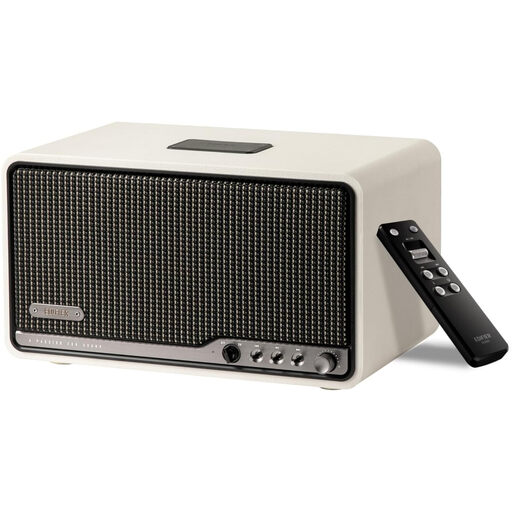
Edifier M60 Bluetooth 5.3 desktop speakers
Consider this compact powered option if your album source can use its stated AUX, USB-C or Bluetooth connection. The title lists 66 W RMS; AUX is not a phono input, so a PHONO-output turntable needs a suitable phono stage. Confirm the speaker count and package contents for left-right stereo, as well as the supplied power arrangement.
Joybuy
 No image available
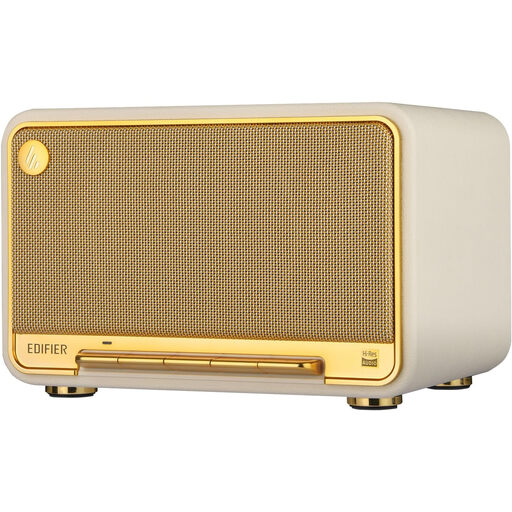
EDIFIER S300 Ivory wireless tabletop speaker
Consider this tabletop model if wireless playback is part of your hobby-room setup. Confirm the exact inputs for your album source, whether one order supplies the speakers needed for left-right playback, and the supplied power arrangement. A turntable with PHONO output also needs a suitable phono stage before any standard line connection.
Joybuy
 No image available
Edifier D32 Bluetooth 5.3 tabletop speaker
Consider this tabletop speaker if wireless and wired source options matter. Its title lists AirPlay 2, USB-C and AUX, alongside 60 W RMS. Check the exact unit’s connections and whether its configuration provides the left-right stereo layout you want; AUX requires a line-level source rather than a raw PHONO output.
Joybuy
 No image available
HiVi-Swans D3.1MKII passive standmount speakers
Consider these for a separate-amplifier setup if you have room to position a stereo pair. The title lists 8 ohms and a 10–120 W range for amplifier matching, plus a rear bass-reflex design. Provide a compatible amplifier and speaker cable; check the package contents, cabinet dimensions and placement requirements. A PHONO-output turntable also needs a suitable phono stage in the signal path.
Joybuy
Common questions
Can I connect any turntable directly to powered speakers?
No: a turntable’s output and the speakers’ input must match. A LINE output can feed a suitable line input; a PHONO output needs a compatible phono stage first. Rega Research explains this signal-level distinction for moving-magnet cartridges.
Can bookshelf speakers go inside a shelf?
Do not assume the name guarantees suitable shelf placement. Richer Sounds recommends dedicated stands for standmount speakers; if a shelf is your only option, check the chosen model’s placement instructions and required clearances.
Should I choose standmount speakers or floorstanders for a hobby room?
Start with the space available for two speakers and your listening position, not the cabinet category alone. Richer Sounds identifies standmount speakers as an option for small or medium rooms; measure the intended positions and check each model’s placement requirements before considering a larger cabinet.
What should I check when buying mains-powered speakers for Great Britain?
Check the supplied plug and voltage specification, and ask the seller for the relevant conformity information. The Office for Product Safety & Standards says the Electrical Equipment (Safety) Regulations 2016 set requirements before electrical equipment is placed on the Great Britain market; Business Companion describes manufacturer marking and declaration obligations. Northern Ireland has separate provisions, so GB guidance should not be applied there unchanged.


