Choose a speaker or stereo pair whose placement requirements you can meet, rather than assuming every speaker will sound balanced close to a wall. If bass becomes heavy, look for suitable placement guidance and adjustable bass or room-response controls; choose a spaced stereo pair when left-to-right separation matters more than the simpler placement of one wireless speaker. For wall mounting, check the bracket against the exact model and the proposed fixing location.
Who is this setup for?
Listeners with little space behind the speaker
If the speaker must sit near a rear wall, you may need room to adjust its bass after positioning it. Genelec notes that nearby walls can increase low-frequency output, while KEF advises checking placement for rear-ported designs.
Listeners who want a spaced stereo pair
If you can position two speakers apart and aim them towards the listening area, a stereo pair may better serve your preference for left-to-right musical separation. KEF describes this arrangement for its LSX II system.
Listeners who favour simple wireless playback
If straightforward playback matters most, a compact all-in-one speaker may be easier to position than a pair. Check its connections and wall clearance: Sonos lists Wi-Fi and Bluetooth for Era 100 and publishes separate placement guidance.
What matters when choosing?
Start with the position the speaker can actually occupy. Then check bass adjustment, whether a proposed wall installation is practical, and whether stereo separation or simpler playback matters more to you.
| Concern |
What to check |
Who this matters to |
| Bass near the wall |
Check the exact model’s placement guidance and whether it offers bass or room-response adjustment. |
If my speaker cannot move away from the wall, I want to be able to address bass that sounds too heavy in its final position. Around 36% of consumers put boundary-bass control first. |
| Practical wall placement |
Confirm bracket compatibility, the proposed wall fixing, power access and the cable route. |
Where shelf space is limited, I need a position that can accommodate the speaker and its connections. Around 29% of consumers prioritise a workable installation. |
| Stereo separation |
Check whether two speakers can be spaced apart and aimed towards the listening area. |
For music at a gathering, I would rather make room for two separated speakers than rely on one box. Around 21% of consumers put stereo presentation first. |
| Easy playback |
Check the exact model’s wireless connections, any adapter needed for line-in and the signal at its intended location. |
When I put music on for an occasional gathering, I want a connection that fits the devices I use. Around 14% of consumers prioritise straightforward playback. |
Placement and buying pitfalls
-
Ruling out every rear-ported speaker
KEF says rear-ported designs are generally more sensitive to rear-wall placement, but that does not make every near-wall position unsuitable.
Read the chosen model’s placement guidance and assess its bass in the position you intend to use.
-
Ignoring bass changes at the final position
Genelec explains that nearby walls can raise low-frequency output. A speaker’s balance elsewhere may therefore differ from its balance beside your wall.
If you have little flexibility to move it, check for documented placement guidance and suitable bass or room-response controls.
-
Assuming a wall bracket comes with the speakers
Mounting accessories can be separate products: KEF says its B1 bracket is made for LSX II and that speakers are not included with the bracket.
Check the contents of both the speaker and bracket packages, along with compatibility and fixing instructions.
A compatible bracket and suitable installation materials may need to be obtained separately.
-
Choosing one box when separated stereo is the goal
A single speaker does not provide the physical left-to-right spacing of a pair. KEF describes the separated positions of its LSX II speakers as part of their stereo presentation.
If that separation matters to you, check whether two suitable positions and their power connections are practical before choosing a one-box setup.
Relevant brands to consider
Genelec
Active loudspeaker systems with room-response adjustments may interest listeners who need to manage bass close to a wall.
- Genelec describes adjustments across its loudspeaker systems to compensate for room influences.
- Controls still need to be set for the actual speaker position and room; their presence does not settle how a particular placement will sound.
KEF
The LSX II stereo system and its model-specific B1 bracket are relevant if you can accommodate two wall-mounted speakers.
- KEF describes LSX II as a compact wireless stereo system and the B1 bracket as offering adjustable aiming.
- The B1 bracket is specific to LSX II and does not include speakers. Check placement advice for the exact speaker rather than applying general rear-port guidance to it.
Sonos
All-in-one wireless speakers are an option when convenient playback takes priority over positioning a separated pair.
- Sonos lists Wi-Fi and Bluetooth for Era 100, with line-in available through an adapter.
- Sonos advises leaving space behind its speakers; a single unit also cannot provide the physical separation of two spaced speakers.
Joybuy speakers for festive music
These choices cover a wall-mountable soundbar and a portable Bluetooth party speaker. Decide where either could sit or be fixed before choosing it for music near a wall.
 No image available
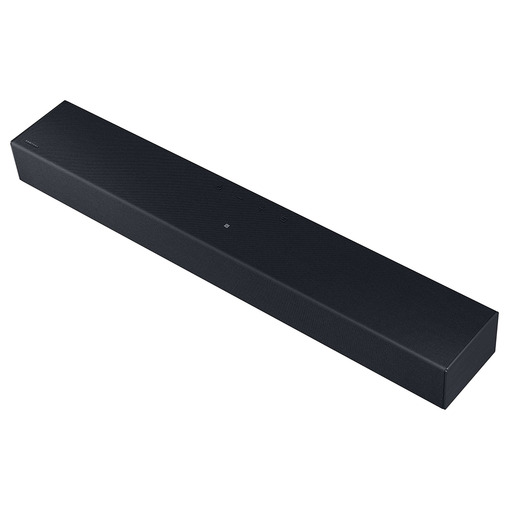
Samsung HW-C400/XU 2.0-channel soundbar, black
Consider this soundbar if a fixed wall position suits your listening area. It is identified as wall-mountable, but check which mounting parts are included and how the exact unit connects to your music source before buying.
View on Joybuy
 No image available
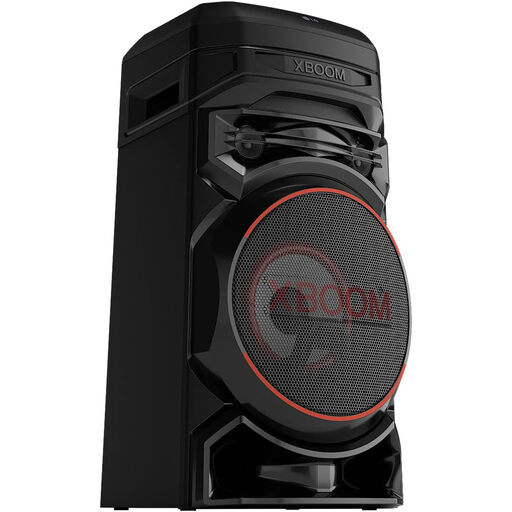
LG XBOOM RNC5 portable Bluetooth party speaker, black
Consider this portable Bluetooth speaker when a single unit suits your gathering. Plan a stable position, and check its placement guidance and available bass adjustment if it must remain close to a wall; do not assume it can be wall-mounted.
View on Joybuy
Frequently asked questions
How much space should I leave behind a speaker?
Follow the exact model’s placement instructions; there is no clearance that applies to every speaker. Sonos advises at least 1 inch behind its smaller One and One SL models and 2 inches behind its larger Five and Play:5 models, rather than placing them directly against a wall.
Why does a speaker sound bass-heavy next to a wall?
A nearby wall can increase low-frequency output, according to Genelec. If your model has bass or room-response controls, adjust them after placing the speaker and judge the result in that room; the appropriate setting depends on the model and position.
Can I use any wall bracket with my speaker?
Choose a bracket specified for the exact speaker model and follow its fixing instructions. KEF identifies its B1 bracket as an option for LSX II and states that the bracket does not include the speakers.
What should I check when buying a mains-powered speaker for wall placement?
Check the seller and supplied product documentation, then assess the bracket instructions against your proposed wall and fixing method. GOV.UK guidance on placing products on the Great Britain market addresses UKCA and CE marking under the applicable product regulations; a product mark does not establish that a particular wall installation is suitable. For delivery to Northern Ireland, check the applicable market requirements separately.


