What matters when choosing?
Single Wi-Fi speaker
Consider it when: You want app-based controls and one compact speaker for phone streaming. Sonos lists bass, treble and low-volume Loudness controls for Era 100.
Trade-off: One cabinet does not give you the separation of two speakers placed apart; Era 100 also needs Sonos’s separately sold Line-In Adapter for a wired line source.
Compact powered stereo pair
Consider it when: You have room for separate left and right speakers and want to follow the placement of voices and instruments across a recording.
Trade-off: Two cabinets need suitable positions, power and a connection between them. Compact size does not establish how clearly vocals will sound at your preferred low level.
Matched smart-speaker pair
Consider it when: You want app control alongside wider stereo presentation and can accommodate two compatible speakers. Sonos supports pairing speakers of the same model.
Trade-off: This arrangement needs a second compatible unit and enough space to position both speakers separately.
For quiet musical-theatre playback, start with your main listening need, then check the source connection and the space where the speaker or speakers will sit.
| Concern |
What to check |
Who this matters to |
| Vocals at low volume |
Try loudness, bass and treble settings at your usual level; look for an independent assessment of midrange detail. |
If I listen quietly, I still want sung words to be distinct without turning up the whole recording. Around 36% of consumers put low-volume vocal detail first. |
| Source connections |
Match your phone, computer, TV or turntable to the exact input; check whether an adapter or phono stage is needed. |
When my recordings move between devices, I need a connection I can use without changing my setup each time. For around 29% of consumers, source compatibility is the primary concern. |
| Bass in a shared home |
Check that bass and volume are easy to adjust, and allow for placement away from shared walls and floors. |
If I share a wall or floor, I want to keep listening quietly without intrusive bass reaching someone else. Neighbour-aware bass control comes first for around 21% of consumers. |
| Stereo and space |
Measure positions for two separated speakers and confirm that the intended system supports stereo pairing. |
For cast ensembles and overtures, I want a left–right presentation, but only if both speakers will fit apart. Around 14% of consumers prioritise stereo placement and the space it needs. |
Joybuy speakers for this setup
These tabletop and desktop speakers offer different ways to set up musical-theatre playback. Check the controls you need for quiet listening and whether your intended stereo arrangement is included or requires another speaker.
 No image available
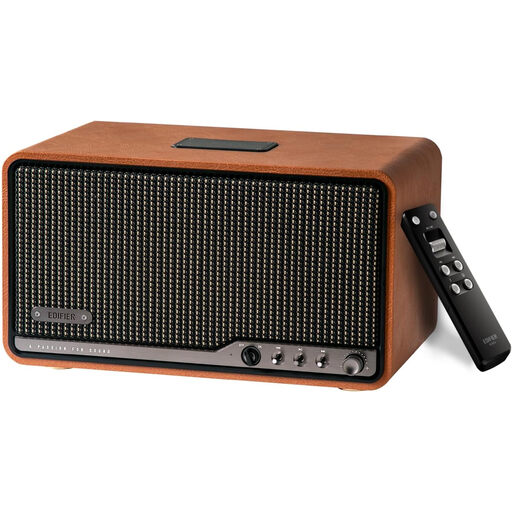
Edifier S300 wireless tabletop speaker, brown
Consider the S300 for tabletop listening if you want the option of pairing it with another S300 for left–right separation. It is described as a wireless multi-room speaker; confirm the available low-volume controls for your listening needs. A stereo arrangement requires a second S300.
View on Joybuy
 No image available
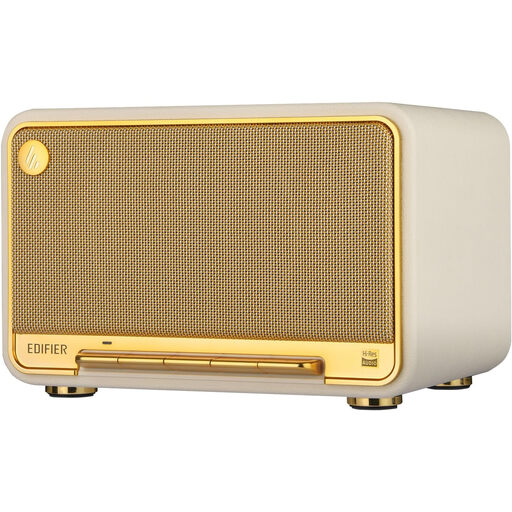
Edifier D32 tabletop wireless speaker
The D32 is worth examining if you want a tabletop speaker with both wired and wireless source options. Its product name lists Bluetooth 5.3, USB-C and AUX inputs, app control and a 2.1 acoustic architecture. Confirm the exact feature configuration and whether its quiet-listening controls meet your needs.
View on Joybuy
 No image available
Edifier M60 compact desktop speakers
Consider the M60 for a desktop setup connected to a computer or another compatible source. Its product name lists Bluetooth 5.3, USB-C and AUX inputs. Check the supplied speaker configuration and the available low-volume controls before planning a stereo layout.
View on Joybuy
Questions about quiet listening
Do I need two speakers for musical-theatre recordings?
No: one speaker can suit quiet listening when simple placement and accessible tone controls are your priorities. If you value a wider left–right presentation and have room to separate two units, consider a powered pair or compatible matched smart speakers; Sonos says its same-model stereo pairs provide a wider stereo experience.
How do I connect a computer, phone, turntable or TV?
Choose an input that matches the device you actually use: check wireless options for a phone, USB audio for a compatible computer, and optical or analogue inputs for compatible wired sources. A turntable needs a suitable phono stage in the speaker or a separate phono preamp. Ruark Audio lists these input types for the MR1 Mk3, while Sonos says Era 100 needs its Line-In Adapter for a wired line source.
Can music played quietly still disturb neighbours?
Yes, particularly if bass travels through a shared structure. Somerset Council advises keeping speakers away from walls and off floors where practical. In England, GOV.UK says councils must investigate complaints about noise that could amount to a statutory nuisance; a low setting on your speaker does not establish its effect in another home.
Does higher wattage mean clearer vocals at low volume?
No: a wattage figure by itself does not establish vocal clarity at your listening level. Check usable tone or loudness controls and assess the speaker with vocals at a quiet setting; Which? evaluates sound across bass, mids, treble, accuracy and detail rather than relying on output claims alone.


