Vinyl-first office listeners
If records are your main source, establish whether your turntable has a built-in phono preamp. A powered pair with an explicit phono input can keep the signal chain simple; otherwise, plan for a separate phono stage.


Choose speakers around how you play your albums, rather than the music genre alone. A powered pair with a phono input suits a turntable without its own phono preamp; a compact active pair suits computer or streaming playback, while passive speakers suit listeners willing to add an amplifier and cables. Check the space available for the speakers and any plans for a subwoofer before settling on a system.
If records are your main source, establish whether your turntable has a built-in phono preamp. A powered pair with an explicit phono input can keep the signal chain simple; otherwise, plan for a separate phono stage.
If albums play from a laptop, phone or streaming service, look for a stereo pair that fits your desk and accepts the connection you intend to use.
If you want to choose or replace speakers and amplification independently, passive speakers are a route to consider. Allow space for an amplifier and plan the cabling and any phono stage the source requires.
Identify your album source and its required input first. Then check placement for the whole speaker setup and decide whether separate components or later subwoofer expansion matter to you.
| Concern | What to check | Who this matters to |
|---|---|---|
| Vinyl connection | Check whether the turntable outputs phono or line level. For phono output, choose an explicit phono input or add a compatible phono preamp. | If I mainly play records, I need to know that my turntable can feed the speakers correctly. Around 36% of consumers put that connection first. |
| Desk fit and sources | Measure space for both speakers and confirm the input you will use, such as computer USB, Bluetooth or an analogue connection. | When my office computer and phone are the usual album sources, I want a pair that fits beside my work setup. That is the primary need for around 29% of consumers. |
| Bass and expansion | Consider your room and listening level; if you may add a subwoofer, confirm an output on the exact speaker model. | I want the option to adjust the system later without assuming that reggae requires a subwoofer in this room. Around 21% of consumers make that flexibility their main concern. |
| Component flexibility | For passive speakers, check amplifier compatibility and account for speaker cable and any required phono stage. | If I expect to change amplification or speakers independently, I am comfortable assembling the system. This is the leading consideration for around 14% of consumers. |
A line-level input is not the same as a phono input. A turntable without a built-in phono preamp needs phono amplification before its signal reaches an ordinary line-level input.
Check the turntable manual and input labels. Choose speakers with an explicit phono input or use a compatible separate phono preamp.
Passive speakers need a compatible amplifier and speaker cable. Vinyl playback may also require a phono stage, depending on the turntable and amplifier.
Map the full source-to-speaker chain before choosing the speaker pair.
A preference for reggae does not establish the right cabinet size, placement or subwoofer arrangement for a particular room.
Measure the intended positions, identify your main playback source and consider whether a later subwoofer would fit your space.
The Fives is a powered stereo pair for combining a turntable and other office sources without a separate amplifier.
LSX II is a compact active stereo system aimed at computer, streaming and other connected sources.
The M20 offers a powered system route, while the 3020c is a standmount speaker for a separate-component system.
These choices cover desktop music playback and a passive-speaker route. Check whether you need two separate speaker cabinets: the Edifier D32 is a tabletop speaker, rather than a documented separated pair.
 Image unavailable
Consider this pair if albums play from a computer or another compatible desktop source.
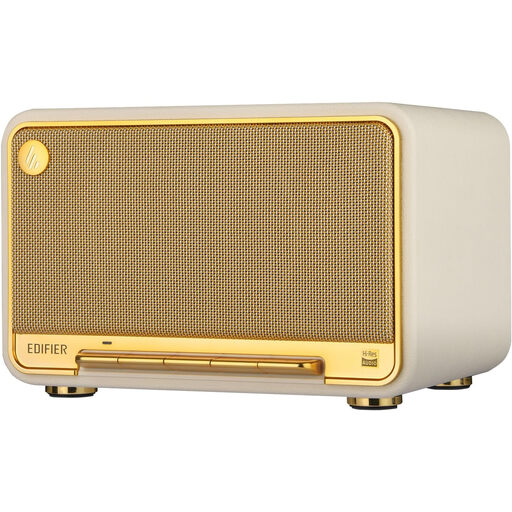 Image unavailable
Consider this tabletop format if you want to play albums from compatible wired or wireless sources.
 Image unavailable
Consider this pair if you want to build a system with separately chosen amplification.
No: the connection depends on whether the turntable has a built-in phono preamp and which input the speakers provide. A line-level turntable output can use a compatible line input; a phono-level output needs an explicit phono input or a separate phono preamp. Klipsch lists an integrated phono preamp for The Fives.
Start with a connection your computer and speakers can both use. KEF lists USB Type-C for LSX II, while Q Acoustics documents a USB computer connection for the M20; check the exact connection required by your own computer before choosing.
No particular music genre establishes that a subwoofer is necessary in your room. Consider your listening level, available space and neighbours; if you want the option to add one later, KEF lists a subwoofer output for LSX II and Q Acoustics lists one for M20.
Passive bookshelf speakers need a compatible amplifier and speaker cable to form a working system. If you play vinyl, check whether the turntable or amplifier supplies the necessary phono stage; otherwise, plan for a separate one.