What to check before buying
For rock albums in an open-plan flat, settle the placement and neighbour considerations first, then decide whether you value a separated stereo layout, fewer components or particular source connections.
Compact active stereo pair
Choose it when: You can space two speakers apart but do not want to select a separate amplifier.
Allow for: Two speaker positions and mains power, even with a compact pair.
Single wireless speaker
Choose it when: One practical speaker position and straightforward streaming matter more than widely spaced left and right channels.
Allow for: Less physical separation between channels than two cabinets can provide.
Passive standmount pair
Choose it when: You want to select the amplifier and sources separately and can position two speakers.
Allow for: An amplifier, speaker cable and suitable supports as part of the system.
| Concern |
What to check |
Who this matters to |
| Bass and neighbours |
Check bass or equaliser controls and whether the speakers can sit away from shared walls and floors. |
If I share a wall or floor, I want the rhythm of an album without bass becoming a disturbance next door. Around 33% of consumers put neighbour-conscious bass control first. |
| Stereo placement |
Check space for two speakers and a roughly symmetrical layout around your main listening seat. |
When I sit down with an album, I want distinct left and right positions rather than sound coming from one spot; roughly 27% of consumers prioritise stereo placement. |
| Source connections |
Match the inputs to your TV, computer and streaming devices; check whether a turntable outputs line or phono level. |
I move between digital sources and records, so I need to know what will connect without another component. Around 20% of consumers make source compatibility their primary concern. |
| Setup and space |
Check where cabinets, stands, power connections and any amplifier would go. |
If the living area has little room for equipment, I would rather keep the setup manageable than add more separate boxes; approximately 20% of consumers put simplicity first. |
Joybuy products for these setups
These products cover a passive stereo pair and tabletop wireless speakers. Choose between them by the space you have for separate speakers, the sources you use and the components you are willing to add.
 No image available
HiVi-Swans DIY3.1 Passive Bookshelf Speaker Pair, 6.5-inch
This pair suits a layout with separate left and right speakers if you are prepared to use a compatible amplifier.
Check the amplifier and source connections for your system, and allow space to adjust both speakers' positions.
View on Joybuy
 No image available
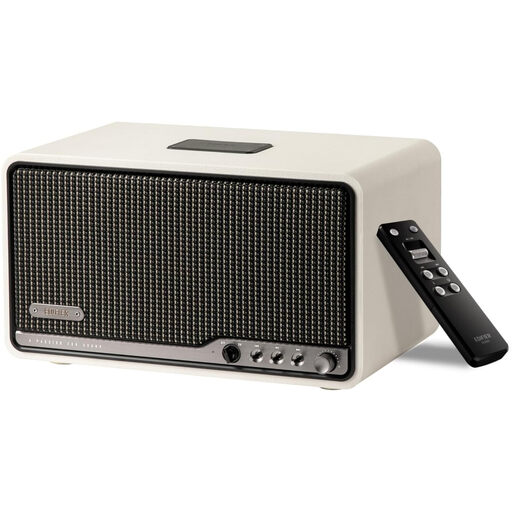
EDIFIER S300 Wireless Multi-Room Tabletop Speaker, Ivory
This single tabletop speaker suits a setup where one speaker position is more practical than a separated pair.
If you want left and right S300 speakers in different positions, check what a second unit and stereo pairing require. Check bass-adjustment options if neighbour-conscious listening is a priority.
View on Joybuy
 No image available
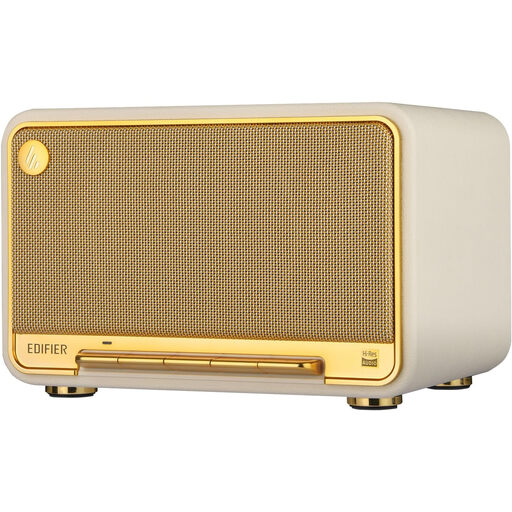
Edifier D32 Wireless Tabletop Speaker, 60W (RMS), 2.1
This tabletop speaker suits a compact, single-cabinet arrangement when its connections match your sources.
Its listed connections include Bluetooth 5.3, AirPlay 2, USB-C and AUX. The 60W (RMS) rating and 2.1 configuration do not establish how bass will behave in your flat; check bass controls and channel options if those matter to you.
View on Joybuy
Questions about listening in a flat
Is there a volume setting that makes music in a flat automatically acceptable?
Do not rely on a fixed setting as permission to play music without regard to neighbours. For England, GOV.UK describes statutory nuisance in terms of noise that unreasonably and substantially interferes with the use or enjoyment of a home; check your local council's guidance and your tenancy or lease terms.
How should I position two speakers in an open-plan room?
Start with the speakers placed roughly symmetrically around your main listening position, then adjust them to suit the room and the model. KEF suggests using similar distances between the listening seat and each speaker as a starting point; its placement guidance also makes wall distance worth testing, particularly for rear-ported designs.
Can a turntable connect directly to an active or wireless speaker?
It can connect to a suitable line input if the turntable supplies line-level output; a phono-level output needs a phono preamp first. Check both the turntable's output and the exact speaker model's input before buying. Sonos specifies a 3.5 mm line input on Five and advises using a preamp for turntables that lack one.
Should I add a subwoofer for rock music in a flat?
Not before you have tried the main speakers at your usual listening level and checked whether you can control and position the bass considerately. Westmorland and Furness Council advises reducing bass and keeping speakers away from surfaces shared with neighbours to limit disturbance.
Do I need two speakers to enjoy rock albums?
Choose two physically separated speakers if a stable left and right layout at your listening seat is a priority and you have room to place them. One wireless speaker is a practical alternative when space or cabling rules out that layout; Sonos says Five separates channels within its cabinet when horizontal, but the cabinet itself remains in one position.


