Choose a left-and-right stereo setup if you want to hear where the instruments sit in a string quartet recording. Passive speakers suit a listener prepared to match a separate amplifier; active speakers reduce the number of components, but still need suitable inputs, power and room for two-speaker placement. Listen to familiar recordings where possible before deciding which presentation you prefer.
Who each setup suits
Detail-focused chamber-music listener
If following each instrumental line from a seated position matters most, consider a properly placed stereo pair and listen with recordings you know. KEF describes the passive LS50 Meta in terms of acoustic accuracy, while Bowers & Wilkins describes the passive 606 S3 in terms of precision; neither description establishes which sound you will prefer.
Streaming listener with limited equipment space
If you want to avoid choosing a separate amplifier and streamer, an active system may simplify the equipment. KEF’s LS50 Wireless II and LSX II LT integrate amplification and streaming features, but their physical inputs differ, so check every source you intend to connect.
Listener building a traditional hi-fi system
If you already have an amplifier or want to choose one separately, passive standmount speakers offer that route. Wharfedale’s Denton 85 and larger Linton belong in this category; allow space for speaker placement and suitable stands as well as the amplifier.
What to check before choosing
Passive stereo speakers
Choose when: You have, or want to select, a separate stereo amplifier and prefer to choose the system’s components individually.
Allow for: Amplifier matching, speaker cable and appropriate placement; the speakers alone cannot play a recording.
Active stereo speakers
Choose when: Integrated amplification and streaming suit your sources and the space available for equipment.
Allow for: Model-specific inputs, mains power and positions for both left and right speakers.
| Concern |
What to check |
Who this matters to |
| Instrument detail and stereo image |
Plan left and right speaker positions around your listening seat; audition familiar quartet recordings if possible. |
If I want to follow the violin, viola and cello separately, I need to hear how a stereo pair presents my own recordings. Around 42% of consumers put instrument detail first. |
| Sources and system simplicity |
Check the exact speaker inputs against your streaming device, television, computer or turntable; identify whether a passive option needs an amplifier. |
When I use several sources, I want connections that fit them without assembling more equipment than I need. Roughly 33% of consumers make source compatibility and simplicity their primary concern. |
| Room fit and placement |
Measure two usable speaker positions and check whether stands, mains sockets or an interspeaker cable are needed. |
In a room with limited space, I need to know where both speakers can sit before choosing a cabinet size. Around 25% of consumers prioritise room fit and setup space. |
Common buying mistakes
-
Buying passive speakers as though they were a complete system
Passive speakers need separate amplification. KEF specifies a 40–100 W amplifier requirement for the LS50 Meta, while Bowers & Wilkins says stands are not included with the 606 S3.
Check an amplifier against the exact speaker model’s requirements, and plan how the speakers will be supported and connected.
The setup may also require speaker cable and stands.
-
Assuming an active speaker accepts a wired turntable
Inputs differ between active models. KEF says the LSX II LT has no 3.5 mm analogue input; its guidance describes Bluetooth as the turntable connection route for that model.
Check the turntable’s output and the exact speaker’s inputs. A phono-level turntable output also needs suitable phono pre-amplification before connection to a compatible line input.
-
Choosing compact speakers without planning stereo placement
A small cabinet does not remove the need to position left and right speakers for listening from your intended seat. KEF lists mounting options and an optional longer interspeaker cable for the LSX II LT.
Measure the available positions and check power and cable reach before settling on a compact active setup.
Brands to consider for these setups
KEF
Relevant models span passive standmount and active streaming systems, rather than one interchangeable speaker type.
- KEF lists the LS50 Meta as passive with a 40–100 W amplifier requirement; the LS50 Wireless II and LSX II LT integrate amplification and streaming features.
- Check inputs model by model: KEF says the LSX II LT has no 3.5 mm analogue input.
Wharfedale
The Denton 85 and larger Linton are options for a traditional passive standmount system.
- Wharfedale specifies a 20–120 W recommended amplifier range and 4 Ω nominal impedance for the Denton 85; it describes the Linton as a three-way standmount.
- A separate amplifier and room for suitable speaker placement remain part of the decision; Linton matching stands are optional.
Bowers & Wilkins
The 606 S3 represents a passive standmount route for listeners choosing a separate hi-fi system.
- Bowers & Wilkins specifies a Titanium Dome tweeter and Continuum bass/midrange cone for the 606 S3.
- The 606 S3 needs separate amplification, and Bowers & Wilkins says stands are not included.
Joybuy product choices
These choices cover a passive speaker pair for a separate-amplifier system and a wireless tabletop speaker that needs a second unit for left-and-right stereo playback. Check the complete setup, not just the individual listing, against your room and sources.
 Image unavailable
HiVi-Swans DIY3.1 passive bookshelf speakers, 6.5-inch pair
For a listener building a left-and-right stereo system with a separate amplifier.
The listing identifies a pair of passive 6.5-inch bookshelf speakers. Check amplifier suitability and speaker-terminal compatibility before choosing cables.
View on Joybuy
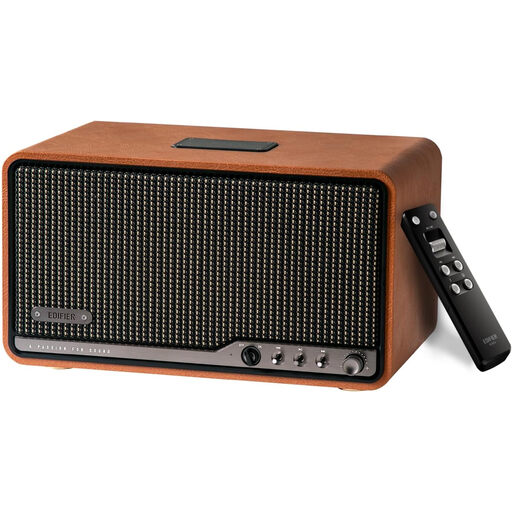 Image unavailable
Edifier S300 wireless multi-room tabletop speaker, brown
For a tabletop wireless setup where you can position two S300 units for left-and-right playback.
This listing is for one speaker, not a stereo pair. A second S300 is needed for the described stereo arrangement; check your intended source connections before buying.
View on Joybuy
Questions about the setup
Should I choose passive or active speakers for string quartet recordings?
Choose passive speakers if you want to select a separate amplifier; choose active speakers if integrated amplification better suits your setup. KEF lists the LS50 Meta as passive with a 40–100 W amplifier requirement, whereas its LS50 Wireless II integrates amplification. Either route still needs suitable stereo placement, and an active model’s inputs must match your sources.
Can I connect a turntable directly to active speakers?
Only when the turntable’s output and the exact speaker’s inputs are compatible. KEF says a phono-level turntable output needs phono pre-amplification before connection to a compatible line input; it also says the LSX II LT has no 3.5 mm analogue input and uses Bluetooth for a turntable connection.
Do standmount speakers need stands?
They need a stable position at a suitable listening height, which may mean stands if your existing furniture cannot provide one. Wharfedale describes matching stands for the Linton, and Bowers & Wilkins says stands are not included with the 606 S3.
What should I check for a powered speaker supplied in Great Britain?
Check that the seller supplies documentation and a mains product appropriate for the delivery market. GOV.UK guidance recognises CE marking alongside or in place of UKCA marking for many covered products placed on the Great Britain market; Northern Ireland has different arrangements. A marking alone should not replace checking the exact product and supplier documentation.


