Fixed-room music listeners
You mainly listen in the hobby room, have space to place two speakers apart and can sit in a reasonably central position.


For regular listening in one hobby room, choose a powered stereo pair if you can place two speakers apart and sit roughly between them; that arrangement lets stereo recordings present distinct left and right channels. A portable Bluetooth speaker makes more sense if you need battery operation and will move it around, while a networked active pair suits TV and streaming use if its connections match your sources.
You mainly listen in the hobby room, have space to place two speakers apart and can sit in a reasonably central position.
You switch between a phone, laptop, TV or turntable and need to match the speaker’s inputs to the equipment you actually use.
You want to take the speaker beyond the hobby room, making battery operation and a portable enclosure more important than fixed stereo placement.
Start with where you will listen and how you will play the music. Those decisions help you judge whether two fixed speakers, particular inputs or a portable unit will be useful in your room.
| Concern | What to check | Who this matters to |
|---|---|---|
| Stereo placement | Check for two stable speaker positions and a seat roughly equidistant from them. Try some wall clearance where space allows. | I mainly listen from one seat and want stereo recordings to have distinct left and right positions. Around 36% of consumers would put fixed-room stereo first. |
| Source connections | Match your main device to the exact model’s inputs. For a turntable, check its output and whether a suitable phono stage is built in. | If I alternate between a phone, computer, TV or turntable, I need a straightforward way to connect the one I use most. Roughly 29% of consumers would prioritise source compatibility. |
| Room and level | Measure the available shelf or desk space and consider wall clearance and accessible volume controls. | In a compact or shared room, I care about fitting the speakers and adjusting the sound comfortably more than chasing an output figure. About 21% of consumers would make room-friendly listening their primary concern. |
| Portability | Check charging requirements, the stated protection rating and whether a second compatible unit is needed for stereo. | I will use the speaker away from its usual spot, so carrying it and running it without mains power matter most. Around 14% of consumers would put portability first. |
A single portable unit cannot occupy the two separated positions of a stereo pair. JBL says two Charge 6 speakers can be paired for stereo, but one unit alone is a different setup.
If the speaker will stay in the hobby room, check whether you have space for a powered pair before choosing portability instead.
Creating a portable stereo pair requires a second compatible speaker.
Ruark specifies a moving-magnet phono input on the MR1 Mk3. KEF says the LSX II LT has no 3.5 mm analogue input and connects to a turntable via Bluetooth instead.
Check the turntable’s output and built-in preamp, then compare them with the exact speaker’s inputs before ordering.
An incompatible connection may call for a suitable additional device or a different speaker.
Bowers & Wilkins notes that moving speakers close to a back wall can increase bass while reducing openness and stereo imaging.
Begin with two stable positions and some wall clearance where practical. Adjust the speakers’ angle towards your listening position before settling on a setup.
JBL describes Charge 6 playback as up to 28 hours; the time you get will depend on use. JBL also says a charging cable is not included.
Check what you will use to charge it and plan for recharging during longer listening sessions.
The MR1 Mk3 is a compact powered stereo pair for a fixed listening space, with Bluetooth, USB-C audio, optical and line connections, and a moving-magnet phono input.
The LSX II LT is an active stereo pair oriented towards digital, computer, streaming and TV sources.
The Charge 6 is a portable Bluetooth option for listening that extends beyond one hobby room.
These models offer different ways to play music in a hobby room: consider the Edifier connections and included speaker configuration for a tabletop setup, or the JBL if you plan to carry your music elsewhere. Check the exact package before relying on a separated stereo arrangement.
 No image available
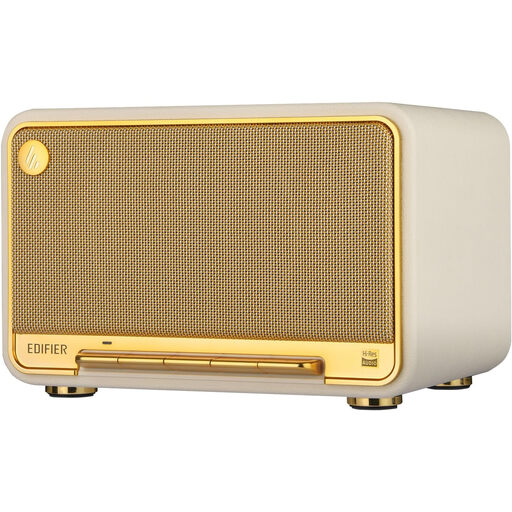
Consider this model if you want a compact desktop setup with both wired and wireless source options.
The product name specifies Bluetooth 5.3, USB-C and AUX inputs, LDAC and 66 W RMS. Confirm the number of speakers included before planning two separate positions, and check your TV or turntable’s required connection.
 No image available
Consider this tabletop model if your listening sources call for a choice of wireless and wired connections.
The product name lists Bluetooth 5.3, AirPlay 2, USB-C and AUX inputs, 60 W RMS and 2.1 acoustic architecture, with an 11-hour playback claim. Confirm its power arrangement and included speaker configuration; a separated pair should not be assumed from the 2.1 description.
 No image available
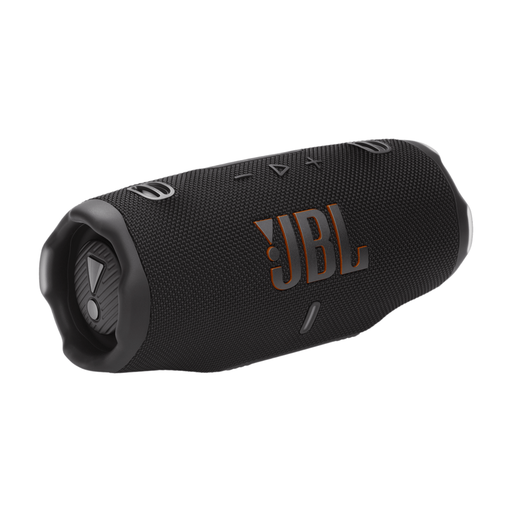
Consider this unit when you expect to take the speaker out of the hobby room and use it away from mains power.
JBL specifies IP68 protection, Auracast pairing and up to 28 hours of playback; that duration is a manufacturer claim, not a guaranteed runtime. One unit does not provide separated stereo placement, and JBL says a charging cable is not included.
Choose a powered stereo pair if the speakers can stay apart in your hobby room and you usually listen from a central position. A single portable Bluetooth speaker is more suitable when moving it around and using battery power matter more to you than separated stereo placement.
You can connect it directly only when the turntable’s output matches an input on the exact speaker. Ruark specifies a moving-magnet phono input for the MR1 Mk3; KEF says the LSX II LT has no 3.5 mm analogue input and connects to a turntable via Bluetooth. Check whether your turntable has a built-in phono preamp before choosing a connection.
For an eligible UK online purchase, GOV.UK says to tell the seller within 14 days of receiving the item if you want to cancel. Check the applicable exceptions and the seller’s return instructions; cancellation for a change of mind is separate from remedies for a faulty or misdescribed speaker.
Check the exact speaker’s power arrangement, supplied instructions and suitability for use with your socket before connecting it. For a product offered for use in Great Britain, check its product information rather than relying on a generic listing image; GOV.UK notes that applicable product requirements depend on the product and regulatory route.