
24/7 全天候客户支持

免费退货

当日/次日达

品质保障

开启新人专享福利: 全场免邮 | 低至 2 折 | 免费试用 30 天 JoyPlus 会员
下载 Joybuy
Watching a child begin to connect letters with sounds is a magical part of their development. To support this journey, many parents in the UK look for educational toys to make learning fun. However, the market for spelling games for kids is crowded, and it's easy to end up with a toy that gathers dust after a week.
As the Joybuy Product Recommendation Officer, my role is to help you navigate the options and identify what truly offers value. Before you buy, be aware of a few common pitfalls that can lead to disappointment and wasted money.
To find a game with lasting appeal and genuine educational benefit, focus on a few core features rather than flashy packaging. These are the non-negotiable parameters to check.
A game that is right for a three-year-old learning letter sounds will be too simple for a six-year-old starting to write sentences. Look for clear age guidance on the packaging, but also consider the specific skills it targets.
The physical quality of a game is paramount. Children learn through hands-on interaction, which means pieces will be handled, dropped and sometimes even chewed.
The best educational games for kids can be played in different ways and grow with your child.
Here are a few spelling games that align with these quality benchmarks, matched to different learning stages and play styles.
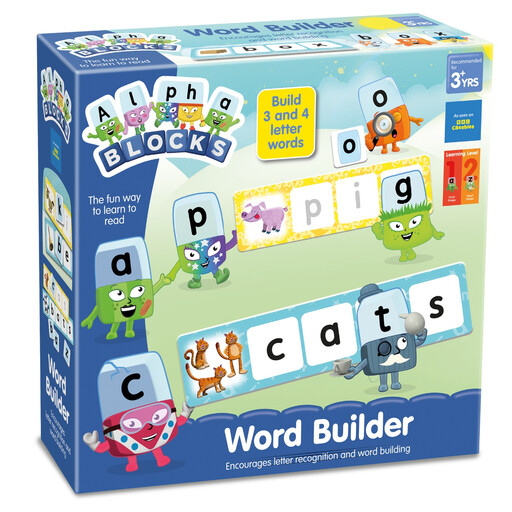
Why This Fits Their Persona: This game is perfect for preschoolers familiar with the Alphablocks characters. It provides a tangible, hands-on way to connect characters, letters and sounds, turning abstract phonics into a concrete activity.
It includes two levels of difficulty (3-letter and 4-letter words), allowing the game to grow with the child and avoiding the "one-week wonder" trap.
Directly supports the UK phonics curriculum by focusing on sounding out and building words. The durable cards are designed for little hands.
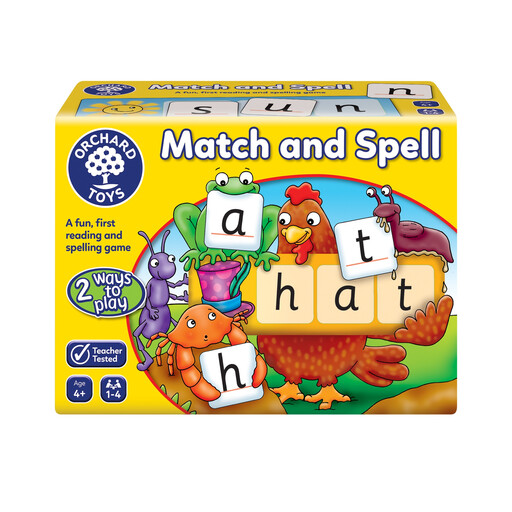
Why This Fits Their Persona: An excellent choice for children in nursery or Reception. It's a classic for a reason, offering a simple, intuitive introduction to spelling. It's one of the most recommended spelling toys for 4 year olds.
Orchard Toys are known for their thick, wipe-clean card, directly countering the "flimsy construction" flaw. The simple, clear gameplay avoids overwhelming young children.
Features two ways to play (matching letters to the board or spelling from memory), and the word cards act as self-correcting guides, encouraging independent play.
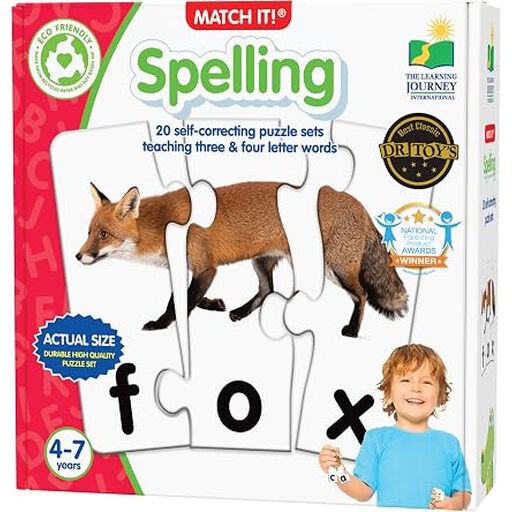
Why This Fits Their Persona: This is ideal for children who love the satisfaction of a jigsaw puzzle. It cleverly combines spelling practice with the problem-solving nature of puzzles, making it a great quiet-time activity.
The self-correcting design, where only the right pieces fit, prevents frustration and removes the need for constant adult correction, avoiding the "overly complex" trap.
The tactile feedback of fitting the puzzle pieces together reinforces learning. The set includes both three and four-letter words for progressive difficulty.
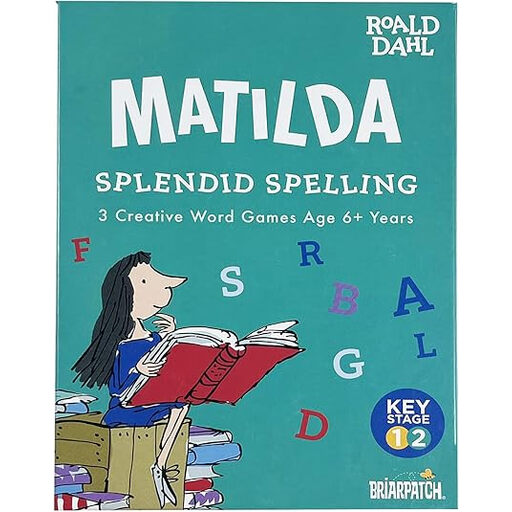
Why This Fits Their Persona: For older children in Key Stage 1 or 2 who are confident readers and enjoy a challenge. The connection to a beloved character and the competitive element make spelling practice feel like a real family game night activity.
By including three distinct games in one box, it offers fantastic replayability and caters to different moods and skill levels, ensuring it won't become a "one-week wonder".
Designed to support the National Curriculum for KS1 and KS2. The inclusion of a timer and competitive rules makes it highly engaging for group play.
You can start with pre-spelling games around age 3. At this stage, focus on toys that teach letter recognition and phonics, like alphabet puzzles or magnetic letters. Formal spelling games, like those involving building words, are typically best introduced around age 4, when children have a stronger grasp of letter sounds.
Absolutely. Magnetic letters are a versatile and valuable tool. They allow for free-form play and can be used on a fridge or magnetic board for years. They are excellent for practicing name spelling, learning the alphabet and eventually forming simple words. Look for sets with durable plastic construction and strong magnets, such as the Simba Art & Fun Magnetic Capital Letters, which are sized to be safe for children from age 3.
Look for brands with a reputation for quality, such as Orchard Toys, who are known for their thick, durable card. Read the product details and look for mentions of material thickness or construction. A well-made game with sturdy pieces and high replay value is a much better investment than a cheaper, flimsier alternative.