
24/7 全天候客户支持

免费退货

当日/次日达

品质保障

开启新人专享福利: 全场免邮 | 低至 2 折 | 免费试用 30 天 JoyPlus 会员
下载 Joybuy
As a Joybuy Product Recommendation Officer, my role is to help you navigate the crowded shelves of sun care. Choosing a high-protection sunscreen should be straightforward, but misleading marketing and confusing labels can make it a challenge. Many of us have bought a sun cream that promised the world, only to find it greasy, irritating or simply not right for our needs. This guide cuts through the clutter to focus on what truly matters for effective sun protection in the UK.
Before you add anything to your basket, be aware of these common traps that can lead to wasted money and, more importantly, inadequate protection.
To make an informed choice, focus on these three non-negotiable parameters.
An SPF 50 rating tells you about the level of protection from UVB rays, the primary cause of sunburn. However, UVA rays penetrate deeper into the skin, causing premature ageing, wrinkles and pigmentation. For comprehensive high protection sunscreen, you need both.
The right formula can be the difference between a product you love to wear daily and one that gathers dust.
Your lifestyle dictates whether you need additional features.
Based on these practical criteria, here are a few options suited to different UK lifestyles and needs.
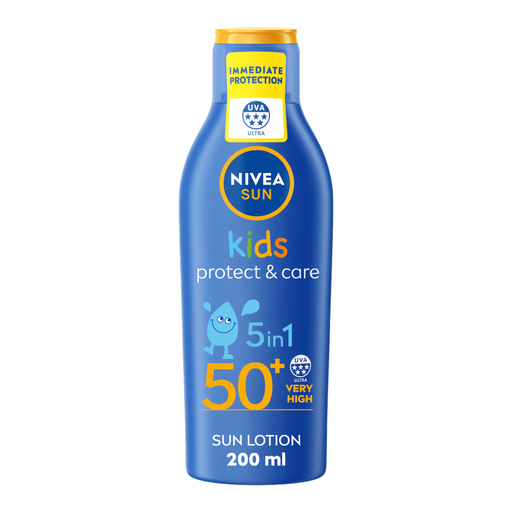
Why This Fits Their Persona: Ideal for UK family holidays and summer days at the park. The large 200ml bottle, paediatrician-approved formula and high water resistance make it a practical choice for protecting children's delicate skin during active play.
It is clearly labelled "extra water resistant" rather than "waterproof," setting realistic expectations. The directions explicitly state to reapply frequently, especially after swimming and towelling, countering the "apply once" myth.
The formula is specifically developed for children's skin and is paediatrician approved. It also has an Ocean Respect formula, free from certain UV filters like Octinoxate and Oxybenzone.
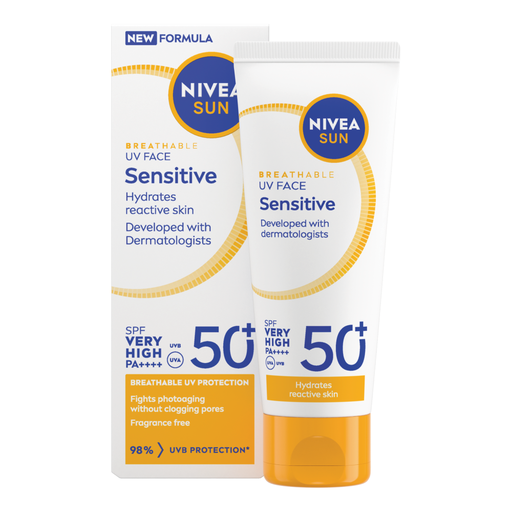
Why This Fits Their Persona: Perfect for someone in the UK needing daily facial protection that won't irritate their skin or feel heavy. Its lightweight, non-greasy texture is designed for comfortable wear, even under makeup during the morning commute.
This is a specialised facial product, avoiding the one-size-fits-all trap. It's a chemical sunscreen specifically formulated and dermatologically approved for sensitive skin, showing that not all chemical filters are irritating.
The formula is 0% greasy and non-comedogenic, making it suitable for daily use without causing breakouts. It's also fragrance-free to minimise the risk of irritation for reactive skin types.
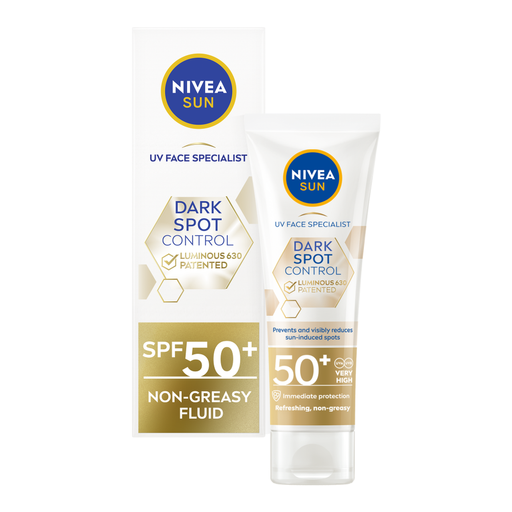
Why This Fits Their Persona: This is more than just a sunscreen; it's a targeted treatment. It's for the person whose main concern is preventing and reducing sun-induced dark spots, integrating their sun protection step with their active skincare goals.
Instead of vague anti-ageing claims, this product targets a specific, user-perceivable concern (dark spots) with a patented ingredient, Luminous630. It provides high UVA/UVB protection, which is the foundation of any anti-pigmentation routine.
The key feature is the inclusion of Luminous630, an ingredient that works to visibly reduce sun-induced spots. The formula is also lightweight and non-greasy, making it pleasant for daily use.
We have compiled a complete, real-time list of products that fully satisfy these strict selection criteria and UK safety regulations.
1. How much SPF 50 sun cream should I actually use? For proper protection, you need to be more generous than you think. The general guideline is to apply at least two finger-lengths of product for your face and neck. For the body, a common recommendation is about a full shot glass worth (around 35ml) to cover all exposed areas of an average adult. Applying too little will significantly reduce the level of protection you receive.
2. Can I use my body sun cream on my face? While you can, it may not be ideal. Body sun creams are often thicker and can feel heavier or greasier on the face. They may also contain fragrances or oils that could clog pores or irritate sensitive facial skin. A dedicated face sun cream SPF 50 is formulated to be lighter, non-comedogenic and to sit better under makeup.
3. Does SPF 50 sun cream expire? Yes, it does. All sunscreens have a shelf life. Look for a "Period After Opening" (PAO) symbol on the packaging, which looks like a small open jar with a number followed by "M" (e.g., "12M"). This indicates you should use the product within 12 months of opening it. Expired sunscreen will be less effective and should be discarded.