
24/7 全天候客户支持

免费退货

当日/次日达

品质保障

开启新人专享福利: 全场免邮 | 低至 2 折 | 免费试用 30 天 JoyPlus 会员
下载 Joybuy
Navigating the world of sun protection can feel overwhelming. With endless options on the shelves, it's easy to fall for marketing hype that doesn't deliver. As a Joybuy Product Recommendation Officer, my role is to help you see past the clutter and make an informed choice. Many of us have been let down by sun creams that promised the world but failed in practice. Let's look at the common pitfalls to avoid when selecting an SPF50 sun cream.
The most frequent complaints often stem from a few key issues:
To ensure your chosen sun cream works for you, focus on a few non-negotiable parameters rather than just the brand name. Understanding these will help you find a product that you'll genuinely want to use every day.
The SPF (Sun Protection Factor) number primarily indicates protection against UVB rays, the main cause of sunburn. However, UVA rays are equally important as they penetrate deeper into the skin, contributing to premature ageing and pigmentation.
In the UK, look for a UVA logo in a circle, which signifies that the UVA protection is at least one-third of the SPF value, meeting the EU recommendation. You may also see the PA rating system (from PA+ to PA++++), common in Asian and increasingly global formulas, where more '+' symbols mean higher UVA protection. For robust defence, an SPF50 with a 5-star UVA rating or a PA++++ rating is a strong benchmark.
The right texture is what separates a sun cream you tolerate from one you love. Modern formulations have moved far beyond the thick, chalky lotions of the past.
Beyond basic protection, many sunscreens now offer added skincare benefits to address specific concerns.
Instead of a one-size-fits-all approach, we've matched some standout products to specific user needs, helping you find a formula that solves a real-world problem.
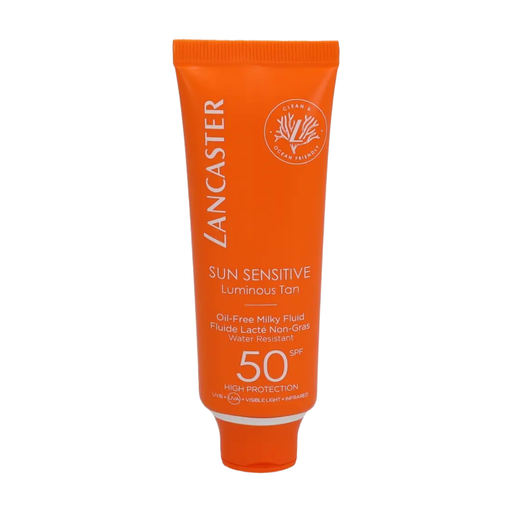
Why This Fits Their Persona: This is ideal for someone who needs a high-performance daily face SPF that feels like nothing on the skin. Its oil-free, milky texture is perfect for wearing under makeup in a UK city environment, without causing breakouts or irritation on reactive skin.
It directly counters the "greasy finish" and "sensitive skin mismatch" pitfalls. The formula is specifically designed for sun-sensitive skin and absorbs instantly for a non-greasy, invisible finish.
Features Lancaster's Full Light Technology, which shields against UVA, UVB, Visible Light and Infrared. It's also an ocean friendly sunscreen formula.
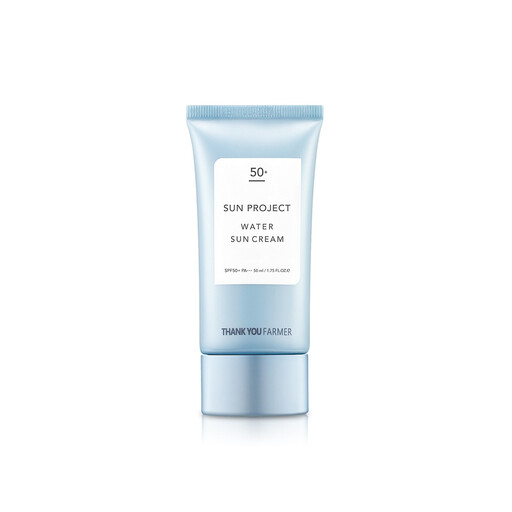
Why This Fits Their Persona: This is for the person who wants their sunscreen to feel like a luxurious moisturiser. It's perfect for those with normal to dry skin who are chasing a radiant, "glass skin" glow without any stickiness or white cast.
It avoids the heavy, greasy feel by using a unique "Sliding Texture Technique" that glides onto skin, providing a burst of hydration and a dewy, not oily, finish. It's the opposite of a traditional thick sun cream.
This hydrating sunscreen for dry skin is infused with Bamboo Water and Centella Asiatica to soothe and moisturise. Its PA+++ rating ensures strong UVA protection.
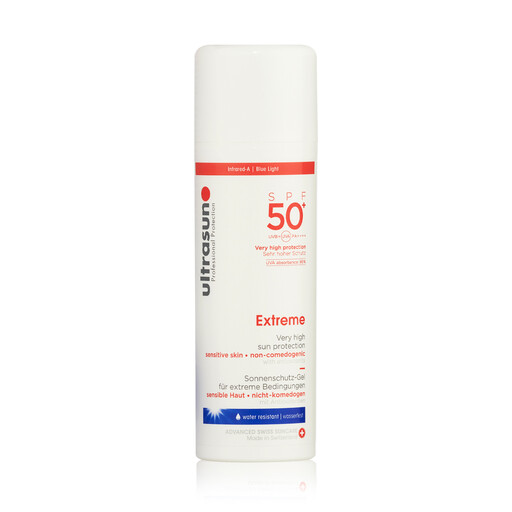
Why This Fits Their Persona: This is a go-to for anyone needing one reliable bottle for the whole family. It's suitable for babies and those with very sensitive skin, making it a practical choice for a family trip to the British seaside or a holiday abroad.
It addresses the "false sense of security" by using lamellar technology for long-lasting protection and being water resistant. It also solves the "sensitive skin" issue by being formulated for even the most delicate skin, including babies.
A true multi-purpose formula that is fast-absorbing, non-greasy and helps prevent prickly heat. It's an excellent all-rounder for face and body.
A common and helpful guideline is the "two-finger rule." Squeeze a line of sun cream onto your index and middle fingers, from the base to the tip. This amount is generally considered sufficient for your face and neck to achieve the level of protection stated on the bottle.
While you can, it's often not ideal. Sunscreens formulated specifically for the face are typically lighter, less greasy and non-comedogenic, meaning they are less likely to clog pores. If you have oily, acne-prone or sensitive skin, a dedicated daily face SPF is usually a better choice to avoid potential breakouts or irritation.
This is a common misconception. A higher SPF provides a higher level of protection against UVB rays, but it does not mean you can extend your time in the sun. Protection diminishes over time and with activity. It is still essential to reapply your sun cream at least every two hours, and more frequently if you have been swimming, sweating or towel drying.