What matters when choosing
Decide whether you need to crush a complete mixed rub or prepare one ingredient, then consider how small a portion you will make and how you will clean the tool.
Compact electric spice grinder
Consider it when: You make rubs regularly and want a fine blend without prolonged hand-crushing; look for a model whose maker addresses smaller quantities.
Trade-off: It needs mains power, careful blade handling and cleaning between strongly flavoured blends.
Small pestle and mortar
Consider it when: Your rubs are tiny and occasional, and you want to control the crush as you mix the ingredients.
Trade-off: Getting a very fine texture or working through harder spices takes more manual effort.
Dedicated hard-spice mill
Consider it when: You chiefly need to grind a compatible hard spice, such as nutmeg or cinnamon, into a rub.
Trade-off: A specialist mill should not be assumed to crush and combine every ingredient in a mixed rub.
| Concern |
What to check |
Who this matters to |
| Small-batch handling |
Look for an explicit small-quantity claim or choose a compact mortar. Maximum bowl capacity does not establish how a tiny load will grind. |
When I only need seasoning for one portion, I want the tool to work with a small amount rather than making a larger batch. Around 42% of consumers would put small-batch handling first. |
| Cleaning and flavour separation |
Check whether the bowl detaches, which parts can go in a dishwasher and what the manual says about cleaning the blade. |
If I switch between coffee and strongly flavoured rubs, I want to clean away residue before the next use. Around 33% of consumers would make cleaning and flavour separation their main concern. |
| Texture and ingredient fit |
Check that the maker permits your whole spices and whether you can stop and inspect the grind or adjust its coarseness. |
For a blend of different whole spices, I want the texture to suit the rub without assuming a single-spice mill can make it all. About 25% of consumers would prioritise texture and ingredient fit. |
Brands to consider for different grinder types
These examples cover electric grinders, a specialist mill and a small mortar; compare the stated features of the particular model rather than treating them as claims about every product from a brand.
Cuisinart
The SG21U is an electric spice-and-nut grinder aimed at people who want to process smaller quantities and keep blends in separate bowls.
- Cuisinart says its blades sit close to the bowl base for even results with smaller quantities. The SG21U has two removable stainless-steel bowls, sealed lids and dishwasher-safe removable parts.
- It remains a mains-powered blade appliance: clean it after use and handle the sharp blades as the instruction booklet directs.
Salter
The EK6136 is a compact electric coffee-and-spice grinder with a removable bowl and stated fine-to-coarse control.
- Salter lists a 200W motor, a removable 70g stainless-steel bowl and adjustable consistency for this model.
- The 70g capacity does not establish how it performs with the much smaller fill you may use for one rub; check the maker's guidance for your intended amount.
Lakeland
Lakeland's own-brand coffee-and-spice grinder is an electric option for preparing ingredients for rubs and marinades.
- Lakeland lists one-touch operation, an 85g capacity, a detachable rubber-sealed lid and a quad blade for wet and dry ingredients.
- Lakeland recommends hand washing, which matters if you expect to change spice blends frequently.
KRUPS
The F20342 is a multipurpose electric coffee mill that KRUPS also describes for nuts, seeds, herbs and spices.
- KRUPS lists a lid-activated safety switch and uses beyond grinding coffee for this model.
- Its stated coffee-bean capacity does not establish how it will handle a tiny one-person spice portion.
ProCook
The 9.5cm Chocolate Marble Pestle & Mortar is a manual option for cooks making small amounts of seasoning.
- ProCook describes this size as suitable for smaller amounts of spices, herbs and seeds.
- It needs hand washing and drying, and achieving a very fine powder from harder spices takes manual effort.
Joybuy products for this task
This manual pepper grinder is relevant if peppercorns are one ingredient in your one-person rub. Check how you would prepare and combine the remaining ingredients before choosing it as your only tool.
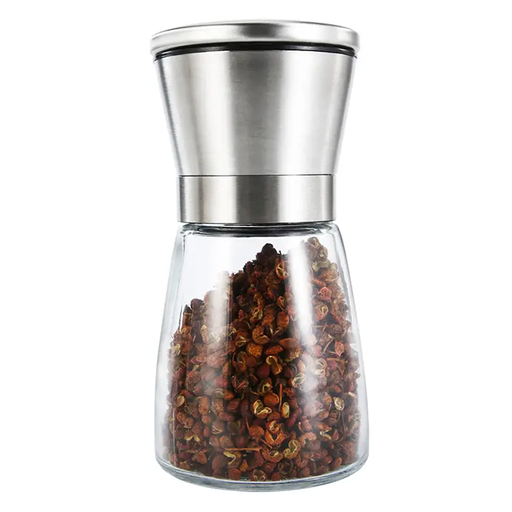 Image unavailable
Maxcook MCPJ026 Small 304 Stainless Steel Pepper Grinder
Consider this manual grinder if your rub calls for black or Sichuan peppercorns; check whether its use and cleaning instructions also suit the rest of your recipe.
The listed variant is Small and is described as a 304 stainless-steel pepper grinder.
Before relying on it for a complete mixed rub, check how it handles your intended small amount and how you collect the ground spice.
View on Joybuy
Questions about small-batch rubs
Is an electric grinder too large for one serving of barbecue rub?
Not necessarily: maximum capacity is not a minimum fill requirement. Cuisinart says the blade-and-bowl arrangement of its SG21U gives even results with smaller quantities; if you make only an occasional tiny blend, a compact pestle and mortar is another option.
Can I use a coffee grinder for barbecue spices?
Yes, if the exact model is specified for the spices you intend to use. KRUPS describes its F20342 for herbs and spices as well as coffee, while Salter lists spice use for the EK6136. If you alternate between coffee and rubs, check the cleaning instructions and whether separate or removable bowls are available.
How should I clean a blade grinder after making a rub?
Follow that model's manual and take care around its blades. Cuisinart instructs SG21U users to clean parts after every use and says its removable parts can go on the dishwasher's top rack or be washed by hand; the motor base should not be immersed.
What should I check before ordering a mains-powered grinder?
Check the supplied plug, rated voltage, instructions and seller details for where you will use it. The Office for Product Safety and Standards' March 2025 guidance covers requirements for electrical equipment placed on the Great Britain market; it does not establish compliance for an individual listing, and Northern Ireland has different arrangements.


