For curry powder made from dry whole spices, start with a compact grinder explicitly intended for spices, and choose one whose controls let you stop at the texture you want. Removable or separate bowls matter more if you make several blends or also grind coffee; a wet-and-dry model is worth considering if you will make pastes as well as powder, but brings more parts to store and clean.
Who needs which grinder?
Small-batch curry-powder makers
If you mainly grind dry whole spices for home cooking, look for a spice-capable grinder that lets you check the texture and pour out the finished blend without difficulty. A large food processor need not be the starting point for a small quantity.
Cooks making several blends
If you switch between spice mixtures, coffee, nuts or seeds, cleaning and flavour carryover may shape your choice more than an extra grinding function. Removable bowls make cleaning easier to manage; separate bowls offer another way to keep uses apart.
Cooks making pastes and chutneys
If your plans include wet ingredients as well as dry curry powder, choose a model whose instructions expressly cover wet grinding. Duronic, for example, describes separate wet and dry bowls for its CG421; a coffee-grinder label alone does not establish the same use.
What matters when choosing?
Decide whether you need to grind wet ingredients at all, then weigh texture control against how often you will empty, clean and reuse the bowl.
| Concern |
What to check |
Who this matters to |
| Dry-spice texture |
Confirm spice use and check how you can stop or monitor grinding. Match the bowl to the quantity you make. |
When I grind whole spices for curry powder, I want to stop before the blend becomes finer than I need. Around 46% of consumers put controllable dry-spice texture first. |
| Cleaning and flavour separation |
Check whether the bowl removes and which parts can be washed; consider separate bowls if you change ingredients frequently. |
Switching from a strong spice blend to coffee makes lingering aromas a concern for me. For around 36% of consumers, easy cleaning or keeping flavours apart is the primary need. |
| Wet-and-dry use |
Look for explicit permission to grind wet ingredients and follow the stated uses for each bowl or blade. |
I want the same appliance to make dry powder and small batches of paste, so a dry-only grinder would not cover both tasks. Wet-and-dry use comes first for around 18% of consumers. |
Mistakes to avoid
-
Assuming every coffee grinder can make curry paste
A grinder described for coffee or dry spices is not necessarily intended for garlic, sauces or other wet ingredients.
For dry curry powder, check that spices are permitted. If you also make pastes, choose a model whose instructions expressly cover wet ingredients and specify the appropriate bowl or blade.
-
Choosing by wattage or capacity alone
Those figures do not tell you how easily you can inspect a small blend, pour it out or clean up afterwards.
Compare permitted ingredients, grind control, lid visibility and bowl removability before treating motor power as a deciding factor.
-
Overlooking residues in shared equipment
Spice aromas can carry into later blends or coffee. Equipment shared with raw-food preparation also needs careful cleaning to avoid cross-contamination.
Use separate bowls where practical and follow the appliance cleaning instructions between uses. For food-business preparation, follow applicable Food Standards Agency guidance on equipment used for raw and ready-to-eat food.
-
Grinding continuously without checking the manual
Operating limits differ by model; a long uninterrupted run may exceed the instructions for a particular grinder.
Check the manual for your exact model and follow its stated operating and cooling intervals rather than applying another grinder’s limits.
Brands to consider for this task
Cuisinart
Cuisinart presents the SG21U Spice & Nut Grinder as a compact option for small quantities and for cooks who want to keep different grinds apart.
- The SG21U has two stainless-steel bowls with storage lids; Cuisinart says the bowls and lids are dishwasher safe.
- Two bowls add parts to store, and their presence alone does not establish that every wet ingredient is permitted. Check the SG21U instructions for your intended use.
Salter
Salter describes the EK6136 Coffee & Spice Grinder for dry ingredients, including spices, dry herbs, nuts and grains.
- The EK6136 has a removable 70 g stainless-steel bowl, a transparent lid and grind texture adjusted by grinding time, according to Salter.
- Its stated dry-ingredient uses should not be taken as permission to grind wet curry-paste ingredients.
Duronic
Duronic positions the CG421 as a wet-and-dry grinder for cooks who want to make both dry spice blends and small batches of wet mixtures.
- Duronic specifies separate removable stainless-steel bowls with blades intended for wet and dry ingredients respectively.
- If you only make dry curry powder, the additional bowl and wet-grinding function may mean more components to store and clean than you need.
VonShef
VonShef presents its 150 W Coffee Bean Grinder primarily for coffee and also describes it as suitable for dry spices, herbs, nuts and seeds.
- VonShef specifies a 60 g capacity, a transparent lid and one-touch control for this model.
- Check the instructions before using ingredients outside its stated dry uses, particularly if you intend to make a wet paste.
Joybuy products for this task
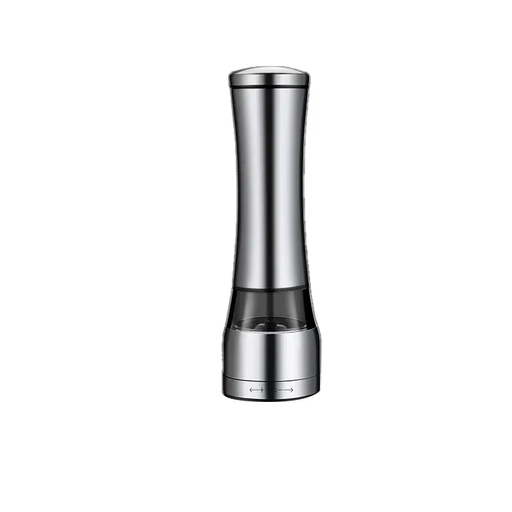
This manual pepper grinder is an option to assess if you prefer hand grinding for dry ingredients. Before choosing it for curry powder, confirm that it accepts every whole spice in your blend and holds the quantity you want to make.
 No image available
BJ Stainless Steel Manual Pepper Grinder (Extended Version)
Consider this hand-operated grinder if you want to assess a manual option for dry curry spices. It is presented as a pepper grinder; check the permitted ingredients, batch capacity and achievable texture before relying on it for a whole-spice blend.
View on Joybuy
Questions about curry-powder grinders
What type of grinder should I use for dry curry powder?
Choose a grinder explicitly intended for dry spices, with a way to stop and inspect the texture you want. A removable bowl can make it easier to transfer a small blend; Salter specifies one for its EK6136, while Cuisinart specifies pulse action for its SG21U.
Do I need a wet-and-dry grinder to make curry powder?
No: dry whole spices can be ground in a suitable dry-spice grinder. Consider a wet-and-dry model if you also plan to make pastes or sauces; Duronic specifies separate bowls for those two uses on its CG421.
How can I keep curry-spice flavours out of coffee?
Clean the grinder thoroughly between ingredients, or use separate bowls if the model provides them. Cuisinart says the SG21U’s two bowls are intended to limit flavour contamination; still follow its cleaning instructions.
Can I keep grinding until the spices are powder-fine?
Follow the operating limit in your exact grinder’s manual rather than assuming it can run continuously. A Salter coffee-and-spice-grinder manual specifies an approximately 30-second maximum run followed by cooling, but that instruction should not be applied to other models.


