
24/7 Customer Support

Free returns

Same-day & Next-day Delivery

Quality Guaranteed

Unlock Your Welcome Offers: FREE Delivery | Up to 80% OFF | Free 30-day JoyPlus trial
Download the APP
As more of us look for savoury snacks beyond the usual bag of crisps, the world of Asian savoury snacks has offered a compelling alternative. Among these, spicy seaweed snacks have surged in popularity, promising bold flavours, satisfying textures and often, a lower calorie count. However, navigating the growing selection of Korean seaweed snacks and Chinese kelp snacks can be tricky.
Many shoppers find themselves disappointed. What was advertised as a light, crispy bite turns out to be a chewy, marinated product. A snack labelled "healthy" might contain surprisingly high levels of salt or sugar. And the term "spicy" can mean anything from a gentle warmth to a fiery challenge. To help you find a snack that truly suits your taste, we've identified the common pitfalls and the key factors to check before you buy.
To avoid disappointment, it pays to look past the front-of-pack marketing and understand what defines a quality seaweed snack. Focusing on these three areas will ensure you get the flavour and texture you're looking for.
The single biggest point of confusion for new buyers is the texture. The term "seaweed snack" covers a wide range of products made from different types of sea vegetables, each with a unique mouthfeel.
Always check the product name and description for terms like "crispy," "sheets," "kelp knots" or "shredded" to understand what you are buying.
"Spicy" is not a universal standard. The flavour profile of hot and spicy snacks can vary dramatically depending on their origin.
Look at the ingredient list for clues. The presence of "Sichuan peppercorn" signals a numbing heat, while different types of "chilli" or "spice powders" will offer different experiences.
While many seaweed snacks are promoted as low-calorie snacks, it is crucial to check the full nutritional panel. Pay close attention to the salt and sugar content, which are typically listed per 100g. This allows for a fair comparison between products. A snack might be low in calories but high in sodium, which is an important consideration for those monitoring their intake.
To help you start your search, we've matched a few distinctive products to different snacking preferences.
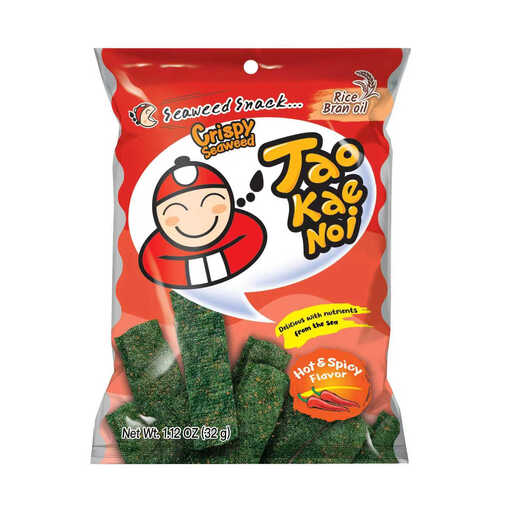
Why This Fits Their Persona: This is the ideal choice for anyone looking for a direct, spicy replacement for traditional crisps. It delivers that classic, ultra-thin and shatteringly crisp texture that makes for satisfying, light snacking.
The product name "Crispy Seaweed" clearly sets the expectation for a dry, brittle texture, completely avoiding the pitfall of accidentally buying a chewy kelp snack.
Features premium, ultra-thin roasted seaweed sheets. The bold and fiery Thai spice blend is perfect for those who enjoy a straightforward kick of heat.
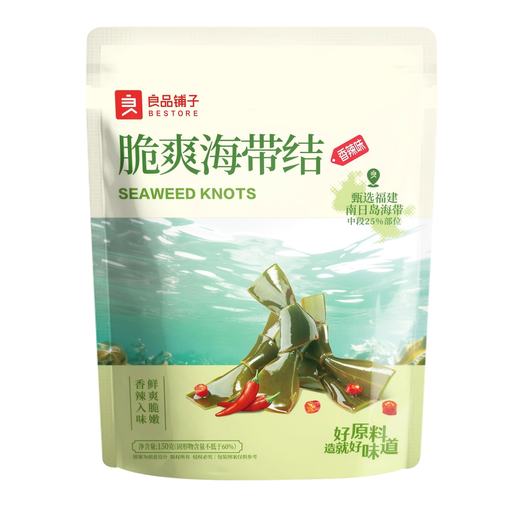
Why This Fits Their Persona: For those who enjoy exploring different textures and authentic Chinese flavours, these kelp knots offer a completely different experience. They are tender, chewy and soaked in a fragrant, savoury sauce with a chilli kick.
By being clearly labelled as "Kelp Knots," it accurately describes its chewy, substantial form. This prevents any confusion for buyers expecting a dry, crispy snack.
Offers a unique, satisfyingly chewy texture. The ready-to-eat format in individual sachets makes it a convenient and flavourful side dish or a substantial snack.

Why This Fits Their Persona: This is not a sheet snack, but rather crispy, seasoned seaweed flakes known as 'Jaban' in Korean. It's perfect for home cooks who want to add a spicy, umami crunch to rice bowls, noodles, salads or soups.
The "Flaked & Seasoned" description clearly communicates its intended use as a topping or mix-in, preventing anyone from expecting large, intact sheets for hand-held snacking.
Extremely versatile for adding flavour and texture to a wide range of dishes. The authentic Korean chilli seasoning provides a savoury and spicy kick.
We have compiled a complete, real-time list of products that fully satisfy these strict selection criteria and UK safety regulations.
The main difference is the type of seaweed used, which dictates the texture. Seaweed crisps are typically made from thin sheets of laver (nori) that are roasted until brittle and light. Kelp snacks are made from a thicker sea vegetable (kombu) and are marinated, resulting in a much chewier and more substantial snack.
They can be a component of a balanced diet. Seaweed is naturally a source of minerals and fibre. Many seaweed snacks, particularly the crispy sheet varieties, are very low in calories. However, it is important to check the nutritional information on the packaging for the salt and sugar content, as some seasoned products can be high in both.
They are incredibly versatile. Crispy sheets can be crumbled over salads, soups or rice for a crunchy, savoury topping. Flaked seaweed ('jaban') is specifically designed for this and is excellent mixed into rice for homemade rice balls. Chewy kelp knots and strips are fantastic as a ready-to-eat side dish (banchan) with a main meal or can be added to noodle dishes.